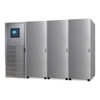
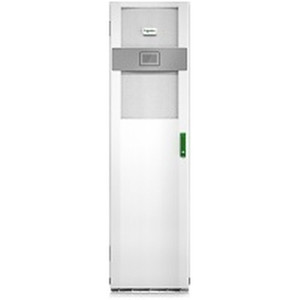
APC by Schneider Electric GVSUPS80K0B5HS Galaxy VS 80kW 400V Double-Conversion UPS
Overview
The APC by Schneider Electric GVSUPS80K0B5HS is an 80kW (80 kVA) three-phase, double-conversion online UPS designed for medium-to-large data centers, industrial facilities, and critical infrastructure environments running 400V distribution. Built around a true online double-conversion topology with unity output power factor and a modular internal battery architecture supporting up to five 9Ah smart battery strings, this unit is engineered for deployments where power quality, scalability, and runtime flexibility are non-negotiable. If you're protecting server rooms, telecom switching equipment, or distributed edge computing nodes on 400V three-phase infrastructure, the GVSUPS80K0B5HS belongs on your shortlist.
Explore the broader APC by Schneider Electric power protection line or browse all UPS systems to compare capacity tiers and form factors.
Key Features
- Double-Conversion Online Topology: Unlike line-interactive or standby UPS designs, the Galaxy VS continuously regenerates output power from DC — meaning your load never draws from raw utility power. Voltage sags, surges, frequency drift, and switching transients are all fully isolated from connected equipment. For 24/7 compute environments where even microsecond interruptions cause transaction loss or hardware damage, this topology is the correct choice.
- 80kW / 80 kVA at Unity Output Power Factor (PF 1.0): A unity output power factor means the kW and kVA ratings are identical — 80kW is 80kW of real usable power, with no derating penalty. Older UPS designs rated at 0.8 PF deliver only 64kW from an 80 kVA unit. If your IT load specification is 80kW, this unit covers it fully without oversizing.
- Modular Battery Architecture — Up to 5 Internal Battery Strings: The internal bay supports up to five 9Ah smart modular battery strings, allowing you to right-size runtime at commissioning and add capacity as the load grows. You're not locked into a fixed runtime at purchase, and you don't need external battery cabinets for initial deployment — a meaningful installation footprint advantage in constrained equipment rooms.
- Wide Input Voltage Window (340–460V): The 120V input range (340V minimum to 460V maximum) accommodates typical utility voltage fluctuations on European and international 400V distribution systems without switching to battery. This directly reduces battery cycling, extends battery service life, and lowers battery replacement costs over the UPS lifecycle.
- High Input Power Factor (0.99): At 0.99 input power factor, the Galaxy VS draws near-sinusoidal current from the utility feed. That means reduced harmonic distortion on your facility's electrical distribution, lower demand charges, and less thermal stress on upstream PDUs, transformers, and cabling — relevant any time you're running on generator during extended outages.
- Low Output Voltage THD (≤3%): Output voltage Total Harmonic Distortion of 3% or less keeps sensitive downstream equipment — particularly servers with switching power supplies and precision measurement hardware — well within manufacturers' input quality requirements. This is the spec that prevents phantom hardware failures traced back to dirty power.
- Pure Sine Wave Output: The sinusoidal output waveform is compatible with any AC load, including active PFC power supplies standard in modern server hardware. Line-interactive UPS units producing stepped-approximation waveforms can conflict with active PFC supplies — the Galaxy VS eliminates that risk entirely.
- Three-Phase Input and Output: Three-phase input and output at 400V matches the distribution architecture of most European and international data centers and industrial facilities, allowing direct integration with three-phase PDUs and bus bars without phase-conversion losses or additional isolation transformers.
- Flexible Output Voltage (380–415V): The configurable output voltage range from 380V to 415V accommodates both 380V and 415V load equipment on the same unit — useful in mixed-standard facilities during infrastructure transitions or in regions where nominal utility voltage varies within that band.
- 9,263 BTU/h Heat Dissipation: At full 80kW load, the unit dissipates 9,263 BTU/h. Factor this into your room cooling design: a single unit at full load is roughly equivalent to adding 2.7 tons of heat load to the space. Size your CRAC/CRAH capacity accordingly, and confirm aisle containment airflow accounts for this output.
- High Crest Factor Tolerance (2.5:1): A 2.5:1 crest factor rating means the inverter handles loads with high peak-to-RMS current ratios — typical of rectifier-input equipment, variable frequency drives, and UPS-protected server banks running non-linear loads — without output clipping or waveform distortion.
- 40–70 Hz Input Frequency Range: The broad input frequency acceptance window makes this unit compatible with generator sets that may not hold tight 50/60 Hz regulation at startup or under varying generator load — critical for facilities that depend on diesel generation for extended backup scenarios.
Integration and Compatibility
The GVSUPS80K0B5HS operates on 400V three-phase distribution, placing it squarely in data center and industrial electrical infrastructure rather than single-phase IT closet deployments. The 340–460V input range and 380–415V output range are calibrated for IEC 60364 electrical environments. The three-phase UPS category includes comparable capacity units if load sizing or physical form factor requirements differ from this model. For facilities planning a complete power protection architecture, consider pairing with compatible power distribution units and an external battery cabinet if runtime beyond the five-string internal capacity is required. Review your UPS selection guide for load sizing methodology, runtime calculation, and topology selection criteria before finalizing specification.
The smart modular battery string design supports battery health monitoring — individual string-level visibility rather than a single aggregate battery status, which simplifies planned maintenance and reduces unplanned downtime risk during battery end-of-life cycles.
Frequently Asked Questions
Q: What is the actual usable power output of the GVSUPS80K0B5HS?
A: The unit delivers 80,000 watts (80kW) of real power. With a unity output power factor of 1.0, the kVA and kW ratings are identical — there is no derating. This is unlike older UPS designs rated at 0.8 power factor, where an 80 kVA unit would only deliver 64kW of real power.
Q: How many battery strings does the GVSUPS80K0B5HS support, and can runtime be expanded?
A: The unit supports up to five internal 9Ah smart modular battery strings. You can install fewer strings at initial deployment and add capacity later without replacing the UPS — making it practical to right-size runtime at commissioning and scale as load or runtime requirements grow.
Q: Is the GVSUPS80K0B5HS compatible with generator power?
A: Yes. The wide input frequency acceptance range of 40–70 Hz accommodates generator sets that may not maintain tight 50 or 60 Hz regulation, particularly under variable load at startup. The 340–460V input voltage window also helps absorb generator output fluctuations without unnecessarily switching to battery.
Q: What input voltage range does the GVSUPS80K0B5HS accept?
A: The unit accepts input voltages from 340V to 460V on a three-phase 400V supply. This 120V window accommodates common utility voltage fluctuations on European and international 400V distribution systems, reducing unnecessary battery cycling during normal utility supply variations.
Q: What is the heat output of the GVSUPS80K0B5HS at full load?
A: At full 80kW output load, the unit dissipates 9,263 BTU/h. This equates to approximately 2.7 tons of cooling load and must be accounted for in your data center or equipment room HVAC capacity planning.
Q: Does the GVSUPS80K0B5HS produce a pure sine wave output?
A: Yes. The double-conversion online topology produces a true sinusoidal output waveform. This is compatible with all AC loads including servers and equipment with active power factor correction (active PFC) power supplies, which can behave unpredictably when powered by stepped-approximation waveforms from some line-interactive UPS units.
The GVSUPS80K0B5HS is one of the cleaner specs I've seen in the 80kW three-phase segment — the unity output power factor (1.0) is the number that earns attention first. In a lot of institutional RFPs, the load spec is written in kilowatts, and a UPS with a 0.8 PF rating quietly delivers 20% less real power than its kVA nameplate suggests. That gap doesn't show up until commissioning, when you're staring at an overload condition on a system that was supposed to have headroom. The GVSUPS80K0B5HS doesn't have that problem.
Technical Highlights:
- Unity Output Power Factor (1.0): 80kW of deliverable real power with zero kVA-to-kW derating — what the nameplate says is what the load sees. Critical for accurate load planning in server consolidation projects.
- Input Voltage Window (340–460V): 120V of input headroom on a 400V supply keeps the unit on utility power through most real-world voltage sag events, directly reducing battery cycling frequency and extending battery service intervals.
- Input Power Factor (0.99): Near-unity current draw from the utility feed reduces harmonic injection into the facility distribution system — relevant when the GVSUPS80K0B5HS shares a transformer or generator with sensitive instrumentation or other high-precision loads.
Deployment Considerations:
- The 9,263 BTU/h full-load heat dissipation figure needs to land in your mechanical engineering scope before installation — this is not a spec to discover after the HVAC design is finalized. Confirm your CRAC or CRAH has margin for this load on top of existing IT equipment heat output.
- The internal battery bay supports up to five 9Ah strings but ships configured for the string count specified at order. Verify your runtime target against load and string count before purchase — adding strings post-installation is possible by design, but plan for it rather than retrofitting under pressure during an outage event.
For a Tier III or Tier IV data center row-level deployment protecting 60–80kW of compute infrastructure on 400V European distribution, the GVSUPS80K0B5HS is sized correctly and specced right — unity PF, online double-conversion, modular batteries, and a generator-compatible input frequency range all in a single enclosure.