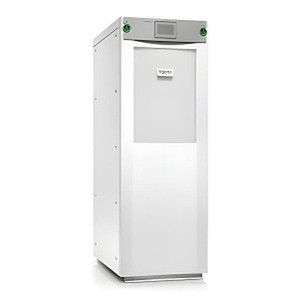
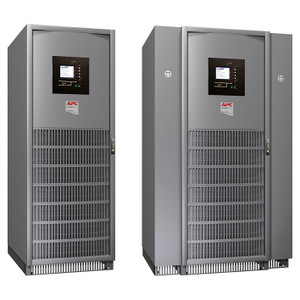
APC by Schneider Electric GVSUPS60KRGS-A 60kW 480V N+1 Three-Phase UPS
Overview
The APC by Schneider Electric GVSUPS60KRGS-A is a 60kW, 480V three-phase uninterruptible power supply built around an N+1 redundant power module architecture and designed to run from external battery strings — the configuration that data center and critical infrastructure engineers reach for when runtime flexibility and power module serviceability matter more than a self-contained box. The Galaxy VS platform sits in the mid-range of APC's APC by Schneider Electric commercial UPS line, covering the gap between smaller single-phase rack UPS units and full utility-scale systems. If you are sizing power protection for a mid-size data hall, a manufacturing floor control room, or a telecom headend running 480V distribution, this is the capacity band to evaluate.
The 5×8 startup service included with this SKU — GVSUPS60KRGS-A (often searched as GVSUPS60KRGS A) — means factory-coordinated commissioning is scoped into the purchase, which matters at this power class: a 60kW three-phase UPS is not a plug-and-play device, and having startup support baked in reduces the risk of commissioning delays that push your go-live date.
Key Features
- 60kW at 480V Three-Phase Input: At 60kW, this system can carry a fully loaded mid-density server pod, a network operations center with redundant compute and storage, or a critical manufacturing control environment — without the step-up transformer overhead you would need if you were sourcing 208V UPS capacity and converting. Native 480V input keeps distribution losses low and avoids a separate transformer in the power chain.
- N+1 Power Module Architecture: The N+1 topology means one power module beyond the minimum required for full load is installed. In practice this means the system continues delivering full 60kW even if one module fails — you do not shed load, and you do not need to schedule an emergency maintenance window. This is the architecture specification that separates enterprise UPS systems from standard single-module designs.
- External Battery Configuration: Batteries are housed in separate external battery cabinets rather than integrated into the UPS enclosure. This separates runtime scaling decisions from the UPS itself — you add battery strings to extend runtime without replacing the UPS, and battery replacement does not require taking the UPS offline. It also means physical placement of battery mass is flexible, which matters in raised-floor environments with strict weight load limits.
- 5×8 Factory Startup Service Included: Commissioning a 60kW UPS requires qualified startup personnel to verify input wiring, output connections, battery string integrity, and control system handshakes. The included 5×8 startup service — meaning coverage during standard business hours five days a week — covers this initial commissioning, reducing the gap between delivery and a verified-operational system.
- Galaxy VS Platform: The Galaxy VS is APC's scalable three-phase UPS family designed for data centers and industrial environments. It supports integration with building management systems and data center infrastructure management (DCIM) software through standard communications interfaces, allowing power events and capacity metrics to flow into your existing monitoring stack. Consult the power protection category for compatible accessories and battery enclosures.
Integration and Compatibility
The GVSUPS60KRGS-A is designed for environments running 480V three-phase distribution — standard in North American commercial and industrial facilities at this power class. Integration with external battery cabinets from the Galaxy VS battery enclosure family is the expected deployment pattern. For DCIM and BMS connectivity, the Galaxy VS platform supports APC's EcoStruxure IT architecture, enabling remote monitoring, event logging, and load reporting. If your operations team manages power infrastructure through a centralized platform, verify communications card compatibility with your specific DCIM or BMS before finalizing the order. For facilities planning, pair this unit with appropriate power distribution units on the output side to segment critical loads by priority.
Frequently Asked Questions
Q: What does the N+1 power module configuration mean for this UPS?
A: N+1 means one additional power module is installed beyond the minimum needed to carry full load. If one module fails, the remaining modules continue delivering the full 60kW output without any load shedding or manual intervention. It is a hardware-redundancy topology, not a software feature.
Q: Why does the GVSUPS60KRGS-A use external batteries instead of internal batteries?
A: External battery cabinets decouple runtime capacity from the UPS enclosure. You can add battery strings to extend runtime, replace batteries without taking the UPS offline, and distribute battery weight across the floor plan — all important factors at 60kW where runtime requirements and physical constraints vary significantly by site.
Q: What does the 5×8 startup service cover?
A: The included 5×8 startup covers factory-coordinated commissioning during standard business hours, five days a week. This typically encompasses input and output wiring verification, battery string checks, and initial system configuration — the steps required to reach a verified-operational state after installation.
Q: Is the GVSUPS60KRGS-A appropriate for a 208V facility?
A: This model is rated for 480V input, which is standard for North American commercial and industrial three-phase distribution at this power class. If your facility runs 208V three-phase distribution, a different model in the Galaxy VS family sized for that input voltage would be the correct selection. Do not attempt to use a 480V-rated UPS on a 208V feed without consulting an electrical engineer.
Q: Can runtime be extended after the initial installation?
A: Yes. Because the GVSUPS60KRGS-A uses external battery cabinets, additional battery enclosures can be added to the string to extend runtime without replacing or modifying the UPS itself. The number of external battery cabinets supported depends on the specific battery enclosure model selected — verify this with APC's configuration tools or pre-sales engineering before committing to a battery string count.
The GVSUPS60KRGS-A lands in a specific architectural niche: 60kW at native 480V with N+1 module redundancy and an external battery topology. That combination is not accidental — it is the configuration you specify when you cannot afford a module failure to impact load, cannot predict final runtime requirements at design time, and are working with 480V distribution infrastructure that makes a transformer-coupled 208V UPS unnecessarily complex. I have seen engineers default to self-contained UPS units at this power class and then wrestle with battery replacement logistics and runtime constraints that the external-battery topology would have avoided entirely.
Technical Highlights:
- 60kW at 480V: Native 480V input eliminates the step-up transformer that a 208V UPS would require in a 480V facility — one fewer failure point in the power path and lower distribution losses at this current level.
- N+1 Redundancy: Module-level redundancy at 60kW means a failed power module does not require a maintenance window or load transfer — the system absorbs the failure transparently while you arrange replacement, which is the behavior critical infrastructure requires.
- External Battery Architecture: Separating battery mass from the UPS enclosure means runtime is a variable you adjust post-installation by adding battery cabinets — rather than a fixed parameter you have to get right at procurement time.
Deployment Considerations:
- The 5×8 startup service is business-hours coverage — if your project timeline requires commissioning on a weekend or a hard go-live date that falls outside standard hours, verify whether an upgrade to 7×24 startup coverage is available for this SKU before finalizing the order.
- At 60kW and 480V, input wiring and circuit protection sizing must be handled by a licensed electrician familiar with three-phase UPS installations; this is not a consideration to leave to general contractors unfamiliar with the power class.
This system is the right specification for a mid-size data center room, a telecom headend, or a mission-critical manufacturing control environment where 480V distribution is already in place, module-level redundancy is a hard requirement, and runtime flexibility needs to remain open after commissioning.