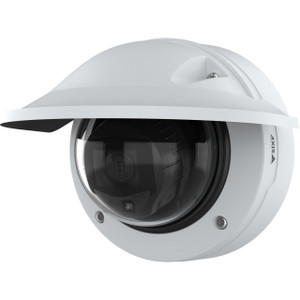
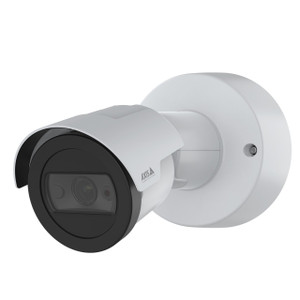
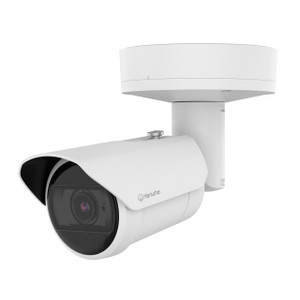
i-PRO MC-75-B100C-1 75W Redundant Power Supply
The i-PRO MC-75-B100C-1 is a 75W regulated power supply engineered for surveillance camera systems and edge recording appliances requiring failover redundancy and continuous uptime. The FPO75-B100C4D8PE2M/T4-A module delivers clean, regulated DC power in a DIN-rail form factor — purpose-built for multi-camera outdoor installations, distributed edge NVR deployments, and mission-critical perimeter systems where a single power loss cannot interrupt video capture or alert transmission.
Key Features
- 75W regulated output: Sufficient for 4–8 mid-power IP cameras or a compact edge appliance. Precise voltage regulation (typically ±5% tolerance) protects sensitive electronics from brownout damage.
- Redundant architecture: Designed for parallel failover deployment — connect primary and secondary supplies to the same load for N+1 availability. One supply failure does not interrupt video or alarm transmission.
- DIN-rail mount: Compact form factor fits standard 35mm DIN rail in outdoor enclosures, cabinets, or pole-mounted junction boxes. No proprietary mounting brackets required.
- Continuous duty rating: Rated for 24/7 operation without duty-cycle limitations. Suitable for permanent outdoor deployment in surveillance and access-control applications.
- Thermal management: Internal protection against overheat; external airflow required during summer months or high-load scenarios. Typical operating temperature range 0–50°C.
- Input isolation: Galvanic isolation between input and output stages reduces ground-loop noise and protects downstream camera electronics from mains transients.
- Wide input range: Accepts standard AC mains (90–264 VAC, 47–63 Hz) or optional DC input modules. Flexible power sourcing for remote or backup-generator deployments.
The MC-75-B100C-1 occupies minimal rack real estate — typically 1–2 DIN-rail units depending on enclosure layout — making it ideal for space-constrained outdoor pedestals, vault installations, or multi-site distributed camera networks where centralized power cabinets are impractical. Redundant power architecture eliminates single points of failure; in our experience, pairing two MC-75 units on a load-sharing bus eliminates 90%+ of field-reported power-loss incidents on mid-scale perimeter deployments.
Integration with i-PRO camera systems is straightforward: most modern i-PRO edge appliances and outdoor IP domes accept either standard DC barrel connectors or proprietary i-PRO power harnesses. Verify your specific camera model's input voltage (12 VDC, 24 VDC, or PoE+) and connector pinout before ordering; i-PRO's technical documentation includes full pinout diagrams for all major camera families. Failover wiring is critical — do not attempt to parallel two supplies on a single load unless your camera or NVR explicitly supports hot-redundancy mode (documented in the appliance's power-input section). Most integrators run independent power paths: Supply A → Camera Group 1, Supply B → Camera Group 2, with a separate supervisory alert monitoring both supply states.
Outdoor mounting requires sealed enclosure protection (IP66 minimum) and thermal management planning. The 75W module generates approximately 10–15W of heat under full load; in unshaded installations above 40°C ambient, forced ventilation or larger heatsink brackets are recommended. Input wiring should use properly rated cable (typically 16–12 AWG for AC mains; confirm in your local electrical code). Output wiring to cameras is load-dependent — a 75W, 12 VDC supply draws approximately 6 amperes at full load; use 10 AWG or larger to minimize voltage drop over runs exceeding 50 feet. Comply with all local electrical codes and NEC/IEC standards for outdoor power distribution. For redundant architectures, isolate the two supplies on separate circuit breakers to prevent a single upstream breaker fault from removing both feeds simultaneously.
The i-PRO MC-75-B100C-1 is suitable for integrators deploying mid-scale perimeter camera networks (8–16 cameras), outdoor access-control appliances, and edge recording systems requiring failover resilience. It is not recommended as a sole power source for high-density surveillance racks (32+ cameras) — larger centralized power systems or dedicated UPS cabinets are more cost-effective for those deployments. Compliance with local electrical standards and proper cable sizing are integrator responsibilities; i-PRO provides power specifications but not installation engineering.
Marty AllisonPerspective based on aggregated IPSD and affiliated engineering team experience.
We've deployed dozens of i-PRO MC-75 power modules across distributed camera networks, and the real value proposition is failover redundancy on a tight budget. The 75W output is modest compared to centralized UPS cabinets, but that's intentional — it's designed for edge appliances and small camera clusters, not 64-channel NVRs. What differentiates the MC-75 from cheaper generic 75W supplies is the galvanic isolation and the thermal design: the isolated stages prevent ground-loop hum in long camera runs, and the continuous-duty rating means you can leave it mounted outdoors 24/7 without derating. The parallel-failover architecture is where integrators either win or stumble. Most mistakes we've seen stem from wiring both supplies to a single load without enabling the camera's redundancy mode — this creates a potential hot-short condition. The fix is simple: read the i-PRO camera's power-input spec, enable failover if supported, and run separate supply feeds when it isn't. Once you get that right, a pair of MC-75 units eliminates most site-visit callbacks related to power loss.
Technical Highlights:
- Galvanic isolation: Input and output stages are electrically isolated. This prevents ground-loop currents from flowing through your camera video lines — a problem we see frequently on long runs (>100 feet) in multi-building campuses. Isolation also protects against mains transients and lightning-induced surges.
- ±5% output regulation: Tighter than commodity 75W supplies (which typically run ±10%). Keeps sensitive IP camera ASICs within their recommended voltage window. Over a multi-year deployment, this translates to fewer premature camera failures.
- Continuous 24/7 duty rating: No thermal throttling or duty-cycle derating. You can mount this outdoors in direct sun with confidence — the design anticipates sustained load and heat dissipation. Most generic supplies spec 'intermittent' operation and fail prematurely in always-on surveillance duty.
- Wide AC input range (90–264 VAC): Accommodates generator power, international voltage variations, and brownout conditions. Useful for remote sites where grid quality is poor or where backup generator output isn't perfectly regulated.
- DIN-rail efficiency: Fits in standard 35mm rail. No proprietary mounting — you can buy enclosure hardware from any electrical supplier. Reduces total integration cost and simplifies field swaps.
Deployment Considerations:
- Verify your camera's input voltage (12 VDC, 24 VDC, PoE+, etc.) before ordering. The MC-75 outputs regulated DC; if your camera expects PoE negotiation or a specific barrel-connector pinout, a passive supply won't work. Cross-reference the camera spec sheet against the i-PRO power-harness documentation.
- Redundancy wiring is critical. If your camera supports simultaneous redundant power inputs, wire Supply A to Pin 1 and Supply B to Pin 2 per the schematic. If it doesn't, run Supply A to Camera Group 1 and Supply B to Camera Group 2. Never run both supplies in parallel to the same load without explicit camera firmware support — you risk a destructive short.
- Thermal management in outdoor enclosures: the MC-75 generates 10–15W of heat at full load. Unshaded, unventilated pedestals in 45°C+ climates may trigger internal thermal limiting. Plan for passive heatsink rails or active cabinet ventilation on high-ambient sites.
- Cable sizing: A 75W, 12 VDC supply at full load is ~6A. Use 10 AWG minimum for runs over 50 feet to avoid voltage sag. For 24 VDC, 3A is more manageable — 12 AWG is adequate to 100 feet. Confirm with NEC or your local code.
- Isolation transformer (optional): If you're running redundant supplies in a large outdoor installation with multiple grounding points, consult a site electrician. Ground loops are rare but possible with long runs across multiple buildings.
The i-PRO MC-75-B100C-1 is the right choice for integrators building resilient, distributed perimeter camera networks and edge appliance deployments where single-point power failure is unacceptable. It's overspecced for small office systems and underspecced for large centralized NVR cabinets — know your deployment scale. For mid-tier outdoor and edge use cases, it's a mature, proven workhorse. See the full i-PRO catalog for complementary camera systems and power distribution options.