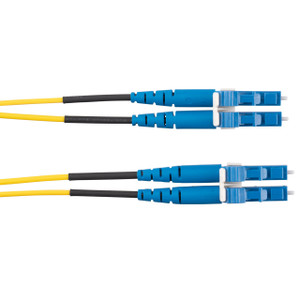
Hubbell HDFHPCLCPRPSM5 Single-Mode Duplex LC Plenum Fiber Patch Cord, 5 Meters
Overview
The Hubbell HDFHPCLCPRPSM5 is a 5-meter single-mode duplex fiber optic patch cord terminated with LC Push Rod connectors on both ends in a reverse-polarity configuration. The plenum-rated jacket makes it the correct choice for above-ceiling and air-handling space runs where building codes require low-smoke, low-flame materials — using a non-plenum cord in a plenum space is a code violation that can halt an inspection. The yellow jacket is the industry-standard color coding for single-mode fiber, making it immediately identifiable during moves, adds, and changes in dense fiber management environments.
Single-mode fiber carries optical signals over considerably longer distances than multimode alternatives and is the standard choice for backbone interconnects, campus links, and any run where future-proofing distance headroom matters. At 5 meters, the HDFHPCLCPRPSM5 targets equipment room cross-connects and patch panel-to-active-equipment jumps rather than long horizontal runs.
Key Features
- Plenum (CMP) Jacket: Rated for installation in air-handling spaces and above suspended ceilings. Code-compliant in environments where OFNP or CMP ratings are required — skip this if your run stays in conduit through non-plenum spaces and cost is a factor, since plenum-rated cable carries a price premium over riser-rated alternatives.
- Single-Mode Fiber: Supports transmission distances far exceeding multimode limits, making this the right medium for backbone interconnects between IDF and MDF closets, or wherever a future bandwidth upgrade to 10G, 40G, or 100G active equipment must be accommodated without re-pulling cable.
- Duplex Configuration: Two fibers in one cord handle simultaneous transmit and receive on separate strands — the standard topology for most active transceivers including SFP, SFP+, and QSFP modules.
- LC Push Rod Connectors: The Push Rod (also called LC Uniboot or push-pull) form factor allows connector extraction in densely populated patch panels without a latch tool or adjacent-port interference. High port-density fiber enclosures benefit directly — a standard LC latch requires clearance that push-pull connectors do not.
- Reverse Polarity: This cord swaps the A-to-B fiber alignment relative to a standard duplex patch cord. Reverse-polarity cords are used to correct polarity at cross-connect points without reterminating trunks — confirm your polarity scheme (TIA-568 Method A, B, or C) before ordering, as installing a standard cord where a reverse-polarity cord is required (or vice versa) produces a no-link condition that can be difficult to diagnose.
- 5-Meter Length: Sized for within-rack or rack-to-rack patch panel jumps in a standard equipment room. Verify slack management before ordering — too short creates tension on connectors; excess slack in a busy fiber tray creates congestion and bend-radius risk.
- Yellow Jacket: Industry-standard color identification for single-mode fiber per TIA-598. In mixed-fiber environments, yellow immediately distinguishes SM cords from OM3 (aqua) or OM4 (violet/magenta) multimode cords, reducing mis-patching errors during maintenance.
Integration and Compatibility
The HDFHPCLCPRPSM5 is compatible with any LC-receptacle SFP or SFP+ transceiver on single-mode-capable network switches, media converters, and fiber distribution panels. It is suited for use within fiber optic cabling infrastructure deployments alongside Hubbell structured cabling panels and enclosures. Confirm that active equipment transceivers are single-mode types (typically identified by a 1310nm or 1550nm wavelength laser, versus 850nm for multimode) before patching — connecting a single-mode cord to a multimode transceiver will not produce a usable link. For SFP transceiver selection guidance, cross-reference wavelength, reach, and connector type against the active equipment vendor's compatibility matrix. In security and surveillance backbone applications, this cord can interconnect fiber-capable network switches within an IDF stack or between distribution and core layers where copper reach limits have been exceeded.
Frequently Asked Questions
Q: What does "reverse polarity" mean on the HDFHPCLCPRPSM5, and when do I need it?
A: Reverse polarity means the A and B fibers are swapped relative to a standard duplex cord. It is used to correct polarity at cross-connect points in a fiber link — for example, when the trunk polarity scheme requires a swap at the equipment cord level to achieve end-to-end Tx-to-Rx alignment. Consult your polarity plan (TIA-568 Method A, B, or C) before ordering.
Q: Can I install the HDFHPCLCPRPSM5 in a plenum ceiling space?
A: Yes. The plenum-rated jacket is specifically designed and code-compliant for installation in air-handling spaces, including above suspended ceilings designated as plenum return-air plenums. This makes it suitable where local building codes mandate CMP or OFNP-rated cable.
Q: Will this patch cord work with multimode transceivers?
A: No. This is a single-mode fiber cord intended for use with single-mode transceivers (typically operating at 1310nm or 1550nm). Connecting it to a multimode transceiver (850nm) will not produce a functional link. Confirm your transceiver type before selecting this cord.
Q: What is the LC Push Rod connector, and why does it matter in dense panels?
A: LC Push Rod (push-pull) connectors allow extraction from high-density patch panels by pushing the connector body rather than pinching a small latch tab. In panels where adjacent ports leave no room for fingers, this significantly reduces the risk of accidentally disconnecting neighboring cords during maintenance.
Q: Is 5 meters the right length for my application?
A: Five meters is sized for within-rack and short rack-to-rack patch panel jumps in an equipment room. Measure your actual routed path including any overhead cable management before confirming length — fiber patch cords should not be stretched taut, but excessive slack in a fiber tray also creates bend-radius and congestion risks.
The detail I flag first on the HDFHPCLCPRPSM5 is the reverse-polarity designation combined with the push-pull LC connector — that pairing is not accidental. In high-density fiber enclosures where polarity corrections are needed, the last thing you want is a standard latch connector you can barely reach. This cord is clearly specced for structured, dense patch environments where both hands-free extraction and polarity management matter simultaneously.
Technical Highlights:
- Plenum (CMP) Jacket: Code-compliant for air-handling space installation — mandatory in most commercial above-ceiling runs; using riser-rated cable in a plenum space is a code violation that will fail inspection.
- LC Push Rod (Push-Pull) Termination: Allows single-handed connector extraction in fully loaded patch panels without a latch tool — directly reduces accidental adjacent-port disconnects during MACs.
- Reverse Polarity: Corrects A/B fiber swap at the equipment cord level without reterminating trunks — saves significant labor when a polarity error is discovered post-installation in a Method A or B scheme.
Deployment Considerations:
- Verify your active equipment transceivers are single-mode (1310nm/1550nm) before patching — this cord will not work with 850nm multimode SFPs regardless of connector fit.
- Reverse-polarity cords are a targeted fix, not a default substitute — deploy only where your polarity map confirms a swap is required at this cross-connect point, or you will create the same error you were trying to correct.
The HDFHPCLCPRPSM5 is the right pick for enterprise MDF/IDF cross-connect builds where high-density LC panels and plenum-space compliance both apply — particularly in new commercial construction where the polarity scheme is being set deliberately rather than inherited.