Panduit FOBKF72AM1 QuickNet 72-Fiber Multimode Breakout Kit
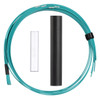
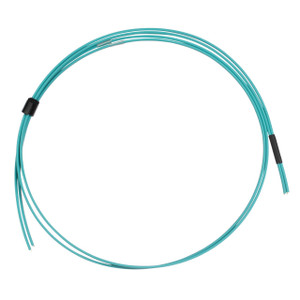
The Panduit FOBKF72AM1 QuickNet Fiber Optic Breakout Kit handles high-density fiber terminations in equipment rooms and datacenters where 72-fiber trunks feed surveillance NVRs, network switches, or storage arrays. This 1-meter flat-design kit fans out a single 72-fiber trunk cable into individually jacketed fibers for direct termination to patch panels or active equipment, eliminating the labor and error risk of field splicing. The aqua jacket identifies multimode fiber (OM3/OM4), and the flat profile minimizes vertical rack space consumption while improving airflow around densely packed cable bundles. Designed for integrators running backbone fiber between equipment closets or consolidating camera feeds in central monitoring stations.
Key Features
- 72-fiber capacity supports up to 36 duplex LC connections or 72 simplex links in a single breakout
- Flat cable design reduces bend radius stress and fits through tight conduit runs better than round equivalents
- 1-meter length ideal for rack-to-patch-panel transitions and intra-rack connections
- Aqua jacket per TIA-598-C identifies OM3/OM4 multimode fiber (850nm optimized for 10G/40G)
- QuickNet factory-terminated system eliminates field splicing, fusion equipment, and OTDR testing
- Individually buffered breakout legs allow independent routing to separate patch panels or equipment
- Compatible with Panduit FiberRunner and fiber management systems
- Ships in cartons of 10 kits for multi-rack deployments
Breakout kits solve the mismatch between high-fiber-count trunk cables and the discrete connections required at termination points. In surveillance installations, a 72-fiber trunk might carry feeds from 36 IP cameras (using duplex LC transceivers) back to a central NVR farm. Without a breakout kit, you'd splice each fiber pair individually inside a splice enclosure — a process requiring fusion splicers, cleaving tools, OTDR verification, and 4–6 hours of labor per trunk. The FOBKF72AM1 replaces that entire workflow with a factory-terminated assembly that connects in minutes. Each of the 72 legs terminates in a 900-micron tight-buffered fiber compatible with standard LC, SC, or ST connectors (connector type depends on your chosen Panduit cassette or adapter panel). The flat cable geometry keeps the breakout bundle under 0.4 inches thick, so it lies flat in cable trays and doesn't block airflow in vertical rack managers. Multimode fiber at 850nm supports 10GBASE-SR up to 300 meters (OM3) or 400 meters (OM4), which covers typical intra-building distances in campus security deployments or datacenter rows.
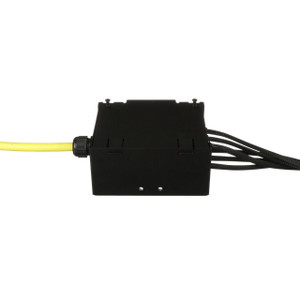
Installation typically places the breakout kit inside the equipment rack or wall-mount cabinet: the trunk end connects to your incoming fiber backbone (pulled from a remote MDF or building entry point), while the 72 fanned-out legs route to LC duplex cassettes in a patch panel. For a 36-camera system using duplex fiber, you'd populate two 1U 24-port LC panels and have room for 12 additional links. The 1-meter length assumes your patch panel mounts in the same rack as the breakout point; if you're bridging racks or need slack for future moves/adds/changes, Panduit offers 2-meter and 3-meter variants (FOBKF72AM2, FOBKF72AM3). The flat design's real advantage appears in high-density installs: stacking four 72-fiber breakout kits (288 fibers total) in a 42U rack consumes roughly 6U of vertical space when dressed properly, versus 10–12U for equivalent round-cable breakouts. This matters in datacenter security監控 rooms where you're competing for rack space with NVRs, network switches, and power distribution. The aqua color-coding also prevents cross-connections with single-mode trunks (yellow jacket) during maintenance — a critical safety feature when your surveillance backbone shares the same cable tray as building automation or access control fiber.
The QuickNet system's factory termination means every fiber is cleaved, polished, and insertion-loss tested before it ships — typical IL specs are ≤0.3 dB for multimode LC connectors. This eliminates the most common field failure mode (poor splice quality causing intermittent link drops), and you can verify end-to-end connectivity with a simple visual fault locator or power meter instead of renting a fusion splicer and OTDR. The kit ships with strain relief boots on each leg and a pulling grip on the trunk end; for permanent installations, secure the breakout point with Panduit's FiberGuide or NeTrack cable managers to prevent kinking during future cable adds. Each kit includes installation instructions with minimum bend radius callouts (typically 10× cable diameter during installation, 5× after dressing). Sold individually, packaged 10 per carton for large projects.