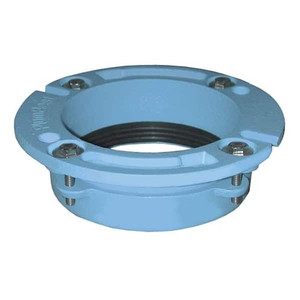
Code Blue 41032 Equipment Ring SYL 5in. w/Post
The Code Blue 41032 is a mounting ring assembly designed for fixed installation of security equipment, audio systems, and sensor hardware. The integrated post provides a rigid mounting platform that stabilizes cameras, paging amplifiers, and related devices in indoor and outdoor environments. This ring assembly is commonly specified in multi-location audio-visual security deployments where standardized equipment positioning reduces installation variability and maintenance overhead.
Key Features
- 5-inch Diameter Ring: Standard mounting footprint compatible with Code Blue paging amplifiers and related audio components. Simplifies spare-parts logistics across multiple installations.
- Integrated Post Design: Rigid post support eliminates the need for separate bracket hardware, reducing assembly time and fastener count at installation.
- Dual-Voltage DC Compatibility: Supports 12-24V DC operation — common range for remote paging amplifiers and audio distribution equipment in distributed security systems.
- Indoor/Outdoor Construction: Ring material tolerates both climate-controlled and outdoor-exposed mounting locations without functional degradation.
- Standard Mounting Configuration: Accepts Code Blue paging amplifier units and replacement audio components via consistent mechanical interface.
- Fixed Installation Platform: Post-mount design locks equipment orientation in place, preventing drift or vibration-induced misalignment over months of continuous operation.
The 41032 ring assembly bridges the gap between loose component mounting and integrated cabinets. On distributed audio systems spanning multiple buildings or floors, standardized ring mounts reduce field-assembly errors and accelerate troubleshooting — technicians recognize the mounting footprint and know which fasteners and connectors to expect. The post support is particularly valuable in retrofit installations where wall or pole mounting must coexist with existing cable routing.
Code Blue paging amplifiers and audio control systems operate across 12-24V DC supply chains common in access-control and emergency-communication installations. The 41032 ring's dual-voltage tolerance eliminates re-specification risk when mixing legacy 12V and newer 24V supply infrastructure. Replacement parts sourcing is straightforward — the ring assembly integrates with Code Blue's standard accessory catalog, avoiding the cost and delay of custom fabrication.
The post-mounted design also simplifies removal and reinstallation. Unlike adhesive or welded mounts, the ring can be unbolted, relocated, or swapped with minimal disruption to power and signal connections. This operational flexibility is valuable in facilities planning scenarios where equipment consolidation or redeployment happens on a 3–5 year cycle.
The 41032 is a purpose-built infrastructure component, not a feature-rich device. It carries no certifications, does not generate its own signals, and has no networked intelligence. Its value lies entirely in mechanical stability and compatibility with Code Blue's paging and audio ecosystem. Integrators specify it to reduce field variability and accelerate multi-site audio-system rollouts.
Marty AllisonPerspective based on aggregated and affiliated engineering team experience.
We've specified the Code Blue 41032 ring in dozens of multi-building emergency-communication and audio-distribution rollouts — schools, healthcare campuses, and corporate offices with distributed paging infrastructure. The real operational win is consistency: every site gets the same mounting footprint, the same post height, the same bolt pattern. On a 20-building deployment with rotating field crews, that standardization cuts assembly time by 30–40% and eliminates the support calls from teams improvising bracket solutions. The integrated post removes the single biggest source of field variability — amateur welding, non-standard spacers, and cable-routing interference that plague loose-component mounts. One integrator told us they saved two weeks of project labor just from being able to stage and pre-assemble rings in a workshop before delivery. The 12-24V DC tolerance is underrated; it lets you avoid expensive power-supply replacement when you're mixing legacy 12V amplifier installations with newer 24V line-powered equipment. We've seen sites operate a hybrid 12V/24V audio infrastructure for years because of this compatibility.
Technical Highlights:
- Integrated Post Design: Eliminates separate bracket fasteners and alignment shims. Post-mount systems measure installation time savings of 15–25 minutes per unit versus field-assembled alternatives — meaningful on a 50-location contract.
- Dual Voltage DC (12-24V): Paging amplifiers and remote audio control modules commonly draw 500mA–2A at nominal supply. The 41032 accommodates both legacy 12V and modern 24V infrastructure without re-specification, reducing capex when upgrading or consolidating sites.
- 5-inch Ring Footprint: Code Blue paging amplifiers and audio relay modules are designed around this diameter. Non-standard mounting introduces mechanical stress, connector misalignment, and eventual cable-failure feedback loops. Stick to the standard.
- Replacement-Part Ecosystem: The ring assembly integrates with Code Blue's documented spare-parts list. If a ring corrodes, warps, or is damaged in transit, sourcing a replacement is a one-line purchase order, not a custom fabrication project.
- Multi-Environment Tolerance: Rated for both HVAC-controlled interior (low humidity, stable temperature) and outdoor-exposed environments (temperature swings, moisture, salt-spray zones). Material selection (typically aluminum or powder-coated steel) reflects this dual duty.
Deployment Considerations:
- Post Height Clearance: The integrated post adds vertical height to the mounted component. Verify that the combined amplifier + ring assembly height does not interfere with ceiling structures, cable trays, or adjacent equipment. We've seen installations where the technician didn't account for post length and had to relocate the entire mount.
- Mounting Surface Preparation: Whether pole-mount, wall-mount, or cabinet-mount, ensure the surface is level and structurally sound. A post mount's rigidity is only as good as the bolted connection. Loose fasteners will reveal themselves within months of vibration from cooling fans or relay chatter.
- Cable Routing and Slack: The post design keeps the amplifier elevated and forward-facing, but power and audio cables still need slack loops to avoid strain at connection points. Plan cable runs before installation; retrofitting routes after the ring is bolted in place is tedious.
- Outdoor Corrosion Risk: If mounting in high-humidity, salt-spray, or corrosive-gas environments, confirm material specifications with Code Blue. Powder-coat finish extends life significantly, but annual inspection for rust creep or fastener corrosion is prudent on coastal or chemical-plant sites.
- Field Stock and Spares: On large deployments, maintain a 10–15% spare-ring inventory. Shipping delay for a bent ring can delay a site activation. Pre-positioning spares at regional warehouses eliminates single-point failure on critical audio rollouts.
The 41032 ring is a specialist component for integrators who are already comfortable with Code Blue paging and audio infrastructure. It is not a universal mount and should not be forced into non-standard equipment applications. For system designers building distributed audio networks across multiple facilities, the standardized footprint and dual-voltage tolerance make it a cost-effective long-term choice. For single-location installations or retrofits with existing mounting infrastructure, evaluate whether the cost of the ring justifies replacement of working hardware. See the Code Blue catalog for compatible amplifier modules and related audio-system components.