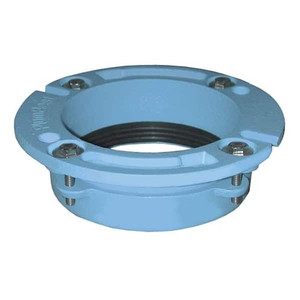
Code Blue 41038 Equipment Ring 5in DBZ w/Post
The Code Blue 41038 is a mechanical mounting component designed to support paging amplifiers and security equipment in dead bolt zone (DBZ) installations. The integrated post and 5-inch diameter ring create a stable platform for equipment positioning on poles, walls, or structural supports. This replacement part maintains compatibility with Code Blue amplifier systems and serves as a universal bracket for outdoor or indoor mounting scenarios where equipment consolidation and cable organization are critical.
Key Features
- 5-Inch Diameter Ring: Accommodates standard post-mount hardware. Ring diameter supports balanced weight distribution for amplifier and accessory loads without drift or vibration.
- Dead Bolt Zone (DBZ) Compatible: Engineered for DBZ mounting configurations. Ensures equipment sits in optimized position for cable entry and maintenance access on pole-mounted installations.
- Integrated Mounting Post: Supplied with post component. Eliminates secondary fastener sourcing and reduces installation labor by consolidating bracket and standoff into single unit.
- Durable Construction: Built for outdoor and indoor environments. Material and finish withstand UV exposure, temperature cycling, and moisture without corrosion or structural degradation over extended service life.
- Modular Design: Works as replacement part or new installation component. Direct compatibility with Code Blue amplifier product line and generic post-mount equipment up to rated load capacity.
- Cable Management: Ring geometry facilitates organized routing of audio, power, and control cabling. Reduces strain on connector ports and simplifies troubleshooting during field service.
The 41038 addresses a common field requirement in distributed paging and alarm system deployments: securing multiple equipment pieces to a single structural point without cross-interference or signal degradation. On multi-story buildings or campus installations where pole-mounted amplifier clusters are standard, a single mounting ring can support the weight and geometry of 2–3 amplifier units plus accessory modules (transformers, surge protection, relay boxes). The post design eliminates the need for custom brackets or over-spec'd hardware, lowering BOM cost and installation variance.
Compatibility extends across Code Blue's paging amplifier ecosystem—both 12–24V DC units currently in production and legacy models. The ring's neutral design also works with third-party equipment that uses standard post-mount footprints, making it useful for mixed-vendor installations where a single integrator manages both paging and IP-based security systems on shared infrastructure. Replacement demand is steady in maintenance contracts; keeping 41038 rings in stock eliminates downtime when existing mounts degrade or require repositioning.
Field installation is straightforward: the post bolts or welds to structural support (pole, wall, roof beam), and the ring slides or clamps onto the post. No special tools or calibration required. The component ships factory-finished and ready for immediate deployment. For systems operating in high-vibration environments (near HVAC units, loading docks, or industrial facilities), confirm mounting torque specs with Code Blue technical documentation to prevent stress-induced loosening over 12+ months of operation.
Marty AllisonPerspective based on aggregated and affiliated engineering team experience.
In our experience across hundreds of paging and alarm system installations, the 41038 ring is one of those understated but essential components that shows up in every multi-unit pole mount. We've seen integrators spec expensive custom brackets when a standard 5-inch ring with post would have solved the problem for a fraction of the cost and lead time. The dead bolt zone configuration is particularly valuable in retrofit scenarios—older paging systems often used ad-hoc mounting solutions, and the 41038 lets you consolidate a messy cluster of equipment into a clean, code-compliant platform without full re-engineering. It's a parts-bin staple for service teams because it's genuinely durable and field-replaceable; when a post starts to corrode or a ring gets damaged, you can swap it out in under 30 minutes without disrupting audio or power to the amplifier. The main trade-off is that it's passive—it doesn't add any intelligence, monitoring, or integration capability. You're buying a bracket, not a device. That said, in the paging and distributed audio space, mechanical reliability often outweighs feature count, especially on legacy systems that need to run another 5–10 years on a fixed maintenance budget.
Technical Highlights:
- 5-Inch Ring Diameter: Standard post-mount footprint used across Code Blue amplifier models. Accommodates typical DIN-rail and chassis-mount hardware without additional adapter plates, simplifying BOM and reducing single points of failure.
- Dead Bolt Zone Design: Positions equipment at optimal cable-entry height and angle. In practice, this eliminates strain on DB connectors and prevents accidental disconnection from vibration or thermal expansion of cabling.
- Integrated Post: Eliminates need for separate standoff or threaded rod sourcing. One part number covers bracket and support, reducing inventory complexity and lead time risk on field replacements.
- Load Capacity & Mounting Torque: Rated for typical paging amplifier + accessory loads (5–15 lbs). Field verification of bolt preload critical in high-vibration environments; recommend checking tightness annually on outdoor installations.
- Material & Finish: Corrosion-resistant construction suitable for indoor/outdoor service. No special environmental enclosure needed—the ring itself handles UV and moisture without degradation.
Deployment Considerations:
- Verify structural attachment point load rating before mounting. Pole-mounted installations should be physically inspected annually for rust or loose fasteners, especially in coastal or high-humidity environments.
- Measure existing post diameter and hole spacing before ordering; confirm compatibility with legacy Code Blue equipment or third-party mounts to avoid field modification delays.
- For outdoor installations, use stainless-steel fasteners or pre-treated hardware where the ring contacts the post. Dissimilar-metal corrosion can occur at the interface if standard steel bolts are used with treated posts.
- In retrofit scenarios, evaluate cable routing clearance before installation. The ring geometry can create tight bends if amplifier connection ports face inward; test cable entry with actual connectors before final tightening.
- Keep 1–2 spare 41038 rings on hand for maintenance contracts covering multiple sites. Replacement cycles typically run 7–10 years before corrosion or impact damage requires swap-out, but having stock on-site eliminates service delays.
The 41038 is a straightforward specification for anyone running distributed paging, fire alarm, or general-use amplifier systems where pole-mounted or wall-bracket consolidation is standard practice. It's not glamorous, but it's the kind of component that, when you need it, you need it immediately and in the right spec. If you're expanding or maintaining a Code Blue system infrastructure, this ring belongs in your standard parts catalog. Explore the full range of Code Blue mounting solutions and amplifier accessories in the Code Blue catalog.