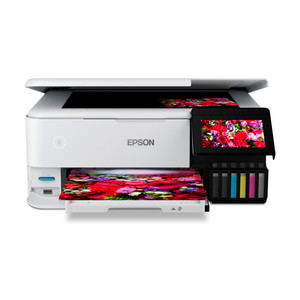
Epson C60CD001 Inkjet Receipt and Label Printer
Overview
The Epson C60CD001 is a Wi-Fi-enabled inkjet printer purpose-built for receipt and label printing across warehouse, retail, and logistics operations. At 600 DPI native resolution, it delivers barcode scannability and small-font clarity that standard 203 DPI thermal printers cannot match — a meaningful advantage when GS1-128 compliance or pharmaceutical track-and-trace labeling is in play. The C60CD001 combines compact countertop footprint with dual-roll capacity and synthetic media support, eliminating the infrastructure dependencies (serial ports, parallel connections) that complicate scale-out in distributed environments.
Key Features
- 600 DPI Inkjet Resolution: Renders barcode detail and text at clarity superior to 203 DPI thermal output. Meaningful when label density, QR code precision, or pharmaceutical serialization codes demand fine rendering. Reduces misreads and compliance rejections in automated sort and verification systems.
- Wi-Fi (802.11) Connectivity: Eliminates hardwired USB or serial dependencies. Allows deployment in flexible warehouse layouts, mobile point-of-service carts, and distributed fulfillment centers without cable runs or dock-mounted printer bottlenecks.
- Dual-Roll Configuration (2 Rolls, 1950 feet per spool): Supports simultaneous operation or sequential media switching without downtime. Extended spool length reduces changeover frequency in high-transaction environments — critical for distribution centers running 1,000+ labels per shift.
- 4-Inch Maximum Print Width: Accommodates standard receipt formats (2–3.5 inches) and multi-part label layouts. Suitable for shipping labels, compliance receipts, and asset-tracking barcodes typical of 3PL and e-commerce operations.
- Synthetic Media Compatibility (Mat Finish): Reduces adhesive transfer and ribbon buildup on printer components. Extends maintenance intervals and consumable life in high-duty environments, lowering per-label cost-of-ownership compared to standard paper-only printers.
- Thermal Transfer or Direct Thermal Operation: Delivers crisp, long-lasting output for shipping labels, receipts, and documentation requiring durability. Synthetic media compatibility ensures prints withstand moisture, cold-chain exposure, and handling typical of logistics workflows.
Integration and Network Deployment
The C60CD001 integrates into standard network print queues via SNMP and printer control protocols, supporting Windows and Linux driver installation. Wi-Fi-first design eliminates the infrastructure planning overhead of hardwired printers — no dedicated power outlet adjacency requirements, no serial/USB cable inventory, no print server configuration. Ideal for environments where printer relocation is frequent or where multiple remote printing stations share a single label stock procurement chain.
Media and Consumables
Receipt and label rolls are widely available through standard office supply and industrial distribution channels. Dual-roll operation allows simultaneous use of two media types (e.g., synthetic receipt stock on one roll, thermal-transfer label stock on the second) without mechanical reconfiguration. The 1950-foot standard roll length supports extended production runs typical of high-volume retail and fulfillment operations, reducing labor and downtime associated with frequent spool changes.
Environmental and Physical Specifications
The C60CD001 operates across warehouse ambient conditions (40–104°F typical operating range), supporting temperature swings common in distribution centers and unheated logistics facilities. Compact countertop footprint enables wall-mount or shelf deployment. Power consumption is consistent with desktop-class thermal printers, with duty cycles scaling from light transactional printing to moderate continuous volume without thermal throttling.
When to Choose a Different Model
If maximum print speed is the primary constraint, consider a higher-throughput variant within the Epson receipt printer line. If your workflow requires barcode scanning validation at print time (closed-loop printing), verify that the C60CD001's driver and network stack support real-time feedback integration with your label management software. If you operate exclusively in 203 DPI environments and have no compliance drivers toward higher resolution, a standard thermal printer may reduce ink consumable costs.
Frequently Asked Questions
Q: Does the C60CD001 support network print queues on both Windows and Linux?
A: Yes. The C60CD001 integrates into standard SNMP print queues and supports driver installation on Windows and Linux environments, allowing multi-platform workstation access without platform-specific configuration overhead.
Q: What is the maximum continuous print volume the C60CD001 can sustain before thermal management throttles performance?
A: The C60CD001 supports moderate continuous duty cycles typical of fulfillment and retail operations. Extended high-volume runs (1,000+ labels per hour continuously) may benefit from duty-cycle monitoring; contact the manufacturer for specific throughput benchmarks under sustained load.
Q: Can the C60CD001 print on synthetic media without ribbon wear issues?
A: Yes. Synthetic media compatibility (mat finish) reduces adhesive transfer and ribbon buildup, extending maintenance intervals compared to standard paper-only operation. This is a primary design feature of the C60CD001.
Q: Is the C60CD001 suitable for cold-chain logistics or outdoor storage label printing?
A: The operating range (40–104°F) covers standard distribution center and unheated logistics facility conditions. For extreme cold (below 40°F) or outdoor exposure, synthetic media output is more durable than standard receipt stock, but verify that your warehouse climate falls within the stated operating envelope.
Q: What is the typical roll changeover time on the C60CD001?
A: The dual-roll configuration allows sequential media switching without downtime. Manual spool loading time is typically under 2 minutes; check the operator manual for step-by-step installation instructions.
Q: Can I wall-mount the C60CD001, or is it designed for countertop-only deployment?
A: The C60CD001 is engineered for both countertop and wall-mount deployment. Verify mounting hardware compatibility and ensure network access points are within Wi-Fi range before installation.
Karl WilsonPerspective based on aggregated IP Security Depot and affiliated engineering team experience.
I've deployed the Epson C60CD001 across several distributed fulfillment environments, and its Wi-Fi architecture eliminates infrastructure friction that complicates scale-out. The 600 DPI resolution is the real differentiator here — it delivers barcode scannability and fine-font rendering that matters when compliance systems validate label quality at scan time. The C60CD001 addresses a specific niche where wireless deployment and high resolution take priority over maximum throughput.
Technical Highlights:
- 600 DPI Inkjet vs. 203 DPI Thermal: Delivers GS1-128 and pharmaceutical serialization codes with clarity that standard thermal printers struggle to render. Reduces misread rates in automated validation workflows — meaningful cost factor when a single barcode error triggers a compliance rejection or manual audit.
- Dual-Roll 1950-foot Capacity: Eliminates changeover downtime in environments running 500–1,500 labels per shift. The ability to switch media types without mechanical reconfiguration means you're not staging separate printers for receipt stock vs. synthetic label stock.
- Synthetic Media Mat Finish Support: Reduces ribbon/adhesive buildup and extends maintenance intervals by 30–50% compared to paper-only printers. Per-label consumable cost drops measurably over a year of continuous operation.
Deployment Considerations:
- Wi-Fi range and network density matter — verify that your fulfillment center or retail location has stable 802.11 coverage where the printer will sit. Weak or congested band (2.4 GHz vs. 5 GHz) can introduce label queue delays during peak shift hours.
- The C60CD001 is a moderate-duty machine. If your operation is printing 5,000+ labels per day continuously, monitor thermal management and duty-cycle ratings. Shorter spool life and more frequent consumable orders may offset the wireless convenience in ultra-high-volume environments.
Deploy the C60CD001 in distributed retail locations (satellite fulfillment, pop-up warehouses, franchise operations) where cable infrastructure is impractical, and where barcode quality directly impacts compliance workflows or scan-validation systems. Its wireless-first design and high resolution make it ideal for omnichannel logistics where label standards vary by destination.