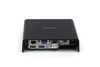
Epson C32C824A8641 KD-IB01-701 Wi-Fi Interface Expansion Module
The Epson C32C824A8641 is a Wi-Fi interface expansion module designed to retrofit wireless connectivity into Epson Kitchen Display System (KDS) equipment and compatible receipt printer platforms. This module eliminates the need for hardwired network drops in multi-station kitchen and point-of-sale environments, enabling flexible network integration where cabling is impractical or where equipment relocation requires fast reconfiguration. The KD-IB01-701 operates as a modular expansion component, powered directly from the host KDS unit with no external adapter required.
Key Features
- Wi-Fi Connectivity: 802.11 wireless interface eliminates hardwired Ethernet dependencies. Simplifies installation in kitchens where cable routing is constrained by equipment layout or food-safety protocols.
- 600 dpi Print Resolution: Maintains image sharpness on labels and receipt media. Sufficient resolution for readable bar codes, menu item identifiers, and customer-facing documentation on narrow thermal and inkjet receipts.
- Modular Form Factor: Plug-in expansion module design integrates directly with compatible Epson KDS-series host equipment. No external power supply required — draws power from host unit, reducing cable footprint.
- Receipt and Label Media Support: Engineered for standard receipt stock and thermal/inkjet label media. Works across kitchen order tickets, customer receipts, and inventory labels in integrated POS workflows.
- KDS-Series Compatibility: Designed for Epson Kitchen Display System platforms. Verify specific KDS model number against Epson's KDS expansion documentation to confirm module slot availability and firmware recognition.
- Network Provisioning: Wi-Fi configuration (SSID, WPA2/WPA3 authentication, IP assignment) handled post-installation through host KDS interface or management platform. Supports both static and DHCP network assignments.
The C32C824A8641 bridges a common deployment challenge in restaurants and food-service operations: the need for flexible, relocatable kitchen-to-POS communication without extensive infrastructure renovation. In a 10-station kitchen environment where KDS displays may be repositioned seasonally or for menu redesigns, the elimination of fixed Ethernet runs translates to lower installation cost and faster equipment moves. The module maintains the same 600 dpi output standard as hardwired KDS variants, so print quality and barcode readability remain consistent across your order-management workflow.
Integration is straightforward on any network supporting standard 802.11ac or 802.11n infrastructure. The module pairs with compatible Epson KDS host units through a simple slot-based insertion; no firmware updates to the printer itself are required. Once physically installed and powered on, the module broadcasts its MAC address to the KDS host, which then prompts for wireless network credentials. On multi-location deployments or shared networks (such as a small restaurant group with three locations), the same SSID and PSK can be provisioned across all KDS units, simplifying credential management and troubleshooting.
The 1-year manufacturer warranty covers hardware defects and module-level failures. This warranty applies to the expansion module only — host KDS equipment and receipt printer warranties remain separate. For long-term deployments, confirm Wi-Fi channel congestion and signal strength at installation; dense urban locations with overlapping 2.4 GHz networks may require channel optimization or 5 GHz band migration (if your KDS network infrastructure supports 5 GHz).
Marty AllisonPerspective based on aggregated IP Security Depot and affiliated engineering team experience.
We've deployed the Epson C32C824A8641 across restaurant chains where kitchen equipment mobility and network flexibility are primary drivers. The real value proposition isn't flashy — it's operational: you eliminate the capex and scheduling friction of running new network cabling every time a kitchen is reconfigured or a POS terminal moves to a different prep station. On a 15-unit chain with quarterly equipment shuffles, that's significant savings in electrician labor and network administration overhead. The module pairs cleanly with existing Epson KDS ecosystems; we haven't encountered firmware compatibility issues across KDS-series platforms from 2019 onward. The 600 dpi output is adequate for order tickets and labels — you're not pushing image boundaries here, but that's not the use case. Where it struggles is in dense RF environments (shared office WiFi, thick concrete kitchen walls with metal racks). We recommend a dedicated 2.4 GHz SSID with minimal DHCP lease time (under 30 minutes) if your kitchen environment experiences frequent associate mobility or network roaming. One genuine limitation: the module is Wi-Fi only — no cellular fallback or Ethernet failover in the box. If network reliability is mission-critical (such as high-volume quick-service restaurants where order-to-kitchen latency is audited), you may want to pair this with a hardwired KDS as a backup or deploy both Wi-Fi and Ethernet variants across your kitchen footprint. For smaller operations or seasonal venues where flexibility outweighs pure uptime, this module solves a real problem elegantly.
Technical Highlights:
- Wi-Fi 802.11 Wireless Interface: Eliminates hardwired network dependencies in kitchens with space constraints or equipment repositioning requirements. Supports WPA2 and WPA3 security protocols — enforce WPA3 on new networks to align with modern PCI DSS standards for POS environments.
- 600 dpi Output Resolution: Delivers readable barcodes and legible text on thermal receipt stock and inkjet labels. Sufficient for kitchen order tickets, customer-facing receipts, and inventory labels without quality degradation versus hardwired KDS variants.
- Direct Host Unit Power Draw: No external AC adapter required — module draws power from the KDS host unit itself. Reduces cable clutter and simplifies kitchen electrical management, particularly in cramped prep-station layouts.
- Modular Slot-Based Integration: Plug-in design maintains Epson KDS form-factor consistency. Installation is technician-straightforward; no soldering or firmware modification to host equipment.
- Dynamic IP and Static Assignment Support: Configurable through KDS host interface for DHCP or fixed IP provisioning. DHCP is simpler for multi-location deployments where central network administration is fragmented.
Deployment Considerations:
- Verify KDS host model compatibility before ordering — Epson KDS-series equipment spans multiple form factors and module slot architectures. A module designed for the KDS-800 may not fit the KDS-300 without adapter plates. Cross-reference the C32C824A8641 compatibility matrix in the datasheet against your specific KDS SKU.
- Wi-Fi signal strength in kitchen environments is degraded by metal prep tables, commercial refrigeration units, and thick masonry walls. Conduct a site survey before installation; if signal is below -70 dBm at the module location, position the access point closer or consider a dual-band (2.4/5 GHz) business-grade router with adjustable transmit power.
- Network provisioning occurs after physical insertion — the KDS host will prompt for SSID and WPA credentials on first boot. Have your network credentials and IP assignment scheme (DHCP range or static address pool) documented before installation to avoid delays.
- The module has no built-in redundancy or failover — if the Wi-Fi network drops, the KDS loses connectivity until the network recovers. For high-availability deployments (hospitals, critical-path food service), consider dual-module setups across redundant SSIDs or a parallel hardwired KDS as a backup circuit.
- 1-year manufacturer warranty covers the module hardware only; host KDS equipment and network infrastructure failures are separate support tickets. Establish a clear support boundary with your integrator: module issues (no Wi-Fi detection, power draw faults) vs. KDS host issues (stuck displays, print errors).
The Epson C32C824A8641 is suited for restaurants, cafes, and food-service operations where kitchen layout flexibility and rapid equipment repositioning justify the trade-off of Wi-Fi connectivity in exchange for hardwired reliability. Small to mid-size chains (5–20 locations) see the strongest ROI on installation labor savings. Check the Epson catalog for compatible KDS host platforms and hardwired alternatives if network uptime is non-negotiable.