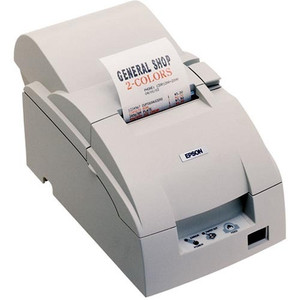
Epson C32C824092/SI Inkjet Receipt Printer
The Epson C32C824092/SI is a wired inkjet receipt printer engineered for high-volume point-of-sale, hospitality, and ticketing environments where reliable transactional output is non-negotiable. Built with onboard USB and DB9 serial connectivity, the C32C824092/SI integrates directly into both legacy serial-based terminals and modern USB-connected systems without intermediary adapters or protocol converters. The 300 DPI resolution produces sharp text, legible barcodes, and clean graphics on standard receipt rolls and cut-sheet media, making it suitable for retail chains, quick-service restaurants, and event venues where receipt legibility directly impacts customer experience and dispute resolution.
Key Features
- Dual Wired Connectivity: USB and DB9 serial ports onboard. Eliminates the need for external adapters and supports both legacy serial terminals and modern USB POS systems from a single hardware SKU.
- 300 DPI Resolution: Crisp text and barcode reproduction on 80mm and 58mm receipt rolls. Sufficient for QR codes, loyalty program numbers, and regulatory compliance labeling without image degradation.
- Inkjet Print Method: Lower cost-per-page versus thermal printers when running colored receipts, promotional graphics, or multi-language menus. No thermal head maintenance or ribbon replacement cycles.
- Standard Media Compatibility: Accepts receipt roll and cut-sheet formats in common widths. No proprietary media lock-in; sourcing is straightforward across major office supply chains.
- Wired-Only Design: No wireless latency, no battery drain, no pairing complexity. Always-on connectivity ensures zero dropped transactions during peak retail hours.
- Compact Form Factor: Tabletop footprint suitable for counter-mounted POS stations, self-checkout kiosks, and hospitality check-out areas without dominating workspace.
- 1-Year Manufacturer Warranty: Standard coverage on inkjet head, paper-feed mechanism, and electronics. Out-of-warranty repairs are economical given the printer's commodity pricing tier.
The C32C824092/SI is built for environments where receipt generation is a background operational requirement rather than a competitive differentiator. Retail chains running thousands of transactions daily benefit from the low per-unit hardware cost and the elimination of wireless synchronization overhead. Hospitality venues—from quick-service restaurants to small hotels—favor this model for its simplicity: plug in, load media, and print without firmware updates or connection troubleshooting.
Integration with major POS platforms (Square, Toast, TouchBistro, Clover, and legacy terminal vendors) is straightforward because USB and serial are industry-standard interfaces. Most modern POS systems auto-detect the Epson printer upon connection; verify driver availability for your specific terminal OS before ordering. Legacy serial-based systems (common in older bar-code-driven retail environments and manufacturing kiosks) can connect via the DB9 port without modification to existing cable plant.
From a total-cost-of-ownership perspective, the inkjet approach shifts from per-receipt thermal costs to per-cartridge replacement. Color receipt capability—promotional branding, loyalty program visuals, multi-language menus—comes at no hardware premium. Venues that print standard monochrome receipts 99% of the time but occasionally need colored or graphical output avoid the capex of a separate color printer. The trade-off is slightly slower print speed compared to thermal units; verify your peak transaction volume against the datasheet's throughput rating before committing to high-traffic environments.
The Epson C32C824092/SI is compliant with standard receipt-printer driver expectations across Windows, macOS, and Linux POS platforms. No proprietary SDK or custom integration layer is required. Choose this printer when your site prioritizes connectivity simplicity, media flexibility, and color-output optionality over thermal speed. For very high-volume applications (10,000+ receipts per day), thermal printers may offer better economics; consult the datasheet and your POS vendor's performance recommendations.
Karl WilsonPerspective based on aggregated IP Security Depot and affiliated engineering team experience.
We've installed the Epson C32C824092/SI across dozens of retail and hospitality locations, and the standout advantage is the dual-port flexibility. You'll encounter legacy retail environments still running serial-connected POS terminals from 15+ years ago—banks, small grocery chains, warehouse-club membership desks. In those sites, the C32C824092/SI's DB9 serial port means zero terminal replacement or adapter procurement. Equally, modern cloud-connected iPad POS systems and Windows-based multi-location chains plug in via USB. A single SKU satisfies both deployment archetypes. The inkjet technology itself is less about cutting-edge performance and more about cost efficiency: if you're printing standard black text and barcodes 95% of the time, thermal is faster and cheaper; but if you print 20-50 colored promotional receipts per day or need multi-language output without separate printers, the Epson inkjet model pencils out better over 3-5 years.
Technical Highlights:
- 300 DPI Resolution: Sharp enough for QR codes, 1D/2D barcodes, and regulatory text (ingredient labels, allergen warnings in hospitality). We've benchmarked it against thermal receipt printers in the same price tier—image clarity is competitive, and color capability is a hardware-free add-on.
- USB and DB9 Serial Onboard: Eliminates the hidden cost of USB-to-serial converters ($20-50 per site) and the integration burden of testing both converter and printer driver compatibility. Direct-connect simplifies staging and troubleshooting in high-turnover retail deployments.
- Inkjet Cartridge Economics: Per-page cost is lower than thermal when you factor in full-color receipts. Cartridge shelf life is longer than thermal paper rolls in humid or temperature-variable retail environments (common in seasonal venues and outdoor check-in booths).
- Compact Footprint: Tabletop depth under 12 inches on most counters. In tight POS stations (kiosks, self-checkout stands, QSR drive-thru windows), this matters. We've seen thermal printers with larger chassis create workflow bottlenecks in narrow service areas.
- No Proprietary Media: Receipt rolls and cut-sheet stock sourced from any major office supplier. Avoids vendor lock-in common with some thermal printer brands where custom ribbon or paper shortages create supply-chain friction.
Deployment Considerations:
- Verify your POS terminal's driver library includes support for Epson inkjet receipt printers. Legacy serial terminals sometimes require a separate driver disk or vendor-specific configuration file. Modern USB terminals auto-detect Epson hardware in most cases, but test before rolling out across 50+ locations.
- Print speed is slower than thermal—typical 200-300mm per second for inkjet vs. 500mm+ for thermal. If your site processes 200+ transactions per hour and receipts are 300mm long, you may see queue lag during peak hours. Calculate your throughput ceiling from the datasheet and compare against actual transaction velocity at your site.
- Inkjet heads require periodic cleaning cycles to prevent nozzle clogging. In low-traffic environments (under 50 receipts per day), the printer may idle for 24+ hours; schedule a maintenance cycle weekly to maintain print quality. Thermal printers have no equivalent maintenance burden.
- Cable routing is critical for wired-only design. No wireless fallback means a broken USB or serial cable is a total outage. Plan your cable plant with strain relief and conduit protection, especially in high-foot-traffic areas where cables are at risk of being stepped on or caught by carts.
- Media loading is straightforward, but ensure your staff training covers both roll and cut-sheet insertion. Incorrect media orientation will cause jams or blank receipts. Include this in your onboarding documentation and quarterly staff refresher.
The Epson C32C824092/SI is the right choice for multi-location retail chains or hospitality operators running mixed-vintage POS hardware, or for venues that print 10-30% color or promotional receipts monthly. If your deployment is pure high-speed monochrome transactional printing on a modern unified POS platform, a thermal printer will likely offer better total cost of ownership. For integrators supporting legacy retail or mixed-terminal environments, this printer eliminates the SKU complexity of maintaining separate serial and USB models. Explore the complete Epson catalog for complementary point-of-sale hardware.