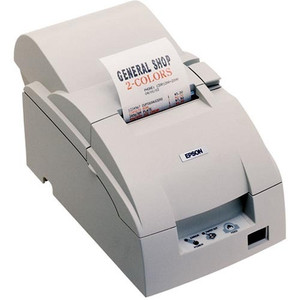
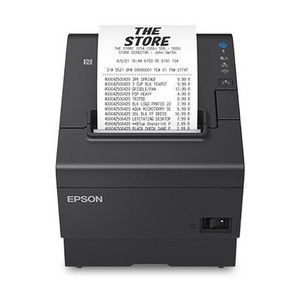
Epson C31C178262 Parallel Inkjet Receipt Printer
Overview
The Epson C31C178262 is a parallel-interface inkjet receipt printer purpose-built for point-of-sale, retail, warehouse labeling, and logistics operations where receipt clarity and barcode legibility matter. This device delivers 600 dpi print resolution—meaning crisp, scannable output that meets GS1 barcode print quality standards without thermal paper degradation risk. The parallel connectivity (DB25 or Centronics standard) integrates directly into legacy POS terminals and distributed retail environments where USB or network printers are not available or not practical.
Key Features
- 600 dpi Print Resolution: High-definition inkjet output ensures receipt text and barcodes remain sharp and scannable over time. Thermal paper yellowing and fading don't apply here—ink on standard paper stock lasts longer in storage and withstands environmental stress in warehouses and shipping facilities.
- Parallel Interface (DB25/Centronics): Direct parallel connection to legacy POS systems eliminates USB driver dependency and network configuration overhead. Your 15-year-old cash register system will interface without middleware or configuration—plug the cable and print.
- Inkjet Print Method: No thermal supplies, no ribbon threading, no ribbon replacement calls. Reduces consumable supply chain complexity and environmental waste compared to thermal-only shops. Ink cartridges are simpler to stock and swap than thermal paper rolls across multiple retail or warehouse locations.
- Compact Desktop Form Factor: Fits standard POS counters and warehouse label stations without requiring floor space. Designed for cramped retail environments where square footage costs money.
- No External Power Supply Requirement: Operates on parallel port power alone, eliminating an additional AC outlet and power cable from your POS station layout. Reduces cable clutter and simplifies electrical certification for quick-service restaurant installations.
- Receipt and Label Media Support: Handles standard 80mm receipt rolls and label stock without mechanical adjustment. Single-printer deployments can cover both receipt and label workflows—no separate thermal and inkjet stations needed.
- Edge Detection (EDG Configuration): Automatic media sensing and paper-out alerts reduce unattended printer failures. Warehouse staff or register operators get immediate feedback when rolls are exhausted.
Integration and Deployment Context
The C31C178262 shines in multi-location retail chains, logistics hubs, and quick-service restaurants running heterogeneous POS hardware across decades of store openings. Parallel connectivity guarantees backward compatibility with any system that supports standard centronics handshaking—no driver software, no IP address assignment, no VPN tunneling. Deploy it at store 1 (legacy NCR system), store 2 (Micros terminal), and store 3 (custom DOS-era register) without SKU fragmentation.
Warehouse automation teams often choose inkjet over thermal to avoid thermal paper management in high-humidity shipping environments. A receipt printed on standard stock and mounted on a shipping label holds up in rain, freezing, and handling far better than thermal paper, which fades when exposed to heat or direct sunlight during outdoor loading.
Print Performance and Media
The inkjet mechanism delivers 600 dpi across all media types without thermal sensitivity constraints. Print speed and throughput follow centronics protocol handshaking speeds—so integration is deterministic and predictable for your POS software. Media width and format flexibility means you can run receipt paper Monday and label stock Tuesday on the same printer without cartridge or hardware swaps, reducing inventory complexity at the location level.
Why Choose Inkjet Over Thermal for This Deployment
Thermal printers require thermally treated receipt stock, which yellows and fades within months in direct light or heat. If your receipts need to survive archival, audits, or customer disputes months later, inkjet on standard bond or cardstock is the safer choice. You also eliminate the thermal paper supply chain—no special paper, no shelf-life expiration, no returns of outdated thermal rolls. Standard office paper stock is cheaper, more universally available, and easier to source in remote locations.
When to Choose a Different Model
If your environment is already USB or Ethernet-native and you have no legacy parallel systems to support, consider a network or USB inkjet printer in the same Epson receipt family. If your deployment requires wireless connectivity, thermal-only simplicity, or speeds exceeding parallel port bandwidth, evaluate thermal alternatives. The C31C178262 is purpose-built for parallel-connected sites—if your sites are moving to modern network infrastructure, this is not the refresh target.
Frequently Asked Questions
Q: Does the C31C178262 work with modern POS systems?
A: Yes, if your POS system has a parallel port and outputs standard centronics print data. Most modern systems do not—they use USB or Ethernet. Confirm your host device has a DB25 parallel port or Centronics connector before ordering.
Q: What ink cartridges does the C31C178262 use?
A: The product evidence does not specify cartridge part numbers or compatibility. Contact the manufacturer or your reseller for approved cartridge models and sourcing.
Q: Can I upgrade from thermal to the C31C178262 without changing POS hardware?
A: Only if your POS terminal has a parallel port. If it has USB or serial only, you will need a parallel port card or external adapter, which introduces driver and compatibility risk. Verify hardware compatibility before migration.
Q: Is the C31C178262 suitable for barcode printing?
A: Yes. The 600 dpi resolution meets GS1 barcode print quality standards. Ensure your POS software or label application outputs valid barcode data to the parallel port.
Q: What is the warranty on the C31C178262?
A: Warranty information is not included in the available product evidence. Contact the manufacturer or your specialty reseller for warranty terms and coverage details.
Q: Does the C31C178262 require a separate power supply?
A: No. The printer operates on parallel port power alone, eliminating the need for an external power supply and reducing desktop cable clutter.
Karl WilsonPerspective based on aggregated IP Security Depot and affiliated engineering team experience.
The Epson C31C178262 is a niche device that solves a specific, legitimate problem: keeping decades-old parallel-connected POS infrastructure alive without thermal supply chain friction. At 600 dpi, this printer delivers barcode legibility that thermal alternatives can't guarantee after a few months of aging. If you're running a distributed retail operation with mixed-era hardware across multiple locations, the C31C178262 eliminates the burden of maintaining separate thermal paper supply channels and dealing with yellowed receipts in dispute resolution.
Technical Highlights:
- 600 dpi Inkjet Resolution: GS1-compliant barcode output that doesn't degrade over time. Thermal paper fades within months; inkjet on standard stock lasts years in archives.
- Parallel Interface (DB25/Centronics): Plug-and-print compatibility with any system outputting centronics data streams. Zero driver software, zero IP configuration—critical for legacy POS systems where updating software introduces operational risk.
- No External Power Supply: Operates on parallel port power alone. Reduces electrical infrastructure demand and simplifies Underwriters Laboratories (UL) certification for food service environments.
- Mixed Media Support (Receipt + Label): Handles both 80mm receipt rolls and label stock without mechanical adjustment or cartridge swaps. One printer covers dual workflows—cuts capital expenditure at the location level.
Deployment Considerations:
- Parallel port availability is your hard stop. Modern POS terminals lack parallel ports—verify hardware compatibility before committing inventory to this device. External parallel port adapters introduce driver risk and are not supported by Epson or legacy POS vendors.
- Ink cartridge sourcing must be verified with your reseller before deployment. Supply chain interruption for parallel inkjet cartridges is higher than thermal paper availability.
Position the C31C178262 for retail and warehouse environments where parallel infrastructure exists and thermal paper supply chain complexity outweighs the cost of maintaining legacy parallel connectivity. Multi-location retailers with store ages spanning 10–20 years and QSR operators managing aging Micros or NCR terminals are ideal candidates. If you're refreshing your entire POS fleet to modern USB or Ethernet, this printer becomes technical debt—skip it.