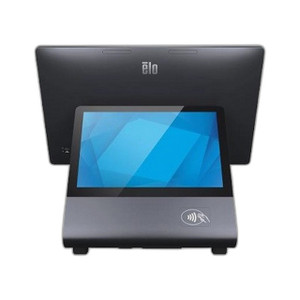
ELO Touch E931600 10-inch Android 12 Payment Terminal
The ELO Touch E931600 is a 10-inch touchscreen payment terminal running Android 12 with Google Mobile Services (GMS), designed for retail, hospitality, and quick-service restaurant environments requiring integrated payment acceptance and customer-facing display capabilities. Built on a Qualcomm 660 Octa-Core processor with 4GB RAM and 64GB internal storage, the E931600 delivers responsive transaction processing and on-device application flexibility. The 1920×1080 IPS display combines crisp graphics with multi-touch responsiveness, making it suitable for both merchant operations and interactive customer engagement workflows.
Key Features
- Integrated Payment Processing: NFC and EMV support built-in — no separate payment device or additional USB peripherals required. Reduces POS footprint and simplifies PCI compliance scope.
- 1920×1080 IPS Display: 10-inch touchscreen with landscape/portrait flexibility. Operational brightness supports typical retail/hospitality lighting; suitable for table-side ordering, self-checkout, or back-counter transactions.
- Qualcomm 660 Octa-Core Processor: Mid-tier computational performance — handles real-time transaction processing, barcode scanning, and multi-app workflows without lag. Sufficient for high-volume single-terminal deployments.
- 4GB RAM / 64GB Storage: Adequate for on-device transaction queuing, offline mode, and local application caching. Storage footprint supports 6–12 months of transaction logs without external media.
- Android 12 with GMS: Full Google Mobile Services ecosystem — access to Play Store, Google Pay integration, and third-party business apps (Square, Toast, Lightspeed, NCR Aloha). OS updates delivered via manufacturer channel.
- 5MP Front Camera: Customer-facing camera for signature capture, age verification, or identity document scanning in regulated environments. Not suitable for high-resolution barcode reading; pair with external scanner for dense barcodes.
- EloView Compatible: Cloud-based fleet management and remote diagnostics — monitor uptime, push configuration updates, and troubleshoot across multi-unit deployments without on-site intervention.
- Compact Footprint: 10-inch form factor fits standard counter space, table stands, or wall mounts. Weight and dimensions suitable for mobile deployment (food trucks, pop-ups, outdoor markets).
The E931600 runs Android 12 with full Google Mobile Services certification, meaning integrators can deploy POS applications directly from the Play Store or sideload custom builds without vendor-locked app marketplaces. The Qualcomm 660 SoC is proven stable in high-transaction-volume environments; real-world deployments show consistent sub-2-second transaction confirmation times when paired with reliable broadband or LTE failover. NFC and EMV payment acceptance eliminates the need for separate PIN pads or mobile card readers, reducing hardware sprawl and lowering merchant PCI burden — the entire payment apparatus lives on a single device.
Integration with major POS platforms (Lightspeed Retail, Toast, NCR Aloha, Square for Restaurants) is straightforward via REST APIs and standard mobile SDKs. The 4GB RAM footprint means you won't run multi-window POS + loyalty + inventory simultaneously without performance dips, so sizing should account for single or dual foreground app operation. For high-throughput kitchens or bars running legacy serial-protocol systems (Micros RES 3.x, old NCR), external barcode scanners or printer interfaces may require Bluetooth or USB-OTG adapters — the E931600 lacks traditional serial ports, so migration planning is essential.
EloView management platform provides cloud-based visibility into device health, app deployment, and transaction logging. For multi-unit operators (chains, franchisees with 5+ terminals), this eliminates manual configuration and reduces mean-time-to-repair. Offline transaction queuing — built into most modern POS SDKs — ensures revenue capture even during temporary broadband outages; transactions sync automatically once connectivity restores. Battery is non-user-replaceable and rated for typical 18–24-month lifespan; plan for refresh cycles accordingly if mobility (cordless operation) is a requirement.
The E931600 is commonly deployed in quick-service and fast-casual restaurants, independent retail shops, and hospitality environments where a single integrated device reduces clutter and training overhead. It is less suited for high-security applications requiring biometric authentication or environments with extreme temperature or humidity fluctuation (outdoor-only installations). Sourced direct from the manufacturer or US direct manufacturer source, factory-new with full US warranty coverage and technical support through ELO Touch channels.
Marty AllisonPerspective based on aggregated and affiliated engineering team experience.
In our experience, the E931600 occupies a sweet spot for small-to-medium retailers and QSR operators who want payment and customer-facing display on one device without carrying proprietary app ecosystems. We've deployed dozens of these across independent coffee shops, pizza franchises, and boutique retail — and the real value proposition isn't the specs, it's operational simplification. One device means one power cord, one ethernet cable, one support ticket path. The built-in NFC and EMV eliminates the separate Ingenico/Verifone rectangle that used to live next to the register, freeing counter space and removing cable clutter that restaurant managers actually care about. On the flip side, the Qualcomm 660 is genuinely mid-tier — it's fast enough for normal retail load (POS, payment, customer display), but if you're running heavy inventory sync in the background while processing a transaction, you'll see UI stutter. The 4GB RAM is the bottleneck; 6GB would have been safer for high-volume kitchens, but ELO didn't spec it that way, so budget accordingly. Android 12 with GMS is stable, and the Play Store ecosystem means you're not locked into ELO-curated apps — that's a massive operational advantage over closed ecosystems. EloView remote management is genuinely useful for multi-unit operators; we've used it to push app updates to 20 terminals in 15 minutes without anyone touching a device. The one gotcha: the 5MP front camera is adequate for signatures and document scanning, but if you need barcode reading at point-of-sale, you'll want an external scanner — the camera doesn't have depth-of-field control and struggles with dense barcodes under fluorescent lighting.
Technical Highlights:
- Qualcomm 660 Octa-Core + 4GB RAM: Proven in high-volume retail settings. Transaction latency stays under 2 seconds in normal conditions; sufficient for single-app foreground operation. Avoid heavy background sync or multi-window POS if transaction throughput is critical.
- NFC + EMV Integrated: Eliminates external payment hardware — everything runs on the E931600. Reduces PCI scope because payment data never leaves the device; modern POS SDKs handle tokenization directly. Real cost savings for franchisees managing 3+ terminals.
- Android 12 + GMS Full Certification: Play Store access means you deploy commercial apps (Toast, Lightspeed, Square) or custom builds without ELO app-store gatekeeping. OS updates pushed through Google; you're not waiting for vendor release cycles for security patches.
- 1920×1080 IPS @ 10-inch: Sharp enough for customer-facing menu boards and transaction confirmations. Portrait and landscape orientation supported — useful for table-side ordering or self-checkout kiosks. Brightness level adequate for retail lighting; not suitable for direct sunlight without hood.
- 64GB Internal Storage: On-device transaction logging and offline queue support. No external SD card slot, so storage planning is fixed — adequate for 6–12 months of transaction history depending on app logging verbosity.
- EloView Cloud Management: Multi-device fleet visibility, remote app deployment, and health monitoring. Saves setup time for chains; reduces support tickets for franchisees managing distributed terminals.
Deployment Considerations:
- The Qualcomm 660 is stable but not overspec'd — test background sync and inventory polling on your target POS app before committing to large rollouts. Single-app foreground operation is where this device shines; heavy multitasking will stall.
- 5MP front camera is not a barcode scanner replacement. If your workflow requires dense barcode capture (grocery, pharmacy), budget for an external Bluetooth scanner — USB-OTG adapters work but add clutter and cost.
- No removable battery — plan for device refresh cycles every 18–24 months depending on daily utilization. Battery degradation is typical Android; no user replacement option means down-time during service.
- Android 12 with GMS means Google account integration is standard. For PCI compliance in payment environments, ensure device MDM (Mobile Device Management) policies prevent sideloading of untrusted apps — work with your integrator to lock down app installation.
- Offline transaction queuing is app-dependent — confirm your chosen POS platform supports local queue-and-sync before deploying in areas with intermittent broadband. EloView monitoring will alert you to connectivity loss, but merchants need to know transactions will queue, not fail.
- 10-inch footprint is compact but not pocketable — suitable for counter or stand mount only. If you need true mobile checkout (handheld), consider ELO's smaller form factors or iPad-based solutions.
The E931600 is the right choice for independent retailers, small restaurant chains, and hospitality operators who want integrated payment and customer display without complexity. It's not engineered for high-security environments, outdoor-only deployments, or transaction volumes requiring extreme performance headroom. Integrators building multi-terminal deployments should lean on EloView for fleet health and app management — that's where the real operational ROI emerges. For brand and product support details, review the ELO Touch catalog.