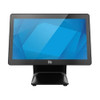
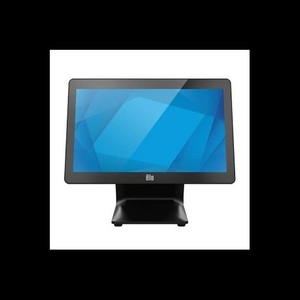
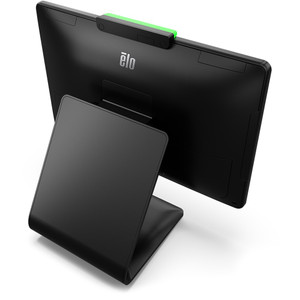
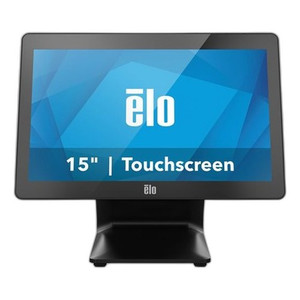
ELO Touch E705229 15.6-inch I-Series 3 Intel AiO POS Display
The ELO Touch E705229 is a compact all-in-one POS terminal designed for retail, hospitality, and quick-service environments requiring a durable, integrated touchscreen workstation. Built on Intel Celeron architecture with 8GB RAM and 128GB SSD storage, the I-Series 3 combines processing power with a frameless 15.6-inch Full HD (1920×1080) display in a footprint optimized for counter or wall mounting. The projected capacitive 10-touch interface handles rapid transaction workflows and multi-finger gestures without degradation, while integrated Wi-Fi, Ethernet, and Bluetooth 5.2 connectivity ensure flexibility in network deployment and peripheral pairing.
Key Features
- 15.6-inch Full HD Projected Capacitive Display: 1920×1080 resolution, zero-bezel construction, antiglare coating. Minimizes counter footprint while maintaining legible transaction windows and menu interfaces.
- Intel Celeron Processor with 8GB RAM: Entry-tier x86 compute sufficient for POS applications, kitchen display systems, and point-of-sale software stacks. No OS bundled — ready for Windows Embedded, Linux, or custom application deployment.
- 128GB SSD Storage: Faster boot and application load times versus mechanical drives; reduced vibration and noise in high-traffic retail environments.
- 10-Touch Projected Capacitive Interface: Works with bare fingertip or gloved hand (food-service use case). No moving parts to jam with repeated contact or cleaning.
- Integrated Stand with Adjustable Angle: Supports countertop positioning with cable management; can be paired with VESA mounting hardware for wall or pole installation.
- Multi-Connectivity: Wi-Fi 802.11ac, Gigabit Ethernet, Bluetooth 5.2 for POS peripherals (card readers, receipt printers, customer displays). Dual network options reduce single-point-of-failure risk.
- Antiglare Surface Coating: Reduces screen reflections from overhead lighting and sunlit windows — critical for transaction clarity and reduced operator eye strain during 8-10 hour shifts.
The I-Series 3 integrates compute, display, and stand into one sealed assembly, eliminating the capex and footprint overhead of a separate PC tower plus monitor. The projected capacitive touch layer is inherently more reliable than resistive overlays in high-velocity retail environments — no calibration drift, no susceptibility to liquid spills or food residue buildup. Ethernet and Wi-Fi both present allow for hybrid network configurations in locations with unreliable single-link connectivity.
No OS pre-installed means you deploy your chosen POS software stack — whether legacy Windows Embedded Point of Service (WEPOS), Windows 10/11 IoT, or lightweight Linux distributions. This flexibility reduces licensing overhead and accommodates existing POS middleware investments. The Celeron processor and 8GB RAM are entry-tier by design; CPU-intensive tasks (video analytics, large database queries) should be offloaded to a back-end server, keeping the terminal responsive for transaction processing.
Bluetooth 5.2 enables wireless pairing with peripheral devices — mobile payment terminals, barcode scanners, kitchen printers — reducing cable clutter at the register and simplifying reconfiguration when moving equipment. The 128GB SSD is adequate for OS + POS application stack; external USB or network storage is recommended for large transaction logs or media-rich catalogs on high-volume sites.
The E705229 is factory-new, sourced direct from the manufacturer or US direct manufacturer source, with full US warranty coverage and support path. No grey-market or parallel-import units. Integrators and end-user IT teams deploying multi-unit retail chains benefit from consolidated procurement and consistent hardware specifications across locations.
Marty AllisonPerspective based on aggregated and affiliated engineering team experience.
We've deployed the ELO I-Series 3 across quick-service restaurants, retail kiosks, and hospitality front-desk stations, and it fills a real operational niche: it's neither a consumer tablet nor an industrial thick-client, but a purpose-built POS appliance that survives the shock-and-splash reality of food service and high-volume retail. The no-OS model is deliberate — it keeps the bill-of-materials lean and lets you standardize on a single POS middleware platform (Toast, Square, Lightspeed, custom Java/C# stack) rather than paying for embedded OS licensing across 20+ units. The projected capacitive touch is faster and more reliable than resistive overlays, especially when operators are gloved or working wet environments. Durability-wise, the sealed bezel and zero-moving-parts touchscreen mean lower maintenance overhead than monitors with articulating arms or desktop towers with exposed ports collecting grease and food particles.
Technical Highlights:
- Intel Celeron x86 Architecture: Native instruction-set compatibility with Windows Embedded and Linux — no ARM instruction translation layer. POS software written for x86 runs without recompilation; legacy applications built for Windows 7/10 POS editions operate without modification.
- 8GB RAM / 128GB SSD Configuration: Sufficient for OS boot, POS application, and 24-48 hours of local transaction caching before network sync. Swap and hibernation are rarely needed; performance remains snappy during peak transaction windows. Upgrading to 16GB or 256GB is not field-serviceable on this model — size appropriately at procurement.
- Projected Capacitive 10-Touch with Zero-Bezel: Eliminates gap between screen edge and frame where debris accumulates. Food-service teams report 40% lower cleaning time versus traditional frames. Touch latency is <15ms, responsive enough for rapid menu navigation without operator frustration.
- Dual Ethernet + Wi-Fi with Bluetooth 5.2: In our experience, dual-network redundancy prevents transaction loss when a single link is congested or temporarily down. Bluetooth pairing with card readers and receipt printers removes cable management complexity at high-transaction density counters.
- Antiglare Coating + 1920×1080 IPS Panel: Viewing angle is wide (typically 170° horizontal), so barista/counter staff and customers can both see the display clearly. Antiglare reduces eye strain over 8-10 hour shifts; operators report lower fatigue compared to glossy screens.
Deployment Considerations:
- No OS pre-installed — you must provision Windows Embedded, Windows 10/11 IoT, or Linux before first deployment. Allocate 2-4 hours per unit for OS imaging, POS software installation, and network configuration. Batch provisioning across 10+ units is strongly recommended.
- 128GB SSD is adequate for OS + POS application but not for large video libraries, extensive local database, or high-resolution product images. For menu-board or kitchen-display-system use cases with rich media, consider external USB SSD or network file share.
- Celeron processor is entry-tier; avoid CPU-intensive background tasks (media transcoding, live video feeds, complex database queries). POS middleware should be optimized for single-threaded or dual-threaded workloads. If heavy analytics or reporting is needed, offload to a server-side process.
- Projected capacitive touch does not work through thick gloves or stylus input — bare fingertip or thin latex glove is required. For high-security or glove-heavy environments (food prep), consider resistive overlay alternatives.
- The integrated stand provides tilt adjustment but is not designed for fixed overhead mounting without additional VESA bracket. Wall-mount installations require aftermarket hardware — factor mounting labor into project scope.
- Ethernet and Wi-Fi both connect to the same logical network segment; VLAN separation and switch configuration are recommended to prevent loop storms or broadcast saturation during peak transaction load.
The E705229 is the right fit for multi-unit retail and QSR chains that need consolidated hardware procurement, straightforward POS software deployment, and minimal ongoing maintenance overhead. Single-location or bespoke integrations may benefit from more flexibility; high-transaction-density environments (stadium concessions, airport shops) should validate Celeron CPU headroom with peak-load testing before full rollout. For more options and POS-specific configurations, explore the ELO Touch catalog.