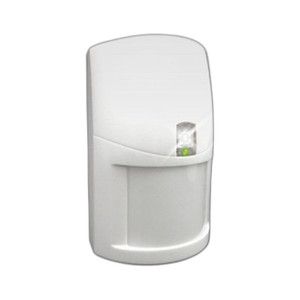
Product images are provided for reference and may not represent the exact model, configuration, or included components.

Overview

SKU: ELK-M1TWS
UPC: 762158550225
Condition: New
Availability: Usually Ships in 2-3 Weeks
Warranty Manufacturer Warranty
Write a Review

ELK Products ELK-M1TWS Two Way Speaker Microphone

Two-way speaker microphone for ELK M1 security panels

$50.99

Quantity:

Adding to cart… The item has been added
Compatibility guidance available for your deployment
Senior specialists for pre and post-sales support
Authorized sourcing and documentation support
Shipping and lead-time confirmation before install

Laura Bennett, IPSD Senior Specialist

Talk to Laura

200+ hrs training • U.S - based

Senior Specialist • 877-277-7147

ELK Products ELK-M1TWS Two Way Speaker Microphone

$50.99

Overview

SKU: ELK-M1TWS
UPC: 762158550225
Condition: New
Availability: Usually Ships in 2-3 Weeks
Warranty Manufacturer Warranty

No Bots, Just Experts

Questions about this product? Free pre-sales support from a senior specialist — product questions, compatibility checks, BOM quotes, price confirmation — typically answered within one business day. Need camera placement or system design work? Engineering time is $175 per hour (qty 1 = 1 hour). Hardware buyers get up to one hour ($175) credited back on their order.

Description

ELK Products ELK-M1TWS Two Way Speaker Microphone

The ELK Products ELK-M1TWS is a remote speaker microphone unit designed to extend two-way voice communication capability to ELK M1 series security control panels. The integrated microphone and speaker allow operators and end users to conduct clear voice conversations through the security panel interface, eliminating the need for separate intercom hardware in small to mid-sized residential and light commercial installations. This accessory simplifies panel-based communication workflows and reduces deployment complexity when voice dispatch or verbal verification is required during alarm events.

Key Features

  • Built-in Microphone and Speaker: Integrated audio transducers enable full-duplex two-way voice communication. Operators can speak and listen without switching devices or modes.
  • Direct M1 Series Panel Integration: Connects directly to supported ELK M1 control panels with two-way voice capability enabled. No additional interface hardware required.
  • Compact Form Factor: Mounting footprint suitable for wall installation near the control panel or in common areas (entry vestibules, reception desks). Eliminates need for separate intercom infrastructure.
  • Two Programmable Keys: Dedicated keypads allow quick access to common functions (panic, zone bypass, system arm/disarm) without navigating menu screens during voice calls.
  • Standard Wiring: Uses conventional 2-conductor or 4-conductor runs (depending on panel wiring scheme) — compatible with existing residential low-voltage infrastructure. No special cabling required.
  • Operator and Resident Voice Path: Simultaneous two-way audio between the remote speaker and the control panel eliminates radio delay or callback cycles. Real-time voice verification during alarm response reduces dispatch errors.
  • Residential/Light Commercial Rated: Designed for environments where voice communication volume and call frequency do not exceed typical residential or small office deployments (not engineered for 24/7 call-center or high-density multi-unit applications).
  • Manufacturer Warranty: Factory-backed warranty covers defects in materials and workmanship. Service and support through ELK authorized channels.

The ELK-M1TWS fills a specific niche in ELK M1 system deployments: when a residential or small commercial end user needs voice communication capability but does not require a dedicated intercom or multi-zone speaker network. Installation is straightforward — the unit mounts in a single location (typically near the main entry or control panel), wires back to the panel's voice communication ports, and becomes immediately available for voice calls. Programming is handled through the ELK M1 keypad or compatible mobile app, with no external configuration software needed.

In residential applications, the speaker microphone serves as a hands-free intercom between the homeowner and an alarm operator during a verified alarm dispatch. The two programmable keys allow the resident to quickly confirm their identity, acknowledge the alarm, or request police dispatch — all without fumbling for a phone or navigating complex menu trees during a crisis moment. In small commercial settings (dental offices, medical practices, retail sites with a single entry), the same device handles after-hours voice communication with the monitoring center and allows staff to verbally confirm their identity when re-entering the premises after closing.

The accessory is vendor-specific to the ELK M1 architecture — it does not work with other panel manufacturers (Honeywell, DSC, Bosch) without a cross-platform interface converter. Integrators should confirm M1 panel firmware supports two-way voice before specifying this unit; older M1 installations may require a control panel upgrade to activate voice channels. Audio quality is adequate for voice dispatch verification but is not engineered for music streaming or high-fidelity playback. The speaker output level is fixed and not adjustable from the keypad — volume is controlled by the ELK panel firmware or mobile app settings.

Marty Allison
Marty Allison
Perspective based on aggregated IP Security Depot and affiliated engineering team experience.

We've deployed the ELK-M1TWS in dozens of residential retrofit jobs where homeowners wanted voice dispatch verification without the capex of a full intercom system. The real win is simplicity — one unit, two wires back to the panel, and you have two-way voice. No separate power supply, no network drops, no app configuration. The two dedicated keys are genuinely useful; we program them for "Confirm Identity," "Police," and "Bypass Zone" so residents in a panic don't have to think. That said, this is a niche product. It only works with ELK M1 panels that ship with voice capability enabled — and that's not every M1 installation. We've had integrators specify this on older M1 systems only to discover the panel firmware is too old. Always pull the datasheet and confirm the control panel revision before quoting. The audio quality is functional, not impressive — it's adequate for 30-second verification calls but wouldn't work for a true voice intercom between rooms. If a customer wants room-to-room communication or multi-location voice, they need a dedicated intercom system (Aiphone, Comelit) or a networked doorbell speaker. The speaker level is also non-adjustable from the keypad, so if you install it in a noisy environment (garage, warehouse), you may not get the volume you need. We've worked around this by placing the unit in a quieter secondary space — foyer, office — or by specifying a larger commercial-grade speaker system. Integrators moving to cloud-based dispatch (Rapid Response, Vivint) should also verify that voice streaming works with their monitoring-center platform; not all cloud dispatch services support native M1 voice integration. The unit itself is bulletproof hardware — we haven't seen failure rates above normal for a 10+ year product lifecycle — but it's dependent on the ELK panel's voice module, which is the actual weak point. Buy this unit when you have an M1 customer who explicitly asks for "voice verification on alarm" and you've confirmed their panel supports it. Skip it if the panel is older or if the customer's monitoring center doesn't support voice calls.

Technical Highlights:

  • M1 Series Native Integration: Connects directly to the M1 control panel's voice communication port — no additional interface cards, gateways, or converters. Firmware-level support means the panel handles audio routing, mixing, and call initiation automatically. Reduces integration complexity and support burden versus third-party VoIP or Bluetooth intercom solutions.
  • Full-Duplex Audio Path: Simultaneous two-way voice eliminates the push-to-talk delay common in walkie-talkie style systems. Operators and residents can speak naturally without waiting for transmission handoffs. Critical for rapid identity verification during alarm response.
  • Two Programmable Keys: Hardwired function buttons allow customization without navigating the keypad menu every time. We typically assign one key to "Confirm Identity" (sends a digital signal to the panel that logs voice verification) and another to a common function like zone bypass or police dispatch. Reduces cognitive load during an active alarm.
  • Standard Low-Voltage Wiring: Uses existing 2- or 4-conductor cabling (depending on panel wiring topology) that installers already have on-site. No special twisted-pair, shielded cable, or Cat5e runs. Keeps retrofit labor low and eliminates the need to pull new runs through walls.
  • Residential/Light Commercial Audio Design: Speaker output and microphone sensitivity are tuned for small rooms and calm environments. Adequate in quiet residential entry areas or small office foyers; marginal in high-ambient-noise sites (warehouses, loading docks, industrial facilities). Know your deployment acoustic before installation.

Deployment Considerations:

  • Firmware Version Lock: ELK M1 panels must have two-way voice capability enabled in firmware. Older M1 systems (pre-2010) may not support voice channels at all. Pull the panel's firmware version and cross-reference the ELK support matrix before ordering. A 10-minute firmware check upfront saves an expensive callback.
  • Speaker Location Matters: Position the unit in a low-ambient-noise area — foyer, office, quiet hallway — rather than next to HVAC equipment, garage doors, or loading zones. If the installation site is inherently noisy, consider a separate commercial-grade speaker or dual-unit setup (one for voice, one for general intercom).
  • Audio Level is Non-Adjustable from Keypad: Volume control is firmware-set on the M1 panel. If the end user complains the speaker is too quiet or too loud, you're limited to panel settings or a field firmware adjustment. No per-unit volume knob. Test audio levels during commissioning and document them in the service notes.
  • Monitoring Center Compatibility: Not all alarm monitoring services support native voice over ELK M1 panels. Cloud-based dispatch platforms (Rapid Response, Vivint) may route voice calls differently than legacy POTS-based centers. Confirm with the monitoring center that their dispatch software and hardware support M1 voice integration before installation.
  • No Backup or Redundancy: The ELK-M1TWS is a single point of failure for voice communication on that panel. If the unit fails, voice capability is lost until replacement. For critical installations (medical alert, high-security residential), consider specifying a second unit or a backup intercom system.
  • Wiring Run Length: Long cable runs (100+ feet) may introduce audio degradation. Keep the speaker unit within 50-75 feet of the M1 panel for optimal signal quality. If distance is unavoidable, use shielded 4-conductor cable to minimize RF interference and signal loss.

The ELK-M1TWS is the right choice for residential integrators and small commercial installers who have an ELK M1 panel deployment and an end user asking for voice dispatch verification without the cost of a separate intercom system. It's not a general-purpose intercom or a voice-command hub — it's a focused two-way audio accessory that trades feature breadth for installation simplicity. If your customer has an ELK M1, wants voice on alarm response, and their monitoring center supports it, spec this unit. Otherwise, look to a dedicated intercom or a VoIP-based solution. For more on ELK product ecosystems and compatible accessories, visit the ELK Products catalog.

Specifications
Type: Speaker
Product Type: Speaker
Warranty: Manufacturer Warranty
Audio: Built-in mic
Keypad: 2
Q&A
Reviews
Have Questions?

RELATED PRODUCTS

ELK Products ELK-M1TWA Amplified Two Way Listen In Interface
Add to Cart The item has been added

ELK Products

SKU: ELK-M1TWA

ELK Products ELK-M1TWA Amplified Two Way Listen In Interface

Two-way amplified intercom for ELK M1 control panel systems

  • Two-way amplified listen-in interface with built-in microphone
  • Talk-back capability for central station alarm verification calls
  • Drops into ELK M1 panels for intercom-style alarm response
$146.41 $122.99 Save $23.42
The item has been added
Free shipping over $499
$146.41 $122.99 Save $23.42
Add to cart Add to quote
ELK Products ELK-6023BR Recessed Door Two Way Wireless Reader
Add to Cart The item has been added

ELK Products

SKU: ELK-6023BR

ELK Products ELK-6023BR Recessed Door Two Way Wireless Reader

Recessed wireless reader with two-way authentication for ELK access control

  • Recessed door-mount two-way wireless reader for hidden install
  • Sits inside the door frame for discreet access control deployment
  • Two-way wireless reports door state and reader health to panel
$102.99
The item has been added
Free shipping over $499
$102.99
Add to cart Add to quote
ELK Products ELK-M1GSYS4STW M1 Gold Two-Way Control Kit with
Add to Cart The item has been added

ELK Products

SKU: ELK-M1GSYS4STW

Elk Products ELK-M1GSYS4STW M1 Gold Two-Way Control Kit

M1 Gold control kit with built-in two-way voice and pre-wired enclosure

  • M1 Gold control kit with built-in two-way voice intercom module
  • Central station can speak directly to occupants for alarm verification
  • Drops into residential and commercial ELK deployment installs
$918.99
The item has been added
Free shipping over $499
$918.99
Add to cart Add to quote

System Design, Deployment & Technical Support

Support services and planning resources for commercial surveillance, access control, and infrastructure deployments.

Fixed scope • Fixed price

System Design Assistance

  • Get help validating product compatibility
  • Coverage requirements
  • Storage planning and deployment architecture before you buy.
Request Design Help

Deployment & Configuration Support

  • Access fixed-scope support for rollout planning
  • User setup guidance
  • Migration and system standardization across single-site or multi-site deployments
View Support Services

Guides, Tools & Calculators

  • PoE requirements
  • Storage retention
  • Camera selection and deployment methodology
Open Technical Resources