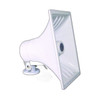
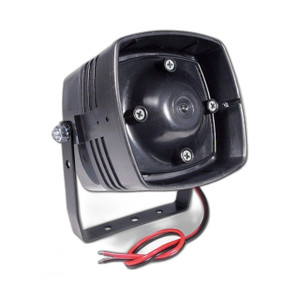
ELK Products ELK-SP40 Security Accessory
Overview
The ELK-SP40 is a supplementary accessory designed to integrate with ELK Products security control systems. This device functions as part of a larger access control and alarm management architecture, supporting deployments where additional hardware integration points strengthen system redundancy and operational flexibility. The ELK-SP40 bridges integration gaps in mixed-vendor or multi-zone security environments where standard ELK control panels need extended reach or specialized signal conditioning.
Key Features
- ELK System Integration: Engineered to pair with ELK security platforms, the ELK-SP40 supports both residential and commercial deployments. Verify compatibility with your specific control panel model and firmware revision before provisioning — ELK's ecosystem includes multiple panel generations, and hardware qualification matters.
- Supplementary Hardware Role: This accessory does not replace a control panel or standalone security appliance. Instead, it extends functionality — whether that means adding reader interfaces, relay outputs, sensor expansion, or communication bridging depends on your specific ELK panel model. Consult your panel's installation guide to confirm the ELK-SP40 addresses your integration need.
- Residential and Commercial Flexibility: Suitable for both environments, though the accessory's role differs by installation type. In residential deployments, it typically handles zone expansion or secondary reader support. In commercial settings, it may serve as a secondary control interface or gateway node in larger access control networks.
- Reliable Supplementary Function: Built for consistent operation within ELK's ecosystem, the ELK-SP40 is expected to deliver the same operational lifespan as the primary control panel. Long-term availability and service parts support follow ELK's standard accessory lifecycle — generally 5–7 years post-purchase for common models.
Integration & Compatibility
The ELK-SP40 is compatible with ELK security system platforms. Before purchasing, verify that your specific control panel model (e.g., M1, M1P, RP, M1G2) officially supports the ELK-SP40. Compatibility is not universal across all ELK products — different panel generations support different accessory sets. Installation integrators should cross-reference the panel's technical documentation or contact ELK directly if the model number is not listed in the ELK-SP40 compatibility matrix.
This accessory is commonly paired with access control panels in mixed deployments and works within standard ELK hardwired and hybrid architectures. It does not require a separate power supply in most installations, as it draws power from the control panel itself — confirm your panel's auxiliary output capacity before adding multiple accessories. If your deployment involves a network video recorder or IP-based sensors, ensure the ELK-SP40's integration role does not create redundant or conflicting control paths.
Frequently Asked Questions
Q: Is the ELK-SP40 compatible with all ELK control panel models?
A: No. Compatibility varies by panel generation and firmware version. Check the ELK-SP40 datasheet and your panel's technical documentation to confirm support before purchasing. If your model is not listed, contact ELK or your system integrator.
Q: Can the ELK-SP40 work in a mixed-vendor security system?
A: The ELK-SP40 is designed for ELK platforms. Integration with non-ELK equipment depends on whether your ELK panel supports standard hardwired protocols (relay, contact closures, serial). Custom integration may require additional bridge hardware or middleware.
Q: What is the typical lifespan of the ELK-SP40?
A: ELK accessories typically have a 5–7 year post-purchase service window. Parts availability and firmware updates depend on when the product was manufactured and ELK's ongoing product support strategy. Confirm support status with your dealer or ELK directly.
Q: Does the ELK-SP40 require a separate power supply?
A: In most installations, the ELK-SP40 draws power from the control panel's auxiliary output. Verify your panel's available power budget and output specifications before installation. Some configurations may require additional power conditioning.
Q: What documentation should I consult before installation?
A: Obtain the ELK-SP40 datasheet, your control panel's installation guide, and any relevant ELK system integration bulletins. Installation integrators should also verify any local fire code or UL listing requirements that may apply to your deployment.
Ted PerryPerspective based on aggregated IP Security Depot and affiliated engineering team experience.
The ELK-SP40 is a solid choice if you're running an ELK ecosystem and need to expand or bridge integration gaps — but only if your control panel officially supports it. I've seen integrators order this accessory without confirming panel compatibility, and it sits on the shelf. Before you commit, verify your panel model against the compatibility matrix. Accessory-level hardware rarely offers backward compatibility across ELK generations.
Technical Highlights:
- Panel Integration: Designed for ELK platforms, the ELK-SP40 operates as an extension of your primary control panel, not as a standalone device. Power draws from the panel's auxiliary outputs, so budget your available amp capacity upfront.
- Residential and Commercial Support: The same hardware works in both deployment types, but its role changes. In residential installs, expect zone or reader expansion; in commercial environments, it often serves as a secondary interface or network node.
- Mixed-Vendor Environments: If your site already runs non-ELK readers or sensors, the ELK-SP40 integrates only if those devices speak ELK-native protocols (hardwired relay, contact closure, serial). Bridge hardware or custom logic may be required.
Deployment Considerations:
- Compatibility is not automatic — every ELK panel generation has its own approved accessory list. Confirm the ELK-SP40 is listed for your specific model before you buy.
- Power availability is a real constraint. Check your panel's auxiliary output specs; undersized power budgets are a common gotcha in retrofit or expansion projects.
- Service lifecycle: ELK typically supports accessories for 5–7 years post-purchase. If your deployment is long-term (10+ years), factor in eventual replacement and ongoing availability.
Best suited for integrators managing established ELK sites that need to expand reader zones, add relay outputs, or bridge to secondary control interfaces. Not recommended as a primary control device or for first-time ELK deployments where a panel upgrade may be more cost-effective.