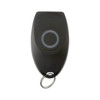
ELK Products ELK-319KF1 Single-Button Wireless Keyfob
Overview
The ELK-319KF1 is a single-button wireless keyfob designed as an expansion credential for access control systems built on the ELK 319 series platform. This compact device transmits commands over the ELK proprietary wireless protocol, enabling remote trigger functionality — whether for door release, alarm bypass, or system state changes — without requiring card readers or PIN entry at the access point. It fills a specific role: when you need a quick, hands-free credential option alongside card-based or PIN authentication.
Key Features
- Single-button operation: One action per keyfob reduces user confusion and deployment complexity. Useful for maintenance crews, delivery personnel, or emergency responders who need a simple "access" or "alarm disarm" trigger without navigating menus.
- ELK wireless protocol: Operates on ELK's proprietary frequency and encryption standard, ensuring the keyfob communicates only with paired ELK 319 series receivers. This closed-protocol design eliminates cross-talk with other wireless devices on the site.
- Compatible with ELK 319 series control panels: The ELK-319KF1 pairs directly with ELK 319 series main panels and wireless receivers that support keyfob credentials. Verify your panel firmware revision and wireless reader compatibility before deployment — not all 319 variants ship with keyfob-capable receivers.
- Compact form factor: Pocket-sized credentials reduce the barrier to carry and use. No clips or lanyards required, though optional accessories can be added.
- Multi-credential integration: Deploy the ELK-319KF1 alongside card readers, keypads, and biometric readers in the same system. Role-based access rules allow you to assign different permissions to keyfob vs. card holders — for example, contractors receive keyfob access to one door zone only, while staff cards unlock all zones.
- Remote control functionality: Enables wireless triggering of armed/disarmed states, door unlock commands, or custom automation routines configured in the ELK 319 panel logic. Typical range is 100–200 feet in open space; wall penetration and RF interference will reduce effective range.
Integration & Compatibility
The ELK-319KF1 requires pairing with an ELK 319 series control panel and a wireless receiver module that supports keyfob credentials. Before ordering, confirm that your panel firmware supports wireless keyfob enrollment and that your access control software (if separate) includes keyfob credential types in its user database.
Pairing is typically performed through the ELK panel's commissioning menu or via a dedicated wireless enrollment tool. Once enrolled, the keyfob transmits a unique ID that the panel matches against its credential database, triggering the assigned access rule or automation.
If you are integrating the ELK 319 series into an existing access control architecture, ensure your ACS (Access Control System) or VMS gateway supports ELK native protocol or ONVIF compatibility — this determines whether your central software can log keyfob events or revoke credentials remotely.
Deployment Considerations
Keyfob credentials are ideal for sites where speed of access matters more than audit rigor — think emergency exits, loading docks, or temporary contractor access. However, they lack the audit trail granularity of card swipes or PIN logs. If your compliance requirement demands detailed "who accessed where and when," pair keyfobs with a robust logging backend and periodic credential audits.
Radio frequency range depends on antenna placement, building materials, and interference from nearby wireless systems (WiFi, cell boosters, industrial equipment). Site survey before full deployment to identify weak-signal zones where the keyfob may fail to authenticate.
Battery life is the keyfob's limiting factor. Typical alkaline cells last 1–2 years depending on frequency of use. Plan a credential replacement schedule and maintain inventory of spare units to avoid access disruptions when batteries deplete.
Frequently Asked Questions
Q: Is the ELK-319KF1 compatible with non-ELK 319 series panels?
A: No. The ELK-319KF1 operates on ELK's proprietary wireless protocol and is designed for pairing with ELK 319 series control panels and compatible wireless receivers only. Cross-compatibility with other brands or ELK product lines is not supported.
Q: What is the typical wireless range of the ELK-319KF1?
A: Effective range in open space is typically 100–200 feet. Range is reduced by walls, metal structures, and RF interference from WiFi, cell towers, or industrial equipment. Conduct a site survey before deployment to verify coverage at all intended access points.
Q: Can I use the ELK-319KF1 alongside card readers and keypads in the same system?
A: Yes. The ELK 319 series supports multi-credential deployments. You can assign different users or roles different credential types (keyfob, card, PIN) and configure access rules per credential type within the panel logic.
Q: How long does the battery last in the ELK-319KF1?
A: Typical battery life is 1–2 years with standard alkaline cells, depending on frequency of use. Establish a spare inventory and credential replacement schedule to prevent access disruptions.
Q: Does the ELK-319KF1 support encrypted wireless transmission?
A: Yes. The ELK-319KF1 transmits over the ELK proprietary encrypted wireless protocol, which prevents unauthorized cloning or jamming from standard RF tools. This is a closed-ecosystem design — only paired ELK 319 receivers recognize the keyfob's signal.
Q: Can I remotely revoke a lost ELK-319KF1 keyfob from the panel?
A: Yes. Access to the ELK 319 series panel (via local menu, web interface, or integrated ACS software) allows you to delete the lost keyfob from the credential database and re-enroll a replacement. Revocation is immediate — the lost keyfob will not authenticate on the next attempt.
Ted PerryPerspective based on aggregated IP Security Depot and affiliated engineering team experience.
The ELK-319KF1 is a straightforward accessory credential that solves a specific problem: you need wireless, button-based access without the friction of card swipe or PIN entry. It's not a replacement for multi-factor authentication or high-audit environments — it's a convenience option that fits well into mixed-credential deployments where some users (contractors, maintenance, loading dock) warrant fast, low-overhead access while others (staff, executives) use cards with full logging.
Technical Highlights:
- Proprietary ELK encryption: The wireless signal is encrypted and paired to a specific ELK 319 receiver — you cannot clone or replay the keyfob credential with off-the-shelf RF analysis tools. This is a meaningful advantage over unencrypted or weakly-secured keyfobs.
- Single-button design: One function per keyfob eliminates user error (wrong button pressed) and simplifies troubleshooting. If the keyfob doesn't unlock, you're not debugging multiple possible actions — just whether the pairing is intact.
- Battery life and replacement cycle: 1–2 years on alkaline cells is typical. Plan a refresh schedule and maintain spare inventory. Unlike cards (which last 5+ years), keyfobs require ongoing battery procurement and logistics management.
Deployment Considerations:
- RF range varies wildly with site topology. A 100–200 foot spec in open air means 20–50 feet through two walls or near RF-noisy equipment (WiFi, cell boosters). Always conduct a site survey before committing to keyfob-only access at a specific door.
- Audit trail risk: keyfob events may be logged by the panel, but if your ACS software doesn't integrate with ELK's protocol, you lose real-time visibility into who accessed where. Pair keyfobs with robust logging infrastructure and periodic credential audits to meet compliance requirements.
- Lost or stolen keyfobs are revocable immediately through the panel, but physical recovery time lags — budget for a short window of elevated risk if a keyfob goes missing at shift change.
Deploy the ELK-319KF1 in loading docks, contractor access zones, or emergency exit scenarios where speed of access and ease of use outweigh audit rigor. Avoid sole-credential deployments in secure areas or compliance-heavy environments — pair it with cards or biometrics for staff and supervisors.