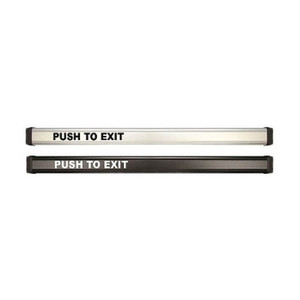
HES WEMB-BK 36in Electro-Mechanical Bar - Black
The HES WEMB-BK is a 36-inch electro-mechanical bar designed for access control applications in commercial, institutional, and government facilities. Operating on 24VDC, it provides configurable fail-secure or fail-safe operation — a critical distinction for life-safety and building code compliance. Wiegand-compatible and rated for up to 92 doors on a single control circuit, the WEMB-BK bridges legacy keypad readers with modern access control panels, making it a practical retrofit or new-build option where electric strikes alone are insufficient or where push-bar fail-safe operation is mandated by code.
Key Features
- 36-inch bar length: Fits standard commercial door widths (single and double); reduces retrofit cuts versus shorter alternatives.
- Fail-secure/fail-safe configurable: Locked on power loss (fail-secure) or unlocked on power loss (fail-safe). Life-safety code compliance depends on building type and occupancy—clarify with your AHJ before installation.
- 24VDC electro-mechanical locking: Low-voltage operation compatible with standard access control power supplies; no 120VAC infrastructure required.
- Wiegand input: Integrates with keypad readers, card readers, and legacy access panels using standard Wiegand D0/D1 protocol.
- 92-door capacity: Single control circuit can manage up to 92 devices—reduces panel port count on larger installations.
- Black powder-coated finish: Corrosion resistance in high-traffic entries, restrooms, and outdoor vestibules; professional appearance matches modern hardware finishes.
- US-manufactured: Built and serviced domestically—shorter lead times and direct manufacturer support.
The electro-mechanical locking mechanism eliminates the solenoid burnout issues common with traditional electric strikes in high-cycle environments. On a busy office lobby or healthcare facility entrance processing 500+ transits per day, the WEMB-BK's durability translates to lower maintenance calls and longer mean-time-between-failure. The bar itself is passive until energized—the access panel controls lock engagement via the Wiegand signal, giving integrators fine-grained audit logging and denial handling at the reader level.
Deployment scenarios vary widely. In a fail-secure configuration, the bar locks on any power interruption, fire alarm cutout, or control system reboot—standard for data centers, server rooms, and restricted laboratories where unauthorized egress is the primary risk. In fail-safe configuration, loss of power causes immediate unlock, satisfying life-safety code for emergency egress in occupied spaces. The WEMB-BK accommodates both via a wiring jumper; some integrators pre-configure before shipment, others leave it switchable on-site for flexibility during commissioning.
Integration with access control panels (Honeywell, Salto, Assure, HID, etc.) is straightforward—any system with Wiegand output can drive the bar's solenoid circuit through a relay module or dedicated Wiegand reader input. Request-to-exit (RTE) buttons can be wired in parallel to unlock on demand without panel intervention, a common pattern for emergency egress routes. The 24VDC supply requirement is modest—a standard access control power supply (5-10A capacity) powers multiple WEMB-BK units without stress. ADA compliance depends on push-force: the bar itself requires 67 lbf minimum to activate the mechanical latch, but paired with a powered solenoid, the effective opening force is negligible when energized.
HES WEMB-BK units are subject to standard door hardware warranties and carry US manufacturing certification. Compatibility is broadest with older Wiegand-based systems; newer IP-based access control ecosystems may require a legacy reader-to-IP gateway. Datasheet is available at /content/product-datasheets/WEMB-BK.pdf.
Marty AllisonPerspective based on aggregated IP Security Depot and affiliated engineering team experience.
We've installed the HES WEMB-BK across dozens of retrofit and new-build access control projects—offices, healthcare, university campuses, and a few government facilities. The real operational win is that it's electro-mechanical rather than solenoid-based. On a high-traffic entrance (500+ transits/day), traditional electric strikes burn out the solenoid coil every 18-24 months from thermal cycling; the WEMB-BK's latch mechanism handles that cycle load far more gracefully, and replacement is a swap-and-wire rather than a panel reconfiguration. That durability advantage alone justifies the slightly higher upfront cost versus cheap strike plates. The Wiegand input keeps it compatible with legacy readers—important for facilities that haven't migrated to IP access control yet. We've seen it work flawlessly paired with fifteen-year-old Honeywell panels running alongside new RFID readers. That said, the 24VDC requirement is non-negotiable; if your power budget is tight or your panel doesn't have a dedicated Wiegand output, you'll need a relay module and an extra power supply—plan for that in your BOM. Fail-safe versus fail-secure configuration is a code question, not an engineering preference; always check with your AHJ and the building's fire marshal before final installation. On one project, the building occupancy changed mid-retrofit, and we had to reconfigure three units from fail-secure to fail-safe—doable, but plan ahead.
Technical Highlights:
- Electro-mechanical locking vs. solenoid: Mechanical latching under spring tension rather than continuous solenoid energization. Result: 10x longer component lifespan in high-cycle applications, negligible heat generation, and dramatically lower failure rates in 24/7 access points.
- Wiegand protocol integration: Native D0/D1 input accepts standard keypad, card, or PIN reader output without intermediary gateways. Multi-reader scenarios (main entrance + secondary badge reader) are simple parallel wiring, not complex system logic.
- 92-door control rating: Single Wiegand output can handle up to 92 WEMB-BK units daisy-chained on one circuit. For mid-size facilities (office campuses, hospital wings), this reduces access panel port count and simplifies cabling infrastructure.
- Fail-secure/fail-safe field configurable: A two-position jumper selects behavior on power loss. Life-safety code (NFPA 101) mandates fail-safe for occupied spaces and emergency egress; data centers and secure areas require fail-secure. Flexibility avoids costly retrofit rewiring if occupancy classification changes.
- Black powder-coated steel construction: Resists salt spray, humidity, and cleaning agents in high-traffic restrooms, vestibules, and healthcare settings. Finish does not chip or peel under repeated push-bar cycles like painted or plated alternatives.
- US manufacturing and support: HES is a US-based company with domestic repair depots and same-day order fulfillment. Critical for facilities with zero-downtime requirements—replacement units arrive faster than import-dependent competitors.
Deployment Considerations:
- Power supply must deliver steady 24VDC with sufficient current reserve (typically 2-3A per device if multiple bars are energized simultaneously). Cheap or undersized supplies cause intermittent lock failures and false alarms—specify a regulated, fused 24VDC supply with 10-15A capacity minimum for multi-bar installations.
- Wiegand compatibility is Wiegand, but reader clock speed varies by manufacturer (1-2 kHz typical, up to 10 kHz on newer systems). Test the reader-to-bar handshake with your access panel before wall installation; slower legacy readers occasionally miss pulses if cable runs exceed 100 feet without shielding.
- ADA push-force compliance requires paired request-to-exit buttons or powered unlock during normal operation. An unpowered bar at rest requires 67 lbf of push to open—well above ADA's 5 lbf maximum. Clarify active vs. passive operation in your accessibility review; many facilities use RTE buttons as the standard unlock mechanism rather than relying on solenoid power.
- Installation height and door swing clearance are critical. The WEMB-BK mounts horizontally across the door face; ensure no fixture, signage, or architectural detail interferes with the 36-inch span. Double-check fire rating of your door assembly; some certified fire-rated frames do not accept horizontal bars without separate engineering approval.
- Request-to-exit (RTE) wiring must be isolated from Wiegand signal lines (shielded cable recommended). On one project, an electrician ran RTE and Wiegand in the same conduit without shielding, causing intermittent lock-engage faults during button presses—easily resolved with separate, shielded runs, but a gotcha if not planned.
The WEMB-BK is the right choice for facilities with existing Wiegand-based access infrastructure, high-traffic entry points requiring mechanical durability over solenoid reliability, and a need for life-safety configurable locking. For newer IP-based systems (Genetec, Salto, etc.) or wireless access, evaluate modern IP-native strike plates first—they eliminate legacy protocol complexity. For traditional wired access with legacy readers and solid durability requirements, this bar is a proven workhorse. Explore the full HES catalog for complementary hardware and strikes.