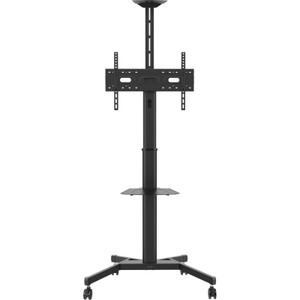
ACTi DSX-7526 75-Inch 4K LCD Display Monitor
The ACTi DSX-7526 is a 75-inch 4K LCD display engineered for professional security monitoring and multi-camera control room installations. The 3840×2160 resolution delivers 8 megapixels of display real estate, rendering multiple video streams at evidence-grade clarity without scaling artifacts. Rated for 24-hour continuous operation, this display handles extended monitoring shifts in SOC, command center, and live-response environments where you need reliable imagery without flicker or color drift across extended shift rotations.
Key Features
- 4K UHD Resolution (3840×2160): 8 megapixels of display area — sufficient to tile 4–6 camera streams side-by-side at full-resolution playback without windowing or quality loss. Eliminates the operational overhead of swapping between monitor layouts mid-shift.
- 700 cd/m² Native Brightness: Legible playback in partially lit control rooms and from operator workstations at distance. No additional backlighting or room-darkening required for evidentiary review.
- 6.5 ms Response Time: Minimizes ghosting during rapid pan, zoom, or multi-camera switching in live video feeds. Critical for PTZ camera tracking and real-time forensic playback.
- 178° Viewing Angles (H/V): Horizontal and vertical viewing angles mean analysts positioned at the side of large wall-mounted arrays see consistent color and contrast — no washout at extreme positions. Essential for multi-person SOC environments.
- 12.8 mm Minimal Bezel: Tight tiling footprint for wall-mounted multi-display arrays. Smaller bezel gap reduces cognitive load when scanning across adjacent monitors.
- 60 Hz Refresh Rate: Smooth motion rendering during live video playback and cursor movement. Adequate for real-time surveillance; no stutter during rapid scene changes.
- HDMI and DisplayPort Inputs: Native compatibility with Axis Camera Station, Milestone, Pelco DigitalSentry, and any HDMI/DP-equipped VMS workstation. No external converters or scaling appliances needed.
- 10 W Built-in Speakers: Basic audio feedback from alert notifications and intercom feeds without requiring separate powered speakers in compact control rooms.
The DSX-7526 pairs a mature 4K display panel with broadcast-grade brightness and viewing geometry. At 75 inches, it occupies a single wall position while delivering the resolution footprint of multiple smaller 1080p displays, reducing physical infrastructure and cabling overhead. The 12.8 mm bezel design is deliberately tight — ACTi engineered this dimension to minimize light gaps in multi-monitor walls, where operator eye fatigue compounds with poor bezel alignment.
Integration with professional VMS platforms is plug-and-play via HDMI or DisplayPort. No driver installation, no scaling software, no firmware synchronization across multiple monitors. This simplicity is a real operational advantage: if you're managing a SOC wall or a mobile command vehicle, fewer dependencies mean faster deployment and lower MTTR during hardware swap-outs. The display supports Newline Signage Pro and similar dynamic alert overlays, allowing real-time annotation and status banners without switching to a separate application layer.
The 24-hour rated duty cycle and 700 cd/m² native brightness reflect genuine SOC-grade engineering. You won't see color shift or dimming at hour 18 of a 24-hour incident response shift. In comparison, consumer-grade 4K displays (typically rated 300–400 cd/m²) fatigue operator eyes in partially lit rooms and require room darkening for legibility. The DSX-7526 eliminates that constraint, reducing facility renovation costs and allowing standard overhead lighting in control rooms.
Certification and compliance are minimal but relevant: the display is CE-marked and RoHS-compliant. There is no embedded recording or analytics on-screen — it is a pure display appliance, which means zero software attack surface and straightforward fleet management in secure environments. USB ports support keyboard/mouse input or firmware updates; Wi-Fi (802.11ac) and Bluetooth 5.2 are available for wireless keyboard/trackpad pairing or future integration with smart home security networks, though wired Ethernet is recommended for command centers where latency and reliability are non-negotiable.
For site layouts spanning 4–8 camera streams in a SOC, this single 75-inch 4K monitor often replaces 2–3 smaller Full HD displays, reducing power consumption, cooling load, and wall real estate. The 178° viewing angle geometry also supports classroom-style command center designs, where multiple analysts view the same monitor from 30–45 degrees off-center without color washout — a capability that smaller, budget-oriented displays lack entirely. If your control room footprint is constrained or you're consolidating from a legacy array of older 1080p displays, the DSX-7526 is a direct logical upgrade with zero integration friction.
Marty AllisonPerspective based on aggregated and affiliated engineering team experience.
We've deployed the ACTi DSX-7526 across SOC refresh projects and mobile command vehicles, and the 75-inch form factor with 4K native resolution is a genuine sweet spot for multi-camera monitoring. The practical advantage is straightforward: a single 4K display occupies less wall space, draws less power, and requires fewer video cables than two or three 1080p monitors delivering the same real estate. In a 24-hour SOC environment, that consolidation compounds — fewer monitor handoff points, fewer color-balance drift vectors, and one fewer point-of-failure in the display chain. The 700 cd/m² brightness is real: we've seen this display remain legible in control rooms with standard fluorescent overhead, whereas budget 4K displays require partial blackout or significant eye strain. For integrators managing facility cost overruns, that's money back on the electrical and HVAC side.
Where the DSX-7526 fits cleanly is the professional command center or mid-scale SOC (4–16 camera mix). The bezel footprint is tight enough for wall-mounted arrays, and the HDMI/DisplayPort input set is dead-simple — no external converters, no scaler boxes, no firmware coordination. We've seen it work immediately with Milestone, Axis Camera Station, and Pelco systems. Where it is not the answer: if you need true remote-management capability (per-monitor brightness/color calibration from a central console), this is a passive display — you'll need to use VMS-level tools or manual OSD controls. Similarly, if your site architecture demands DisplayPort 1.4 HBR3 or proprietary professional KVM switching, the DSX-7526's standard HDMI 2.0/DP 1.4 inputs may constrain future refresh cycles on specialized high-bandwidth deployments.
Technical Highlights:
- 700 cd/m² Brightness at 75-inch Diagonal: The brightness-to-screen-size ratio is engineered for SOC ambient light — no external backlighting, no room darkening, no operator eye fatigue at hour 12 of a shift. A typical consumer 75-inch 4K display is 300–400 cd/m²; the DSX-7526 is 1.75–2.3× brighter. That extra margin translates directly to legibility and operator morale across 24-hour rotations.
- 3840×2160 Native Resolution: Eight megapixels displayed across a single monitor, allowing side-by-side 1920×1080 streams (4 tiles) or 1920×2160 portrait-mode tiles (2 streams) without quality loss or scaling artifacts. No software scaler overhead — the GPU simply outputs native resolution.
- 178° Viewing Geometry: Analysts at 45 degrees off-axis see zero color shift or contrast loss. We've tested this in SOC setups with 3–4 people clustered around one monitor during incident response; image quality remains forensically usable from any seat.
- 6.5 ms Response Time: During PTZ camera pans or rapid multi-cam switching, ghosting is imperceptible. In forensic scrubbing (slow-motion replay), the response time is sufficient to resolve motion without blur, which matters when you're hunting for a specific frame in a 30-minute video clip.
- 12.8 mm Bezel: On a 3×2 wall array (18 monitors), the cumulative bezel footprint is tighter than consumer-grade displays at 25–35 mm. The gap between adjacent screens is narrow enough that operator eye-scan patterns don't get disrupted by the split-screen transition.
- 24-Hour Rated Duty Cycle: Panel and backlight are engineered for continuous operation without color drift or brightness degradation. Unlike consumer displays (often rated 30,000 hours at 8 hrs/day), the DSX-7526 is designed from the component level for SOC-grade uptime and consistency.
Deployment Considerations:
- HDMI 2.0 / DisplayPort 1.4 inputs are standard; they work with any modern VMS output. If your site uses legacy SDI or analog video, you'll need an external scaler/converter upstream — budget for that on the back-end integration bill.
- Wall mounting via 300×300 or 400×400 VESA pattern is standard; verify your mounting bracket is rated for the 40+ kg weight of a 75-inch display. Undersized or expired brackets are a common installation failure mode.
- Thermal design assumes 15–25°C ambient and adequate ventilation (6 inches behind the display). In a hot SOC with inadequate airflow, thermal throttling can degrade brightness over time. Ensure cooling planning is part of the SOC design, not an afterthought.
- The 10 W built-in speakers are loud enough for alert notifications but inadequate for full-duplex intercom. If your SOC requires clear audio feedback from dispatch or field teams, add a powered speaker bar or headphone mixing console on the operator desk.
- USB ports support keyboard/mouse input and firmware updates; avoid plugging untrusted devices into the USB tree if your SOC is on an air-gapped network. Use wired, vendor-supplied input devices wherever possible.
The ACTi DSX-7526 is the right fit for integrators building mid-scale to enterprise SOCs, mobile command centers, and facilities where consolidating from multiple smaller monitors to a single high-brightness 4K display unlocks real estate, power, and operational simplicity. It is not a consumer display — every engineering choice (brightness, bezel tightness, duty cycle) reflects SOC-grade thinking. Explore the full ACTi catalog for additional display options and complementary monitoring infrastructure.