DSC PG9939 Wireless Temperature Sensor
Overview
The DSC PG9939 is a wireless temperature monitoring sensor engineered for integration into DSC security and automation systems. This compact, battery-powered device transmits real-time temperature readings across wireless networks, enabling remote monitoring and alarm conditions based on temperature thresholds. The PG9939 operates across a broad temperature range from -20°C to 50°C (-4°F to 122°F), making it suitable for diverse indoor and outdoor deployment scenarios including equipment rooms, storage areas, and environmental monitoring applications within integrated security systems.
Key Features
- Wireless Transmission: Battery-powered design eliminates hardwiring and simplifies installation across facility zones
- 128-bit AES Encryption: All sensor data transmissions are secured with 128-bit AES encryption, protecting temperature readings from interception and ensuring integrity of monitoring data
- Extended Battery Life: Single CR2032 lithium battery provides up to 5 years of operational runtime, reducing maintenance cycles and site service calls
- Temperature Range: Rated for -20°C to 50°C (-4°F to 122°F) operating window, accommodating HVAC monitoring, freeze detection, and thermal alarm applications
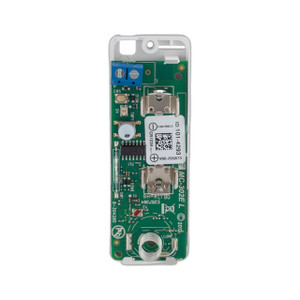
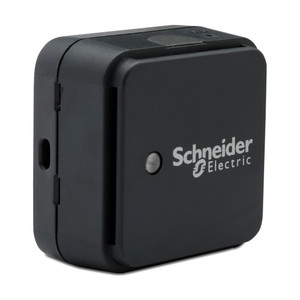
- Compact White Housing: Discrete form factor minimizes visual impact in sensitive environments while ensuring reliable RF propagation
- DSC System Integration: Designed for seamless pairing with DSC wireless security and environmental monitoring platforms
Integration & Compatibility
The PG9939 integrates into DSC wireless ecosystems as a remote temperature sensor node. Its encrypted wireless protocol ensures compatibility with DSC control panels and monitoring stations that support wireless sensor networks. Security integrators should verify system firmware version and wireless protocol support before deployment to confirm the PG9939 will properly communicate with the target DSC panel and any associated cloud or central station monitoring infrastructure.
Deployment Scenarios
Common applications include server room temperature monitoring, freeze detection in pipe areas, HVAC system verification, and equipment enclosure thermal oversight. The 5-year battery life makes the PG9939 cost-effective for permanent monitoring installations, while the wireless architecture enables rapid deployment without conduit runs or additional wiring infrastructure. Temperature thresholds can typically be configured at the DSC panel to trigger alerts, notifications, or automated responses when conditions exceed acceptable ranges.
Ted PerryPerspective based on aggregated IP Security Depot and affiliated engineering team experience.
I spec the PG9939 primarily for clients who need environmental monitoring layered into their DSC intrusion systems—server rooms, mechanical spaces, wine cellars, that sort of thing. The wireless architecture keeps deployment clean, and the 128-bit AES encryption means your temperature data isn't riding in the clear, which matters if you're monitoring sensitive environments. Five-year battery life on a CR2032 is realistic for typical polling intervals, so you're not climbing ladders annually to swap cells.
One thing to nail down before you order: verify your DSC panel firmware explicitly supports this sensor model. Not every PowerSeries panel revision handles all wireless peripherals identically, and I've seen integrators assume compatibility based on frequency alone. If you're tying this into a central station or cloud platform, confirm the monitoring software can parse and display temperature data—some systems log it but don't surface threshold violations clearly. For straightforward freeze alarms or equipment room watch, the PG9939 does exactly what it says with minimal fuss.