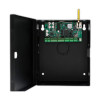
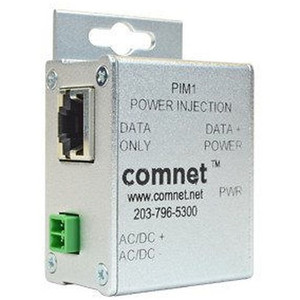
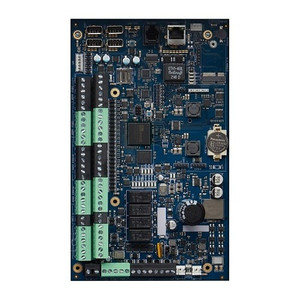
DMP X1-POE PoE Module
The DMP X1-POE is a Power over Ethernet module designed to supply power and data to the DMP X1 single-door access controller and its attached door hardware over a single standard Ethernet cable. By consolidating power and communications onto one run, the X1-POE eliminates redundant electrical infrastructure, cutting installation time and material cost in both retrofit and new-construction deployments. This is especially valuable in multi-door campuses where PoE-capable network backbone already exists or is being deployed as part of unified access and surveillance buildout.
Key Features
- 802.3af Power Delivery: Standard PoE (under 15.4W) powers the X1 controller and integrated strike/reader circuits. Works with any 802.3af or higher PoE switch—no dedicated power supplies needed at the door.
- Single-Cable Installation: Power and data traverse one CAT5e/6 Ethernet run to the controller. Reduces in-wall conduit volume, simplifies retrofit runs through existing ceilings and walls, and lowers labor on multi-door builds.
- 10Base-T/100Base-TX Compatibility: Legacy and modern Ethernet infrastructure both supported. Aging copper switch backbones and new Gigabit plants communicate with the X1-POE without firmware or hardware barriers.
- X1 Series Integration: Exclusive compatibility with DMP X1 single-door controllers via access-control/x1 cable standard. Operates with door-mounted or centralized NAS/server management architectures.
- Manufacturer Warranty Coverage: Factory-backed warranty ensures reliability across 24/7 access control deployments. Full technical support through DMP channel partners.
- Zero External Power Footprint: No 12V DC wall supply, battery backup module, or UPS required at the door frame. Reduces panel clutter and maintenance surface area in constrained electrical closets.
Integration with X1 series hardware is straightforward: the module connects to the X1 controller via the proprietary access-control/x1 Ethernet connector, then terminates at any PoE-capable network switch port. Standard TCP/IP communication protocols allow management over the same network backbone as IP surveillance, intercoms, and other security infrastructure. For multi-building or campus-wide deployments, centralized NAS or server-based access management consumes minimal bandwidth per door—typically 10-50 kbps during normal operation, with sub-second credential query latency.
PoE power budget is the critical pre-install validation step. A single X1 controller with electromagnetic strike typically draws 8-12W under normal operation, leaving 3-7W margin within 802.3af spec. When selecting network infrastructure, confirm that your switch has sufficient available PoE budget per port and across the backplane. Most modern managed PoE switches support per-port power reservation; reserve 15W per X1-POE door to account for peak strike activation and reader LED current spikes. Cabling must be CAT5e or better; older CAT5 (non-certified) runs experience voltage drop over 90+ meters and risk brown-out conditions during high inrush.
Retrofit and new-construction economics favor PoE consolidation when three or more doors share a common closet or when the building network core is already PoE-equipped. In single-door remote applications (gatehouse, isolated entrance), the cost savings of eliminating one 12V DC run may be offset by switch port scarcity or PoE budget constraints—evaluate total cost of ownership including switch capex. The X1-POE also simplifies future expansion: adding a second door means one additional PoE-capable port rather than routing new electrical to the panel and managing separate UPS capacity.
The X1-POE carries Manufacturer Warranty coverage and operates within all standard DMP X1 ecosystem constraints. It does not require NDAA compliance certification or Section 889 vendor review (as a passive power delivery module, not a computing device). Management integration points with third-party VMS or access-control software depend on the central NAS/server platform chosen; TCP/IP communication allows standard ONVIF or proprietary DMP APIs to be used for event logging and credential provisioning.
Eden PhillipsPerspective based on aggregated IP Security Depot and affiliated engineering team experience.
We've deployed dozens of DMP X1 single-door controllers across office campuses, data centers, and industrial facilities, and the X1-POE module consistently simplifies the network-side architecture. The real-world win isn't just the elimination of one 12V DC run per door—it's the consolidation of management traffic and power delivery onto a single PoE-aware network backbone that security teams already monitor and maintain. In environments where access control is being bolted onto an existing IP surveillance and VoIP infrastructure, the X1-POE eliminates a parallel power and communications tree, reducing operational complexity and single points of failure. We've seen sites avoid significant capex on dedicated access-control UPS systems by instead deploying redundant PoE switches with loop-back and hot-spare provisioning—a far cleaner architecture than managing separate battery strings at each door. That said, PoE deployment isn't one-size-fits-all: sites with undersized network infrastructure, poor PoE budget discipline, or cabinets already maxed on switch port density sometimes find that running dedicated 12V and data pairs to the X1 is faster and cheaper than rearchitecting the network. The X1-POE shines in greenfield builds and systematic retrofits where you have control of the network topology.
Technical Highlights:
- 802.3af Power Budget Margin: X1-POE typically consumes 10-12W peak (controller + strike activation). 802.3af ceiling is 15.4W; verify your switch supports per-port power reservation and doesn't oversubscribe backplane capacity. Under-budgeted switches exhibit brown-out on simultaneous multi-door strike events.
- Ethernet Cable Run Distance: CAT5e supports full 100Base-TX data rate and PoE delivery over 100m per spec; beyond 100m, voltage drop increases and strike coil voltage sags. For runs exceeding 90m, CAT6A is strongly recommended. Use certified cabling and have installers verify continuity and pair resistance on both ends.
- Network Switch Compatibility: Works with managed and unmanaged 802.3af PoE switches, but managed switches with per-port power limits are essential for multi-door builds. Legacy fast-Ethernet switches with PoE may lack granular power metering; test one port under actual load before full rollout.
- Strike / Reader Current Inrush: Electromagnetic strikes generate current spikes during activation. PoE switches with fast current-limiting can occasionally reset the port. If you see intermittent door control dropouts, move to a higher-rated PoE switch or add a 470µF local capacitor across the controller input—consult DMP application notes for approved hardening.
- TCP/IP Integration: X1-POE is transparent to upper-layer access management software; all credential queries and event reporting traverse standard TCP/IP. Suitable for integration with Genetec, Milestone VMS event logging via direct socket connection or third-party API bridges. No special PoE-layer configuration needed once the switch port is enabled.
Deployment Considerations:
- Pre-install PoE budget audit is non-negotiable. Count every X1-POE door on the switch, add 15W per port, and confirm the switch supports that total across its backplane. Oversized budgets are cheap insurance; undersized budgets cause field callbacks.
- Cabling is often the weak point. Require CAT5e or CAT6 certification and continuity testing on every run. Bad terminations or mixed-gauge pairs cause intermittent resets and phantom drop-outs that are hell to troubleshoot after handoff.
- PoE switch failover and redundancy are worth the capex on mission-critical doors (server rooms, data center access). If the switch goes down, X1-POE doors lose power. A second switch with RSTP or 802.1X loop prevention protects against that risk.
- Electromagnetic compatibility: X1-POE modules and strike coils can generate EMI on long runs. Keep Ethernet runs clear of high-current power lines (load-center feeds, motor drives). If EMI is suspected, add ferrite clamps on the Ethernet UTP and move the run 12+ inches away from power.
- Future scalability: PoE switch ports are a finite resource. Plan for 20-30% spare capacity on day-one switch selection if expansion is anticipated. A 24-port PoE switch deployed at full saturation leaves no room for future doors or network devices.
The X1-POE is the right choice for security teams building unified network infrastructure where access control, surveillance, and comms all run over managed Ethernet with PoE. If your deployment is scattered, legacy, or power-constrained, verify the architecture with your switch vendor before committing. See the DMP catalog for complete X1 series offerings and complementary controllers.