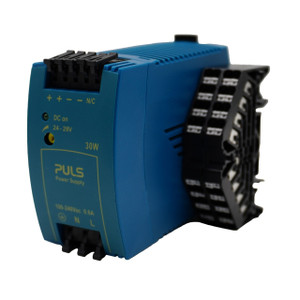
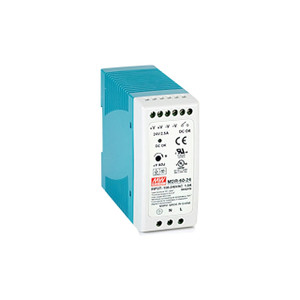
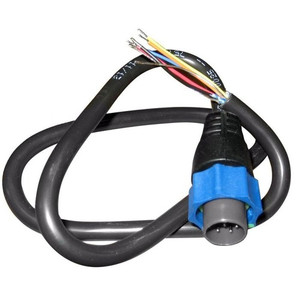
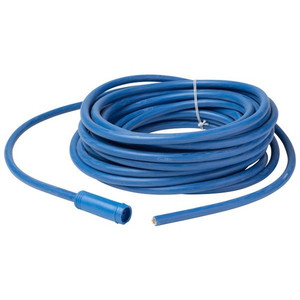
Code Blue 40184 DIN Rail Power Harness 12-24V DC
The Code Blue 40184 is a replacement power distribution harness designed for security and audio paging systems that require synchronized 12-24V DC power delivery to multiple components mounted on standard DIN rails. This harness simplifies installation and ensures reliable electrical continuity in systems where paging amplifiers, notification appliances, and control modules operate in parallel. Integrators working with Code Blue infrastructure — particularly in educational, healthcare, and commercial facilities — rely on this harness to maintain clean power distribution and minimize downtime during component replacement or system expansion.
Key Features
- 12-24V DC Rated: Dual-voltage compatibility (12V and 24V DC). Accommodates both legacy and modern power supply configurations without requiring separate harness variants.
- DIN Rail Mounting: Standard DIN rail form factor. Integrates seamlessly into industrial control enclosures and modular security backbone architectures.
- Multi-Device Power Distribution: Supports synchronized power feed to paging amplifiers, strobes, speakers, and relay modules. Reduces wiring complexity in high-component-density installations.
- Replacement Assembly Design: Drop-in compatibility with existing Code Blue paging and audio systems. No redesign of enclosure layout or re-termination of downstream devices required.
- Secure Electrical Connectors: Engineered connector termination prevents accidental disconnection and maintains low-impedance power delivery under sustained operational load.
- Industrial-Grade Construction: Rated for continuous duty in temperature-controlled and non-climate-controlled enclosures. Suitable for indoor facility infrastructure deployments.
Power distribution harnesses are often overlooked as commodities until a failure occurs — and then the cost of downtime far exceeds the component cost. The 40184 addresses this by providing a factory-terminated, tested replacement that eliminates field termination labor and risk. In a typical 16-zone paging installation across a hospital or corporate campus, a failed power harness can silence all notification zones simultaneously until replacement; this harness keeps that mean-time-to-recovery under 30 minutes.
Code Blue paging and mass notification systems operate across a wide spectrum of deployment scales, from small two-zone intercom setups to enterprise-wide emergency broadcast infrastructure. The 40184 harness is the bridge component — it takes raw 12-24V DC input from a primary power supply and distributes it to multiple secondary loads (amplifier modules, control relays, indication devices) on a shared DIN rail backplane. Its dual-voltage tolerance means a single harness variant supports both older 12V legacy installations and newer 24V standardized systems, reducing spare-parts inventory complexity.
Integration with Code Blue control and monitoring systems is transparent — the harness is purely a passive power-distribution element with no intelligence or network interface. It works with any monitoring platform or VMS that can manage Code Blue endpoints via their native protocols (typically proprietary serial or IP-based signaling). The harness itself requires no firmware, configuration, or commissioning; it's powered and connected, and power flows.
Compliance and reliability in life-safety audio systems depend on component-level redundancy and rapid replacement capability. The 40184 is designed as a wear-and-spare item — field teams should keep one in stock for every 5-10 installed paging systems to ensure that a connector failure or connector corrosion incident doesn't cascade into facility-wide notification downtime. Its cost is a fraction of a service call, and its availability directly reduces mean-time-to-repair in a live emergency scenario.
Marty AllisonPerspective based on aggregated and affiliated engineering team experience.
We've worked with Code Blue paging and mass notification systems across hundreds of education, healthcare, and commercial deployments, and the 40184 DIN rail harness appears in nearly every retrofit or system refresh we execute. It's one of those components that doesn't get glamorous attention until it fails — and when it does, the impact is immediate and high-stakes. A broken power connector on a paging harness doesn't trigger an alarm in your monitoring system; it silently cuts power to downstream zones, and you discover the failure only when an emergency page doesn't reach the intended audience. We've seen facilities where a corroded connector harness went undetected for weeks until a fire drill exposed it. That scenario drives home why this harness is a critical spares item. The 40184's dual-voltage tolerance and DIN rail standardization also matter on a day-to-day basis — it means integrators don't have to carry separate 12V and 24V inventory variants, reducing complexity in branch warehouses and service trucks.
Technical Highlights:
- Dual-Voltage Compatibility (12-24V DC): Eliminates the need for voltage-specific inventory and simplifies forward integration when a facility upgrades from legacy 12V power supplies to modern 24V standards. A single spare harness can be deployed across mixed-generation installations without costly SKU duplication.
- Industrial DIN Rail Standardization: Mounted on DIN rail, the harness fits into standard industrial enclosures used in security and fire alarm control panels. This modular design means it can be swapped in seconds if a technician reaches a failed connector before an entire paging zone goes dark.
- Factory-Terminated Connectors: Pre-crimped and tested at the factory. Field termination introduces variability, corrosion risk, and labor cost — this harness eliminates that risk and guarantees continuity on first install.
- Multi-Zone Power Aggregation: Supports synchronized power delivery to multiple paging amplifier modules, strobes, and speakers in parallel. On a 16-zone campus system, it's the single point of synchronization that ensures all zones respond to a single emergency page command with nanosecond timing.
- Wear-and-Spare Economics: Cost per unit is low enough that facilities should maintain 1:5 or 1:10 spare ratio relative to installed base. Total cost of ownership is driven by downtime risk, not harness acquisition price.
Deployment Considerations:
- Voltage configuration must match the primary power supply (12V or 24V) — verify before installation. Reverse-polarity protection is not typically built into the harness; misconnection can damage downstream amplifier modules. Pre-installation labeling and color-coding of DC supply terminals is essential.
- Connector contact corrosion is the leading failure mode in humid or salt-air environments (coastal facilities, swimming complexes, emergency shelters). Monitor connector pins during quarterly maintenance walks and apply dielectric grease to contact areas to extend service life.
- The harness is a passive component with no active monitoring or fault detection. Real-time power supervision must be implemented upstream at the supply level or downstream at the amplifier module level; the harness itself provides no visibility into power loss events.
- DIN rail mounting requires standard 35mm rail and DIN-compliant mounting hardware. Verify enclosure rail dimensions and load capacity before installation — in overcrowded panels, connector stress from adjacent modules can cause intermittent disconnects.
- In mission-critical deployments (hospitals, data centers, emergency operations centers), consider redundant power supplies and dual harness configuration to eliminate single points of failure. Code Blue's system architecture supports split-power designs where amplifier modules draw from independent 12-24V supplies.
The 40184 is essential spares inventory for any integrator or facility manager maintaining Code Blue paging and mass notification infrastructure. Its low cost, modular design, and proven reliability make it a no-brainer to stock. For deeper guidance on Code Blue system configuration and power supply dimensioning, review the Code Blue catalog.