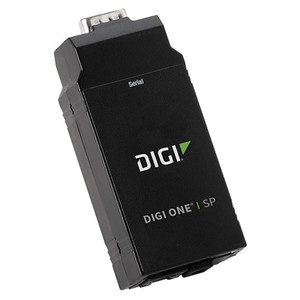
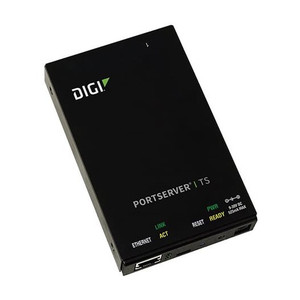
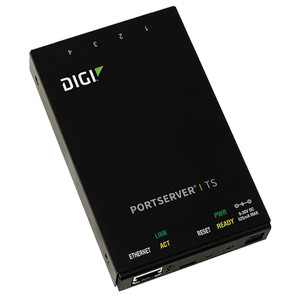
Digi International 70001862 1-Port Serial-to-Ethernet Device Server
The Digi International 70001862 (Digi One IA) is a 1-port serial device server that bridges a single RS-232, RS-422, or RS-485 serial device onto an IP network. It solves a specific integration problem: legacy serial equipment — PTZ camera keyboards, access control panels, industrial controllers, point-of-sale terminals — that has no native Ethernet port. Instead of running the device through a local PC's COM port, the 70001862 sits at the equipment end and exposes it as a network-addressable device, so it can be polled, configured, or controlled from anywhere on the LAN or over a routed WAN link.
Compatibility
Because it supports all three serial standards (RS-232, RS-422, RS-485) on its single port, the 70001862 works with a wide range of serial-only hardware rather than being locked to one wiring type. RS-485 support in particular means it can address multi-drop serial device chains — common in industrial sensor networks and legacy security panel wiring — not just point-to-point RS-232 links. Pair it with any application that reads serial data over a network socket, including COM-port redirector software and SCADA/HMI platforms that accept TCP or UDP serial pass-through.
Installation Notes
At 0.7 lbs and 11.0 x 8.0 x 2.0 in, the unit mounts easily in a cabinet or on a shelf near the serial equipment it's converting, keeping the serial cable run short and the Ethernet run long — the correct topology for minimizing serial-line noise and distance limitations. Confirm which of the three signaling modes (RS-232, RS-422, or RS-485) your source equipment uses before wiring, since the port's electrical mode is configured in software rather than by cabling to a different jack. The 5-year manufacturer warranty on the 70001862 reflects the duty cycle it's built for: always-on operation in a rack or utility closet.
Deploying serial gear inside a broader IP video or access control network? Pair the 70001862 with a managed PoE switch to keep the conversion point on clean, monitored infrastructure, and check the site's PoE planning guide when budgeting power and port counts for the rest of the rack.