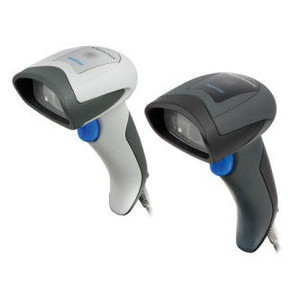
Datalogic GD4520-BKK1S 2D Area Imager Handheld Barcode Scanner
The Datalogic GD4520-BKK1S is a wired 2D area imager handheld scanner designed for retail point-of-sale, office document tracking, and light industrial inventory capture. This model reads both traditional linear (1D) and matrix (2D) barcodes with Datalogic's proven imaging engine and provides immediate visual feedback via Green Spot good-read indication. The GD4520-BKK1S combines multi-interface connectivity—USB, RS-232, and Keyboard Wedge—to integrate into existing enterprise scanning infrastructure without requiring wireless infrastructure or battery management overhead.
Key Features
- 2D Area Imager Technology: Captures 1D linear codes and 2D matrix barcodes (QR, Data Matrix, PDF417, Composite codes) in a single device. This eliminates the need for separate 1D and 2D scanners and simplifies operator training and spare parts inventory.
- Multiple Interface Connectivity: USB, RS-232 serial, and Keyboard Wedge modes allow deployment in modern systems (USB-based POS terminals), legacy equipment (serial-connected barcode verifiers), and hybrid environments. No single connectivity bottleneck means you can standardize a single scanner model across heterogeneous facilities.
- Datalogic Green Spot Visual Feedback: Immediate good-read indication eliminates manual verification steps and reduces misread rates. In high-volume retail or warehouse operations, this feedback mechanism accelerates checkout throughput and reduces liability from undetected failed scans.
- Compact and Lightweight Design: At 222 grams (0.49 lb), the GD4520-BKK1S reduces operator fatigue during extended scanning shifts. The balanced, ergonomic grip minimizes repetitive strain injuries—a material cost factor when handling is performed 8–10 hours per day across dozens of operators.
- Snappy Decoding Engine: Fast decode times mean shorter scan-to-confirmation cycles. In retail environments where transaction speed directly impacts customer experience and throughput, a responsive scanner reduces perceived lag at checkout.
- Wired Connection Model: Eliminates battery charging cycles, missed cordless scanners, and RF interference concerns. Ideal for fixed scanning stations and warehouse zones where tethering is acceptable and continuous uptime is mandatory. Total cost of ownership remains low—no rechargeable batteries to replace every 2–3 years.
- Postal and Composite Code Support: Decodes postal codes (POSTNET, POSTBAR), composite codes (GS1-128 + CC-A/CC-B/CC-C), and other specialty symbologies. Critical for logistics and pharmaceutical workflows where barcode density and encoding standards vary widely.
Integration & Compatibility
The GD4520-BKK1S supports standard interfaces found in enterprise retail and warehouse environments. USB connectivity works with any modern terminal or computer without custom drivers on many operating systems. RS-232 serial mode integrates with legacy warehouse management systems and barcode verifiers that predate USB adoption. Keyboard Wedge emulation allows the scanner to function as an input device on POS systems without requiring separate barcode scanning drivers or middleware.
Organizations deploying mixed scanning environments—retail stores, distribution centers, and back-office data entry—can standardize on the GD4520-BKK1S to reduce device proliferation, simplify repair logistics, and lower operator training overhead. The 5-year limited warranty provides extended protection and supports long-term budget planning for scanning infrastructure renewal.
Deployment Context
The GD4520-BKK1S is best suited for organizations with established wired scanning stations and predictable, moderate-to-high barcode volumes. Retail point-of-sale operations, warehouse receiving, and office mailroom scanning are primary use cases. The wired model is less suitable for mobile, roaming scanning (pallets, shelving, outdoor yards)—consider wireless or mobile computer variants for those scenarios. Standard retail and warehouse barcodes decode reliably; heavily damaged or high-density codes may benefit from Datalogic's HD variants in the Gryphon I family.
Frequently Asked Questions
Q: Does the GD4520-BKK1S require any special drivers or software to operate?
A: USB and Keyboard Wedge modes are plug-and-play on most systems. RS-232 mode may require simple serial port configuration depending on the host device. No proprietary software is required for basic scanning functionality.
Q: Can the GD4520-BKK1S read damaged or faded barcodes?
A: The 2D area imager handles standard retail and warehouse barcodes reliably. Heavily damaged, faded, or high-density codes may result in failed reads. Datalogic's HD (high-density) variants in the Gryphon I family are optimized for challenging barcode conditions.
Q: What is the warranty on the GD4520-BKK1S?
A: The GD4520-BKK1S includes a 5-year limited warranty covering defects in materials and workmanship. This extended coverage helps reduce unexpected replacement costs and supports multi-year budgeting for scanning infrastructure.
Q: Does the wired connection limit where I can deploy the GD4520-BKK1S?
A: Yes, the wired model requires a cable tether to the scanning station (typically 10–15 feet). It is ideal for fixed checkouts, receiving docks, and warehouse counting stations. For mobile scanning (picking, inventory counts on the floor), consider a wireless barcode scanner or mobile computer instead.
Q: Can I use the GD4520-BKK1S with older POS systems and newer ones?
A: Yes. The triple interface (USB, RS-232, Keyboard Wedge) allows seamless integration into legacy serial systems, modern USB terminals, and hybrid environments. This flexibility is a key strength for multi-facility deployments with mixed hardware generations.
Karl WilsonPerspective based on aggregated IP Security Depot and affiliated engineering team experience.
The Datalogic GD4520-BKK1S remains a solid choice for organizations with established wired scanning infrastructure and moderate-to-high barcode volumes. Its three-interface connectivity (USB, RS-232, Keyboard Wedge) is a genuine operational advantage in mixed-generation environments—retail chains and distributors frequently inherit legacy serial systems alongside newer USB-based terminals. The 222-gram weight and balanced ergonomic form factor matter in high-volume operations: repetitive scanning 500+ times per shift, over hundreds of operators annually, adds real strain. Lower weight reduces fatigue-related errors and turnover.
Technical Highlights:
- 2D Area Imager Engine: Reads both 1D and 2D codes in one device, eliminating separate scanner deployments and reducing spares inventory complexity. Postal and composite code support is essential for logistics and pharmaceutical workflows.
- Green Spot Visual Feedback: Immediate good-read confirmation accelerates checkout cycles and prevents undetected failed scans. In retail, this directly impacts transaction throughput and customer experience.
- Wired Connection Model: Zero battery management overhead and 100% uptime predictability. Total cost of ownership stays low—no rechargeable batteries requiring replacement every 2–3 years, no missed cordless scanners, no RF interference tuning.
Deployment Considerations:
- Cable Tether Limitation: The wired model is stationary by design. If your workflow requires roaming scanning (floor picking, inventory by mobile cart), this is the wrong choice—evaluate wireless or mobile computer variants instead.
- Barcode Condition Dependency: Standard retail and warehouse barcodes decode reliably. Heavily damaged, faded, or high-density codes may exceed the optical performance of the base imager. Datalogic's HD variants are purpose-built for those scenarios.
Position the GD4520-BKK1S for fixed scanning stations in retail checkout, warehouse receiving, and back-office mailroom operations. It is particularly valuable in multi-facility deployments where legacy serial equipment coexists with modern USB infrastructure—the triple interface eliminates the need for separate scanner families and standardizes training across locations.