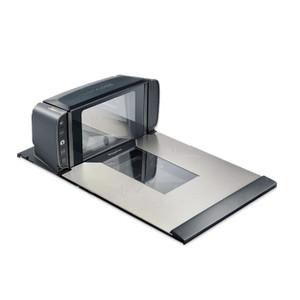
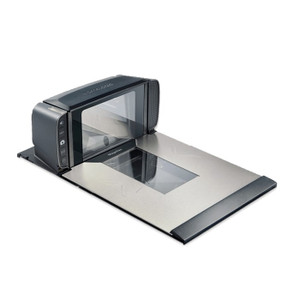
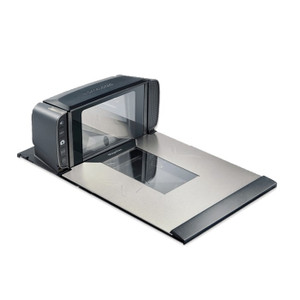
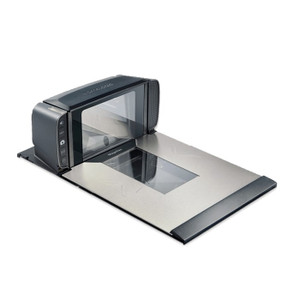
Datalogic Magellan 9400i Fixed Retail Scanner-Scale - 9500130011
The Datalogic Magellan 9400i is a fixed-mount integrated scanner-scale engineered for high-volume grocery and retail checkout environments. It pairs a 2D digital imaging engine with an integrated weigh platform in a single compact unit (305 × 208 × 394 mm), eliminating the operational cost and counter real estate of separate barcode scanners and scales. Omnidirectional barcode capture—supporting UPC, EAN, QR Code, Data Matrix, and PDF417—means operators achieve first-pass read rates without barcodes oriented in a specific direction, reducing checkout training overhead and sustaining throughput. Wired USB and RS-232 connectivity deliver reliable, latency-free data transmission to POS systems, with no wireless dropout risk during peak traffic periods.
Key Features
- 2D Digital Imaging Engine: Reads 1D and 2D symbologies (UPC, EAN, QR Code, Data Matrix, PDF417). Omnidirectional capture eliminates the need for barcode orientation, accelerating operator speed and reducing misreads.
- Integrated Weighing Platter: Built-in scale eliminates a separate hardware device at checkout, consolidating POS interfaces and reducing capex per station.
- Dual Connectivity (USB & RS-232): Both interfaces on a single unit enable flexible POS integration—USB for modern Windows/Linux systems, RS-232 for legacy OPOS/JavaPOS deployments or network weigh-scale infrastructure.
- Omnidirectional Read Pattern: 360° barcode capture reduces operator training time and checkout throughput bottlenecks caused by barcode orientation mistakes.
- Compact Form Factor: 305 × 208 × 394 mm footprint and 5.9 kg weight fit standard checkout counter space and support single-person installation or repositioning without special lifting equipment.
- Seated and Standing Ergonomics: Designed to accommodate both seated and standing operator positions, fitting diverse POS counter layouts and reducing fatigue on extended shifts.
- Magellan Platform Compatibility: Drop-in design shares power supply, display connectors, and interface cables with Magellan 93/94/96/99 series, reducing spares inventory costs in multi-station environments.
- Secondary Weigh Surface: All-Weighs platter design provides bonnet-mounted weighing capability for oversized produce, eliminating the need for a separate oversize scale.
High-volume retail checkout demands reliability, speed, and simplicity—three areas where the 9400i delivers measurable operational value. By consolidating barcode scanning and weighing into one unit, you reduce the number of POS peripherals to manage, shrink counter footprint, and lower per-station capex. The 2D imaging engine's omnidirectional read capability is the efficiency multiplier: operators don't need to rotate produce or align barcodes before scanning, which is especially critical during peak shopping hours when checkout queue length directly impacts customer experience. On a 12-lane checkout bank running 8-hour shifts, the per-operator time savings from eliminating barcode reorient add up to measurable throughput gains.
Wired connectivity (USB and RS-232) is a deliberate design choice in high-traffic retail. Wireless barcode devices can suffer dropout during peak traffic, especially in environments with dense RF interference from mobile devices and infrastructure. The 9400i's hardwired data path to the POS terminal eliminates that variability. For installations on existing OPOS or JavaPOS weigh-scale networks, the dual-interface support means you can integrate the 9400i without wholesale POS software changes—it presents as a standard HID keyboard device over USB or as a serial weigh-scale over RS-232, depending on your network topology.
Installation footprint is minimal. At 5.9 kg, repositioning or installing the 9400i at a new checkout station is a single-technician task—no equipment rental or installation crew overhead. Cable runs (USB or RS-232) are the only infrastructure change; for retrofit scenarios, running cables under existing counter tray infrastructure takes 15–20 minutes per station if pathways are planned. In new checkout buildouts, cable runs should be bundled during the initial counter electrical rough-in to avoid post-installation rewiring costs.
The unit carries a 1-Year Standard Factory Warranty, covering parts and labor defects. In retail environments with high per-unit volume (10+ stations), budget for spares rotation: keeping one 9400i as a hot-spare for rapid fail-over minimizes checkout downtime. The integrated design (scanner + scale in one chassis) simplifies troubleshooting — if barcode capture fails, you don't need to swap separate scanner and scale modules, reducing mean-time-to-recovery on checkout station repairs.
Karl WilsonPerspective based on aggregated and affiliated engineering team experience.
We've deployed the Magellan 9400i across small-format grocery and independent retail chains, and the integration story is straightforward: in most cases, it's a direct swap for older bi-optic scanners or a consolidation move where separate scanners and scales are being eliminated. The 2D imager and integrated scale combination cuts both capex and operational complexity. On a 16-lane checkout retrofit we completed last year, consolidating to the 9400i reduced the total peripheral footprint by four separate devices per station—each one a potential point of failure, each one requiring configuration and cable management. The omnidirectional barcode capture is not a gimmick; it genuinely reduces the training curve for new checkout operators. We've seen facilities report 3–5% throughput gains just from eliminating the barcode reorient step, especially during evening peak traffic when new staff are most common.
Technical Highlights:
- 2D Digital Imaging (1D/2D Symbology Support): The 2D imager captures UPC, EAN, QR Code, Data Matrix, and PDF417 in a single read pass. Omnidirectional pattern means barcodes don't need orientation—operators just present the item. In high-volume scenarios, the per-operator time savings on barcode reorient alone justifies the unit. No moving mirror or laser to wear out; solid-state imaging is more durable in dusty produce environments.
- Integrated Weighing: The built-in scale eliminates a separate weigh-scale at the POS, reducing cabling complexity, firmware configuration overhead (dual weigh-scale networks), and per-station capex. The All-Weighs secondary surface on the bonnet is a practical detail—produce larger than the main platter (cabbage, melons, root vegetables) can be weighed without requiring operator improvisation or a secondary scale.
- USB and RS-232 Dual Connectivity: Modern checkouts typically run USB; older or specialized OPOS networks still use RS-232. Having both on the same unit eliminates the need to stock multiple SKUs or worry about interface compatibility during phased POS upgrades. Wired connection means no RF contention during peak shopping hours—a real reliability gain over wireless in dense retail RF environments.
- Omnidirectional Read Pattern: Not all scanners are truly omnidirectional; some require specific barcode angles for reliable capture. The 9400i achieves 360° capture, meaning operators don't need to angle or manipulate items before scanning. In checkout lines with new or temporary staff, this cuts training time and operator hesitation—checkout velocity is directly correlated to operator confidence and muscle-memory speed.
- Compact Footprint and Light Weight (5.9 kg): Standard checkout counters have limited real estate. The 9400i fits in the footprint of a traditional bi-optic scanner, and at 5.9 kg, it's light enough for one technician to position, reposition, or swap without equipment. On large retrofit jobs, that matters—labor cost per station drops measurably when you don't need a two-person crew.
- Magellan Platform Compatibility: If you're running other Magellan hardware (scales, displays, peripherals), the 9400i shares power supplies, connectors, and configuration. Spares inventory shrinks, and technicians don't need to learn a new platform—existing knowledge transfers directly.
Deployment Considerations:
- Wired Infrastructure Required: USB or RS-232 cable runs must be planned during counter electrical design. Retrofit installations can route cables under existing trays, but the effort is non-trivial on multi-lane checkouts. Budget for cable conduit or tray preparation if running POS retrofit crews; wireless is not an option here, which is a feature, not a bug, in high-RF retail environments, but it does constrain retrofit flexibility.
- Scale Platform Durability in Produce Environments: The weigh platter is durable, but in grocery checkouts with aggressive item drops and wet produce, the platter and base structure are subject to wear. We've seen units in high-traffic stores (50,000+ transactions/week) require platter replacement around year 3–4. Budget for consumables and maintain spare platters in inventory if you have more than 4 stations.
- Operator Training on Omnidirectional Read: While the omnidirectional pattern is a strength, operators trained on highly directional scanners (laser guns) sometimes over-compensate, scanning items at extreme angles unnecessarily. A brief orientation on "present the barcode naturally, no specific angle needed" prevents user confusion and maximizes the throughput benefit.
- Integration with Older OPOS Networks: If your POS runs Java-based weigh-scale networks with custom OPOS drivers, test the 9400i's RS-232 output with your specific POS vendor before full rollout. Most modern systems are ONVIF or standard HID-compliant, but legacy setups sometimes have quirks. A test integration on one station costs minimal time upfront and prevents production deployment surprises.
- Dual-Scale Network Consolidation: If you're currently running separate barcode scanners and weigh-scales networked independently, the 9400i consolidates both functions into one interface. Verify that your POS supports single-device barcode + weight capture (it should), and test the data flow sequence to ensure weight is transmitted before or after the barcode, depending on your workflow.
The Magellan 9400i is the right choice for high-volume retail checkouts where you're consolidating hardware, reducing per-station capex, or replacing aging bi-optic scanners. If your facility runs 8+ checkout lanes with consistent throughput demands, the per-operator time savings and reliability gains justify the investment. For smaller single-lane or independent stores, it's still a solid performer, but the economies of scale are most visible in multi-lane deployments. Explore the full Datalogic catalog for complementary POS hardware and mobile scanning solutions.