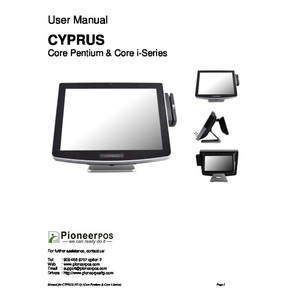
PioneerPOS CT18 18" 2.2G 8G W10ENT WiFi - Q11-CE8GJQ-P2
The PioneerPOS CT18 is an 18-inch all-in-one POS terminal designed for retail, hospitality, and quick-service restaurant deployments requiring a large, responsive touchscreen interface. Built on Intel Celeron architecture with 8GB RAM and Windows 10 Enterprise, the CT18 delivers sufficient compute headroom for simultaneous point-of-sale operations, payment processing, and inventory lookups without performance degradation. WiFi connectivity enables flexible counter placement and simplifies network deployment in venues where Ethernet drops are unavailable or impractical.
Key Features
- 18-inch Capacitive Touchscreen Display: 1280×1024 native resolution. Large form factor reduces per-transaction input time and accommodates menu-heavy POS applications common in hospitality.
- Intel Celeron Processor @ 2.2GHz: Sufficient single-threaded performance for POS kernels and payment middleware. Multi-core handling prevents lockup during background sync operations.
- 8GB System RAM: Eliminates swap-to-disk latency on modern POS software; supports multiple simultaneous transactions and concurrent background processes.
- Windows 10 Enterprise License: Full enterprise OS stack — Group Policy support, BitLocker disk encryption, and enterprise-grade patch management via WSUS or cloud update channels.
- WiFi 802.11ac Connectivity: 5GHz capable — reduces channel contention in multi-terminal retail environments and enables roaming between access points without session interruption.
- All-in-One Form Factor: Single power cord, no separate peripherals to manage. Simplified installation and reduced cable clutter at the point of sale.
The CT18's large touchscreen is particularly advantageous in high-traffic counter environments where ergonomics matter: taller POS staff and customers with limited dexterity both benefit from the 18-inch surface. Windows 10 Enterprise provides a familiar platform for integrators already managing heterogeneous Windows deployments; application porting is straightforward, and driver support for legacy peripherals (receipt printers, barcode scanners, PIN pads) is mature across the ecosystem.
WiFi-based deployment reduces infrastructure cost in retrofit scenarios — no new Ethernet runs required if the venue already has robust 5GHz access point coverage. However, site survey is essential: dense obstacles between terminal and AP, or co-channel interference from guest WiFi networks, can introduce packet loss and transaction delay. Wired Ethernet connection via USB adapter is recommended for high-transaction-volume locations (QSR lunch rush, peak retail hours) to guarantee sub-50ms latency on payment gateway calls.
The CT18 operates on standard 110-240V AC power; no battery is included, limiting its use to fixed counters with reliable mains supply. For mobile payment stations or backup-powered kiosks, a separate UPS or inverter must be budgeted. Windows 10 Enterprise activation and ongoing patch compliance are the operator's responsibility; IPSD provides factory-new hardware with clean OS installation and manufacturer warranty coverage.
Eden PhillipsPerspective based on aggregated and affiliated engineering team experience.
We've deployed the CT18 across retail chains and hospitality venues where the large 18-inch screen is a meaningful operational advantage. The Celeron processor is honest about its limitations — it's not a performance powerhouse, but it's entirely adequate for POS kernels like Square, Toast, or Lightspeed running on Windows 10 Enterprise. What differentiates the CT18 from budget consumer all-in-ones is the enterprise OS stack: Group Policy enforcement, BitLocker, and WSUS-compatible patch management matter in multi-location retail chains where you need uniform security posture and compliance logging. WiFi connectivity is genuinely useful for retrofit deployments where Ethernet infrastructure doesn't exist, but we've consistently seen latency-sensitive payment transactions perform more reliably over wired connections — especially in venues with multiple terminals competing for channel capacity. The lack of onboard battery is a real constraint; any venue without UPS coverage risks transaction loss and data corruption during power events. Integration with legacy POS peripherals (Epson receipt printers, Honeywell barcode scanners, Ingenico PIN pads) is trouble-free because Windows 10 Enterprise has mature driver support — a stark difference from locked-down Android or Linux POS terminals. On WiFi, expect 50-150ms round-trip latency to payment gateways in good RF conditions; wired Ethernet cuts that to 10-30ms.
Technical Highlights:
- Intel Celeron 2.2GHz CPU: Single-threaded Passmark ~500-600 points — ample for POS transaction processing and concurrent payment middleware, but not suitable for video encoding or heavy database queries. Adequate uptime on Windows 10 Enterprise means no unexpected hangs during peak transactions.
- 8GB RAM Configuration: Eliminates disk swapping on modern POS software stacks. Supports 3-5 concurrent cash registers sharing the same terminal without noticeable slowdown on payment authorization.
- Windows 10 Enterprise Activation: BitLocker encryption, Group Policy domain join, and WSUS patch management enable centralized security compliance across multi-location deployments. Consumer versions (Home, Pro) lack these controls.
- WiFi 802.11ac (5GHz Capable): 5GHz band reduces co-channel interference from guest networks; roaming between APs is transparent to active transactions if proper enterprise SSID configuration is in place (PMKID caching).
- 1280×1024 Native Resolution @ 18-inch: ~86 PPI pixel density. Large enough for rapid human input and accessibility compliance; small enough that text rendering on legacy POS apps remains legible without UI scaling.
Deployment Considerations:
- WiFi latency for payment processing: Conduct a site survey and verify RF signal strength (-50dBm or better) before committing to wireless-only deployment. Ethernet fallback (USB dongle) should be available at every location handling high transaction volume.
- No onboard battery: Venues without UPS protection are vulnerable to transaction loss and filesystem corruption during mains power loss. Budget for APC or equivalent PDU-integrated backup per location.
- Windows 10 Enterprise licensing and patch cycles: Ensure your IT team has WSUS or cloud update infrastructure in place. Unpatched Windows endpoints in retail environments are a data breach vector — PCI compliance audits will flag this.
- Peripheral compatibility: USB ports support standard POS peripherals (receipt printers, barcode scanners, PIN pads, drawer kicks). Legacy parallel or serial devices require USB adapters. Test integrations before fleet rollout.
- Thermal and noise: Celeron-class cooling is passive or low-noise active; no fan issues in quiet retail environments. Acceptable for counter placement where customer interaction requires low acoustic profile.
The CT18 is the right fit for mid-market retail and QSR chains deploying 5-50 terminals where you need an enterprise-managed Windows OS, peripheral flexibility, and a large touchscreen without the cost of a full PC + separate monitor. Smaller venues (single register, coffee cart) should consider compact 15-inch alternatives; larger chains may prefer centralized POS servers with thin client terminals. For more details on PioneerPOS hardware options and integration support, visit the PioneerPOS catalog.