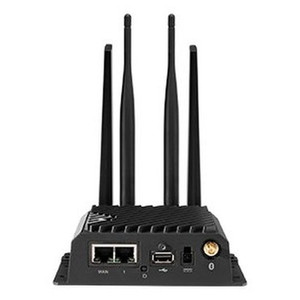
Cradlepoint TBA3-0700C4E-GM S700 Series Wireless Router
Overview
The Cradlepoint TBA3-0700C4E-GM is a compact desktop wireless router designed for enterprise deployments requiring simultaneous cellular and Wi-Fi connectivity. It integrates a 3G/4G LTE modem with Wi-Fi 6 (802.11ax) and Ethernet, delivering redundant network access for branch offices, field command centers, and remote IoT installations. The unit ships with a 3-year NetCloud IoT Essentials subscription, providing centralized cloud-based device management, automatic failover routing, and real-time cellular connectivity monitoring—eliminating manual intervention when primary links fail.
Key Features
- LTE/4G Cellular Modem (150 Mbps): The integrated modem delivers up to 150 Mbps data throughput, sufficient for concurrent video surveillance feeds, IoT sensor uplinks, and branch office traffic. This means you can provision a remote warehouse or construction site with live camera feeds and continuous connectivity without relying solely on unpredictable broadband availability.
- Wi-Fi 6 (802.11ax) Support: Wi-Fi 6 reduces latency and improves throughput density compared to older 802.11ac, critical when multiple mobile devices or tablets are simultaneously connecting at job sites or temporary installations. The standard also improves power efficiency on client devices, reducing battery drain during extended field operations.
- Dual Connectivity (Ethernet + Cellular + Wi-Fi): Three independent data paths mean the router can bond cellular and hardwired Ethernet for higher aggregate throughput, or automatically switch to LTE if the Ethernet circuit fails—no manual cutover required. This architecture is essential for applications where uptime is non-negotiable, such as surveillance monitoring or critical IoT telemetry.
- NetCloud IoT Essentials Management (3-Year Subscription): Cloud-based dashboard provides visibility into cellular signal strength, data usage, and link status across all deployed units. Administrators can remotely configure failover policies, reboot devices, and adjust routing rules without truck rolls, reducing support costs in geographically dispersed operations.
- Compact Desktop Form Factor: The black desktop unit is sized for branch office shelving, warehouse back offices, and mobile command vehicles—no wall mounting required. Small footprint minimizes installation complexity compared to larger industrial routers.
- SIM Card Provisioning: Standard SIM slot supports major carrier LTE networks. Organizations can pre-provision SIM cards with locked data plans or carrier-managed profiles, enabling plug-and-play deployment at remote sites.
Integration & Compatibility
The TBA3-0700C4E-GM integrates with the Cradlepoint NetCloud management platform, allowing centralized oversight of multiple units deployed across sites. It supports standard Ethernet connectivity, meaning integration with existing branch office infrastructure (surveillance NVRs, access control panels, IP phones) requires no special adapters. Organizations already running network video recorders or managed IP camera systems can layer this router as a redundant uplink without redesigning their network topology.
Deployment Considerations
The 150 Mbps LTE ceiling is acceptable for most remote branch and IoT scenarios but will not saturate modern gigabit office bandwidth. If your deployment requires sustained video stream from 4+ cameras or large file transfers to cloud storage, verify that 150 Mbps meets your peak traffic modeling. Cellular signal strength depends on carrier coverage at the installation site—conduct site surveys before deploying in weak-signal areas. The 3-year NetCloud subscription is included but does not cover carrier data plan costs; budget separately for SIM-based cellular service.
When to Choose a Different Model
If your requirement is a stationary enterprise gateway with support for 10+ simultaneous branch locations and sub-second failover, explore higher-end models in the Cradlepoint portfolio that offer modular cellular expansion and redundant WAN inputs. If you need multi-gigabit throughput over cellular, current LTE technology cannot deliver—wait for 5G modem integration. If your installation is purely Wi-Fi with no cellular requirement, a standard enterprise access point will be more cost-effective.
Frequently Asked Questions
Q: Does the TBA3-0700C4E-GM support failover between Ethernet and LTE automatically?
A: Yes. The router continuously monitors both links and will automatically route traffic through LTE if the Ethernet connection fails. Failover timing depends on link detection configuration, typically completing within seconds.
Q: What carriers are compatible with the TBA3-0700C4E-GM?
A: The device supports standard SIM cards on major LTE networks. Consult with your carrier regarding data plan compatibility and provisioning requirements for the specific SIM you plan to deploy.
Q: Is the 3-year NetCloud subscription transferable between devices?
A: The NetCloud subscription is tied to the device. Consult Cradlepoint licensing documentation for transfer or upgrade options.
Q: Can I use the TBA3-0700C4E-GM indoors and outdoors?
A: The device is rated for desktop indoor use. For outdoor installations, additional environmental enclosures or junction boxes are required to meet temperature and moisture specifications.
Q: What is the maximum number of Wi-Fi clients the router supports?
A: The router supports standard enterprise Wi-Fi 6 client density. For exact concurrent client limits under your anticipated traffic load, consult Cradlepoint technical specifications or request a configuration review.
Q: Does the TBA3-0700C4E-GM support VLAN routing and policy-based failover?
A: Yes, standard enterprise routing features are supported through NetCloud management and local configuration. Consult the device technical documentation for detailed VLAN and QoS policy capabilities.
Ted PerryPerspective based on aggregated IP Security Depot and affiliated engineering team experience.
The Cradlepoint TBA3-0700C4E-GM (also searched as TBA3 0700C4E GM) is a straightforward choice when you need cellular backup at a branch office or field site without over-engineering a full redundant gateway architecture. The 150 Mbps modem ceiling is the key limiting factor—it's adequate for concurrent video feeds and IoT telemetry but won't handle simultaneous large file transfers or bandwidth-hungry applications. The Wi-Fi 6 support is a genuine advantage if you're deploying tablets or mobile devices at temporary sites; 802.11ax reduces congestion and power draw compared to older standards.
Technical Highlights:
- 150 Mbps LTE Modem: Sufficient for 2–3 simultaneous H.264 video streams (2 Mbps each) plus IoT sensor uplinks, leaving headroom for office traffic. If your site needs more bandwidth, this isn't the model—you'll need a carrier aggregation or 5G gateway.
- Wi-Fi 6 (802.11ax) + Ethernet + LTE Bonding: Three independent paths means you can use Ethernet as primary, LTE as backup, or bond both for higher aggregate throughput during peak times. NetCloud automates the routing decision—no manual intervention required when a link fails.
- NetCloud IoT Essentials (3-Year License Included): Cloud dashboard eliminates the need to SSH into each unit. You get real-time signal strength, data usage tracking, and remote reboot capability across dozens of sites from one pane of glass.
Deployment Considerations:
- Cellular signal strength is site-dependent; weak coverage will bottleneck the 150 Mbps theoretical max. Always conduct site surveys before final placement commitments.
- NetCloud subscription covers device management but not carrier data plan costs—budget SIM-based cellular separately. Verify your carrier supports the SIM form factor and provisioning workflow before mass deployment.
- The desktop form factor is convenient for branch offices but not weatherproof. Outdoor installations require an enclosure, adding cost and bulk.
Position the TBA3-0700C4E-GM for distributed retail, warehouse, or construction sites where branch offices need resilience against ISP outages but don't require multi-gigabit throughput. It's not a data center gateway, and it's not a mobile hotspot—it's a pragmatic failover router for locations where cellular is a safety net, not the primary link.