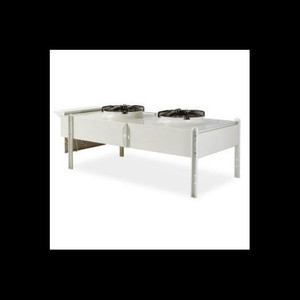
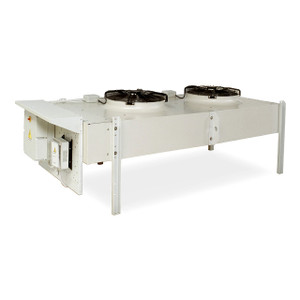
APC by Schneider Electric ACCD75215 Single-Fan Single-Circuit Condenser Unit
Overview
The APC by Schneider Electric ACCD75215 is a single-fan, single-circuit condenser designed for precision cooling applications in data centers, network rooms, and equipment-dense environments where reliable heat rejection is critical. Rated at 6,450 CFM maximum airflow and 1,000W power consumption on a 208–240V AC single-phase feed, this unit is purpose-built to serve as the outdoor or remote condenser half of a split cooling system — rejecting heat extracted from the protected space by a paired evaporator unit. If you're sizing a supplemental or primary cooling loop for a mid-scale computer room or a row-based deployment, the ACCD75215 belongs in the conversation early.
Part of the APC by Schneider Electric cooling line, this condenser pairs with compatible indoor evaporator/air handler units to complete a refrigerant-based split system. At 260 lb and 42.7" × 40" × 37.7", it's a substantial piece of equipment — plan mounting and rigging before the unit arrives on site.
Key Features
- 6,450 CFM Maximum Airflow: That's a meaningful volume of air moved across the condenser coil per minute. Higher CFM means the coil stays cooler under load, which translates directly to better system efficiency (lower head pressure, less compressor strain) on hot days or during peak load spikes. Undersizing airflow here is the most common field error in split-system deployments.
- 1,000W Power Consumption: A 1,000W fan motor draw on a dedicated 208–240V branch circuit is straightforward to provision — one 20A circuit at 240V with appropriate breaker sizing leaves adequate headroom. No specialty power distribution required.
- 208–240V AC Single-Phase Input: The 208–240V single-phase design aligns with standard commercial building power in North America, making it compatible with typical PDU or dedicated HVAC circuit feeds without requiring a step-up transformer or three-phase panel access. Confirm conductor sizing for a 1,000W load at your run distance before pulling wire.
- Single-Circuit Refrigerant Design: A single refrigerant circuit means one compressor loop, one set of service valves, and a simpler commissioning process compared to dual-circuit units. For deployments under ~20 tons of cooling load, this is often the right complexity level — fewer components that can require service.
- Single-Fan Configuration: One fan motor driving the condenser coil keeps the electrical footprint clean and reduces potential maintenance touch points. In low-redundancy deployments where the paired cooling system already has N+1 at the indoor unit, a single-fan condenser is an appropriate match.
- 260 lb Unit Weight: At 260 lb, this condenser requires a structural roof or pad mount rated for point load plus dynamic vibration. Factor in isolation pads and confirm the mounting surface load rating before scheduling installation — a field discovery that the roof deck isn't rated is an expensive delay.
- Compact Footprint for Its Class: At 42.7" wide × 40" deep × 37.7" tall, the ACCD75215 fits on a standard equipment pad with room for service access on all sides, assuming you follow the manufacturer's minimum clearance requirements for condenser coils.
Integration & Compatibility
The ACCD75215 is designed to integrate with compatible precision cooling systems from the APC by Schneider Electric portfolio. As a condenser-only unit, it requires a matched indoor evaporator/air handler to complete the refrigerant loop — it does not function as a standalone cooling device. Refrigerant type, line set sizing, and maximum pipe run distance must be confirmed against the paired indoor unit's documentation before installation. This unit is not a plug-and-play addition to an existing system from a different manufacturer without verifying refrigerant circuit compatibility.
For data center planners evaluating full-room or in-row cooling architectures, pairing this condenser with an appropriate APC evaporator unit and a compatible power distribution infrastructure is the recommended path. Review your data center cooling planning resources to size the system correctly before ordering — undersizing the indoor unit relative to the condenser's capacity is a common over-spec error that wastes budget.
Frequently Asked Questions
Q: What indoor unit does the ACCD75215 pair with?
A: The ACCD75215 is a condenser-only unit that must be matched with a compatible APC by Schneider Electric evaporator or air handler unit. The paired indoor unit must be specified based on the required cooling capacity (BTU/hr), refrigerant type, and line set configuration. Consult the APC cooling system documentation or a licensed HVAC engineer to confirm the correct indoor unit match before purchasing.
Q: What is the power requirement for the ACCD75215?
A: The ACCD75215 requires a 208–240V AC single-phase supply and draws 1,000W under operation. Provision a dedicated branch circuit sized for this load, with appropriate breaker and conductor ratings for your run distance and local electrical code.
Q: What is the maximum airflow rating of the ACCD75215?
A: The ACCD75215 delivers up to 6,450 CFM of airflow across the condenser coil. This rating represents peak fan capacity and directly affects the unit's ability to reject heat efficiently in high ambient temperature conditions.
Q: What is the warranty on the ACCD75215?
A: Based on available product documentation, the ACCD75215 carries a 1-year manufacturer warranty. For specific warranty terms and coverage details, contact APC by Schneider Electric directly or refer to the warranty documentation included with the unit.
Q: Can the ACCD75215 be installed on a rooftop?
A: Rooftop installation is a common deployment scenario for condenser units of this class, but requires a structural assessment first. The ACCD75215 weighs 260 lb — the mounting surface must be rated for that point load plus dynamic vibration. Isolation pads are strongly recommended. Confirm minimum clearance requirements for airflow around the coil before finalizing pad placement.
Q: Is the ACCD75215 a complete cooling system?
A: No. The ACCD75215 is the outdoor condenser component of a split cooling system only. It must be installed with a compatible indoor evaporator/air handler unit, refrigerant line set, and associated controls to form a functional cooling system. It does not provide cooling independently.
The ACCD75215 is a unit I'd specify when the load profile is well-defined and the deployment doesn't need dual-circuit redundancy at the condenser. The 6,450 CFM fan capacity is the spec that matters most here — it sets the ceiling on how efficiently the refrigerant loop can reject heat in a warm ambient, and in my experience, teams that undersize condenser airflow relative to the indoor unit's capacity end up chasing high-pressure faults in summer. Know your worst-case ambient temperature before you finalize this selection.
Technical Highlights:
- 6,450 CFM Airflow: Sufficient to support meaningful cooling capacity in moderate-to-warm ambient conditions. This is the number to cross-reference against the paired indoor unit's rated capacity — if the indoor unit is oversized relative to this condenser's heat rejection capability, you'll see efficiency losses under peak load.
- 1,000W / 208–240V Single-Phase: Clean power profile. A single 20A dedicated circuit at 240V is all you need on the electrical side — no three-phase tap, no specialty transformer. That simplifies the electrical rough-in considerably on sites where three-phase panel access near the condenser location is limited.
- 260 lb / 42.7" × 40" × 37.7" Form Factor: This is not a rooftop curb-mount you position after the fact. At 260 lb, structural coordination happens before the equipment order ships. Confirm pad or curb load ratings and vibration isolation mounting strategy during the design phase, not during installation.
Deployment Considerations:
- The ACCD75215 is a single-circuit unit — if the paired indoor system goes down, you lose all cooling. For mission-critical spaces (Tier III equivalent or above), evaluate whether a dual-circuit condenser or N+1 system architecture is required before committing to this configuration.
- Refrigerant line set sizing and maximum allowable run distance must be confirmed against the specific paired indoor unit — these are not universal values. Exceeding the manufacturer's maximum line set length degrades system performance and can void warranty coverage.
For a mid-scale computer room or edge data facility in the 5–15 ton cooling range where the load is predictable and N+1 redundancy is handled at the room level rather than the component level, the ACCD75215 is a straightforward, well-matched condenser choice — provided the structural and electrical groundwork is done correctly before it goes on the truck.