
Speco Technologies H6HRL4TB vs Speco Technologies H6WHRLN10TB: Specification Comparison
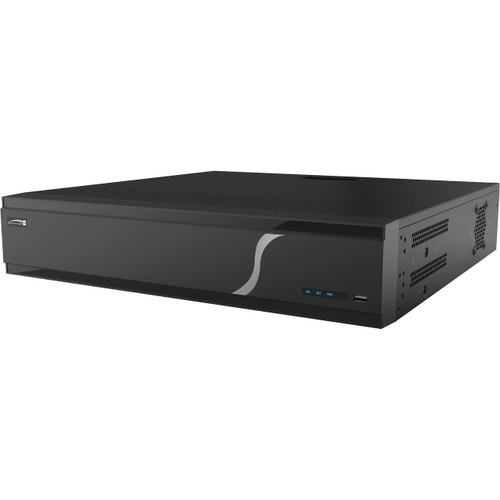
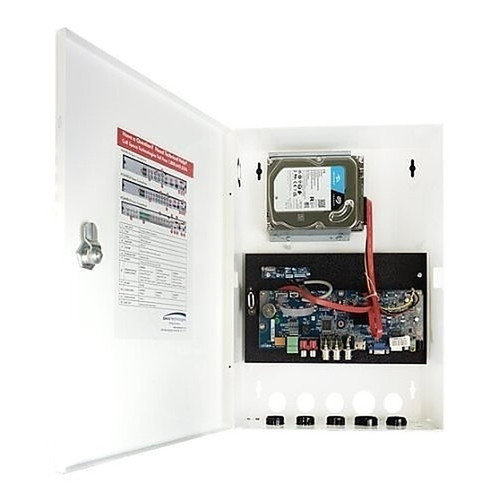
Both the Speco Technologies H6HRL4TB and H6WHRLN10TB are 6-channel hybrid recorders sharing an identical chassis form factor and the same channel architecture: four hybrid inputs accepting TVI analog or IP cameras, plus two dedicated IP-only channels. The primary decision axis between these two units is internal storage capacity. Secondary considerations include the additional feature specifications documented for the H6HRL4TB versus the sparser spec sheet available for the H6WHRLN10TB, and the H6WHRLN10TB's explicit NDAA compliance certification.
In This Guide
- How much onboard storage does each recorder provide, and what does that mean for video retention?
- Which recorder offers more documented feature depth — compression, analytics, resolution, and camera compatibility?
- How do the two recorders compare on physical build, mounting, and regulatory compliance?
- Which should you choose: the H6HRL4TB or the H6WHRLN10TB?
- Side-by-Side Specs
- FAQ
How much onboard storage does each recorder provide, and what does that mean for video retention?
The H6HRL4TB ships with a 4TB internal hard drive, while the H6WHRLN10TB ships with 10TB built-in storage — a 2.5× increase in raw capacity. For a 6-channel deployment recording continuously, more storage directly translates to longer retention windows before footage is overwritten. Speco's published channel range for this product line is listed as 1TB–14TB, confirming the 4TB and 10TB variants sit within the same recorder platform. Neither spec sheet documents the maximum expansion or additional drive bay availability beyond the shipped capacity, so buyers requiring capacity beyond 10TB cannot confirm upgrade headroom from the available specifications alone.
Which recorder offers more documented feature depth — compression, analytics, resolution, and camera compatibility?
The H6HRL4TB carries a substantially more detailed specification set. Documented features include H.265 compression, 5MP maximum resolution, ONVIF IP camera compatibility, deep learning analytics with people counting capability, two-way audio, and IR/Day-Night support. PoE (802.3af) is listed, along with a 2.8–12 mm lens focal length reference — though that lens spec appears more relevant to a camera than a recorder and may reflect a data population artifact rather than a recorder-native spec.
The H6WHRLN10TB's specification sheet does not document compression standard, maximum resolution, analytics capabilities, audio support, or PoE provisioning. Both units share TVI analog and IP camera input compatibility. The H6WHRLN10TB's spec sheet includes nominal voltage and candela fields (values associated with strobes/horns) that appear to be data population errors unrelated to a recorder, and should not be relied upon. Buyers evaluating the H6WHRLN10TB on features beyond storage and channel count cannot draw conclusions from the available specifications.
How do the two recorders compare on physical build, mounting, and regulatory compliance?
Both recorders share identical chassis dimensions of 17.6 × 4.0 × 13.0 inches and carry the same 2-year warranty and white housing color. Weight differs slightly: the H6HRL4TB is listed at 6.0 lbs versus 5.0 lbs for the H6WHRLN10TB — a modest difference that may reflect drive mass variation or a spec rounding difference, as the 10TB unit would typically be expected to weigh equal to or more than the 4TB unit; buyers should verify with Speco directly.
Mount type for the H6HRL4TB is listed as Wall and Pole. The H6WHRLN10TB lists Wall and Ceiling mounting. The H6WHRLN10TB carries an explicit NDAA compliance certification, which is a procurement requirement for U.S. federal, state, and many institutional buyers. NDAA compliance status is not documented for the H6HRL4TB in the available specifications.
Which should you choose: the H6HRL4TB or the H6WHRLN10TB?
Our take: The H6WHRLN10TB is the stronger choice when storage capacity and NDAA compliance are the primary procurement drivers — its 10TB built-in storage provides 2.5× more retention headroom than the H6HRL4TB's 4TB, and its explicit NDAA certification opens it to government and institutional deployments where the H6HRL4TB's compliance status is undocumented. Conversely, the H6HRL4TB is the better-documented option for feature-sensitive deployments: it specifies H.265 compression, 5MP resolution support, ONVIF compatibility, deep learning analytics with people counting, two-way audio, and PoE (802.3af) — none of which are confirmed in the H6WHRLN10TB's available spec sheet. Both units share the same 6-channel hybrid architecture, identical chassis dimensions, 2-year warranty, and white housing. Installers building NDAA-compliant or storage-heavy deployments should favor the H6WHRLN10TB; those requiring verified analytics, compression, or audio specifications should favor the H6HRL4TB or request a full datasheet for the H6WHRLN10TB before specifying.
Side-by-Side Comparison
Spec-for-spec, from manufacturer data.
| Specification | Speco Technologies H6HRL4TB | Speco Technologies H6WHRLN10TB |
|---|---|---|
| SKU | H6HRL4TB | H6WHRLN10TB |
| Total Channels | 6 (4 hybrid + 2 dedicated IP) | 6 (4 hybrid + 2 IP) |
| Hybrid Input Support | TVI / HD-SDI / HD-TVI and IP | TVI analog and IP |
| Internal Storage | 4TB | 10TB |
| Maximum Resolution | 5MP | — |
| Compression | H.265 | — |
| ONVIF Compatibility | Yes | — |
| PoE Support | 802.3af | — |
| Analytics | Deep Learning (DLPU); People Counting | — |
| Audio | Two-way | — |
| NDAA Compliance | — | Yes |
| Mount Type | Wall; Pole | Wall; Ceiling |
| Dimensions (in) | 17.6 x 4.0 x 13.0 | 17.6 x 4.0 x 13.0 |
| Weight | 6.0 lbs | 5.0 lbs |
| Housing Color | White | White |
| Warranty | 2-year | 2-year |
Frequently Asked Questions
Which should you choose: the H6HRL4TB or the H6WHRLN10TB?
The H6WHRLN10TB is the stronger choice when storage capacity and NDAA compliance are the primary procurement drivers — its 10TB built-in storage provides 2.5× more retention headroom than the H6HRL4TB's 4TB, and its explicit NDAA certification opens it to government and institutional deployments where the H6HRL4TB's compliance status is undocumented. Conversely, the H6HRL4TB is the better-documented option for feature-sensitive deployments: it specifies H.265 compression, 5MP resolution support, ONVIF compatibility, deep learning analytics with people counting, two-way audio, and PoE (802.3af) — none of which are confirmed in the H6WHRLN10TB's available spec sheet. Both units share the same 6-channel hybrid architecture, identical chassis dimensions, 2-year warranty, and white housing. Installers building NDAA-compliant or storage-heavy deployments should favor the H6WHRLN10TB; those requiring verified analytics, compression, or audio specifications should favor the H6HRL4TB or request a full datasheet for the H6WHRLN10TB before specifying.
Is the H6HRL4TB or H6WHRLN10TB better for longer video retention on all six channels?
The H6WHRLN10TB is better for retention. Its 10TB built-in storage is 2.5× the 4TB drive in the H6HRL4TB. On a continuous 6-channel deployment, more storage directly extends how long footage is kept before overwriting. Neither spec sheet documents the recording bitrate or calculates days of retention, so exact figures require a retention calculator using your specific camera resolutions and frame rates.
Can either recorder be used in a U.S. government or federally funded installation that requires NDAA compliance?
Only the H6WHRLN10TB has documented NDAA compliance in the available specifications. The H6HRL4TB's NDAA status is not listed in its spec sheet. For any procurement requiring NDAA-compliant equipment — federal, state, or institutional — specify the H6WHRLN10TB or confirm the H6HRL4TB's status directly with Speco Technologies before purchasing.
Do both recorders support a mix of analog TVI cameras and IP cameras on the same system?
Yes — both units share the same 6-channel hybrid architecture: four channels accept either TVI analog or IP camera inputs, and two channels are dedicated IP-only. The H6HRL4TB additionally documents ONVIF compatibility for the IP channels. ONVIF support is not explicitly listed for the H6WHRLN10TB in the available specifications, though both units are described as supporting TVI and IP inputs.
More NVR Comparisons
- Speco Technologies H6HRL10TB vs Speco Technologies H6WHRLN10TB
- Speco Technologies H6HRL10TB vs Speco Technologies H6HRLN
- Speco Technologies H6WHRLN10TB vs Speco Technologies H6HRLN
- Speco Technologies H6HRN4TB vs Speco Technologies H6HRL10TB
- Speco Technologies H6HRN4TB vs Speco Technologies H6WHRLN10TB
- Speco Technologies H6HRN6TB vs Speco Technologies H6HRL10TB
Get a Second Opinion on Your Camera Choice
Share your site layout, coverage goals, and budget. Our team will validate the camera selection, flag anything we would change, and recommend products that match the use case.