
Pelco ITV529-1ERS vs Speco Technologies V5T2: Specification Comparison
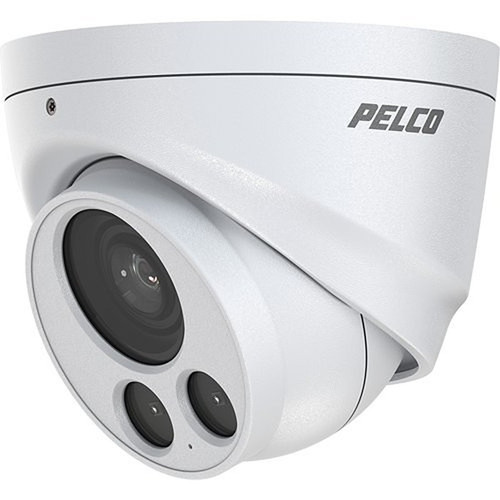
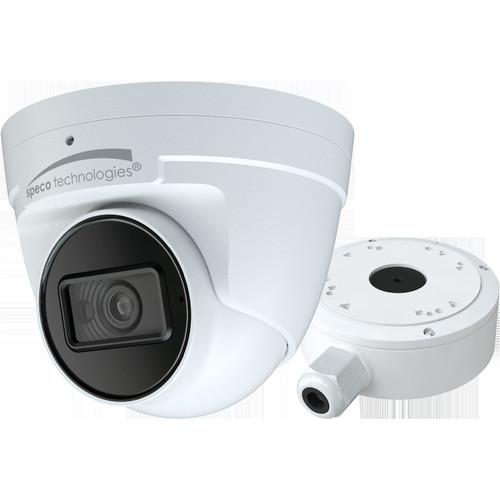
Both the Pelco ITV529-1ERS and the Speco Technologies V5T2 are 5MP turret-form fixed cameras targeting the mid-tier IP and analog-HD surveillance market respectively. The comparison is meaningful at the resolution level, but buyers should note a fundamental technology divergence: the Pelco unit is a network IP camera (H.265/H.264, PoE, ONVIF) while the Speco is an HD-TVI analog coax camera (12V DC). This comparison evaluates how each model's published specifications serve different infrastructure contexts.
In This Guide
How do the imaging specs compare?
Both cameras resolve at 5MP, but their sensor implementations differ. The Pelco ITV529-1ERS uses a 1/2.8-inch CMOS sensor at up to 30 fps with an F1.4 aperture and a varifocal lens, delivering WDR (Wide Dynamic Range) for mixed-lighting environments. The Speco V5T2 uses a 1/2.7-inch CMOS sensor at a maximum of 20 fps with a fixed 2.8mm wide-angle lens and DWDR (Digital Wide Dynamic Range). No minimum illumination figure is provided in the published specs for either unit.
On frame rate alone, the Pelco ITV529-1ERS delivers 30 fps versus the Speco V5T2's 20 fps — a 50% advantage that matters in fast-motion scenes. The Pelco's WDR is a hardware-level capability, whereas the Speco's DWDR is a digital post-processing function, generally considered less effective in severe contrast conditions. The Speco V5T2 spec confirms integrated IR for day/night operation; the Pelco ITV529-1ERS lists IR and day/night capability, though no IR range figure is published for either model.
What about installation and environment?
The Pelco ITV529-1ERS is rated IP52 for indoor use and IP66 for outdoor mounting, with IK09 vandal resistance and an operating range of -10°C to +60°C (14°F to 140°F). It is powered via PoE (802.3at / Class 3) over a single Cat cable, eliminating a separate power run. The Speco V5T2 carries an IP67 rating and an operating range of -22°F to 122°F (-30°C to 50°C), making it the more weather-resistant option at lower temperatures, powered by 12V DC — requiring a separate power supply or power supply distribution point.
Form-factor and mounting options are broader for the Pelco: published specs cite wall, ceiling, pole, pendant, corner, and rack mounting. The Speco V5T2 spec includes a junction box in the package, reducing installation labor on HD-TVI cable runs. The Pelco weighs 625g; the Speco is heavier at 2.21 lbs (approximately 1,003g). Both ship in white housings.
Which fits your VMS and analytics better?
The Pelco ITV529-1ERS is a network camera conforming to ONVIF Profile S and Profile T, enabling broad compatibility with IP-based VMS platforms and supporting advanced metadata and motion events per Profile T. It supports HTTPS encryption, microphone input, and onboard microSD/SDHC/SDXC storage (up to 256GB tested) for edge recording. Video compression options include H.265, H.264, and MJPEG, with H.265 delivering meaningful bandwidth and storage savings relative to H.264.
The Speco V5T2 transmits HD-TVI over coaxial cable and lists ONVIF Profile I, which covers IP interoperability but does not replace the requirement for an HD-TVI-capable DVR or hybrid recorder. No audio capability, edge storage, or encryption specification is published for the V5T2. Buyers integrating into an existing analog-HD infrastructure will find the Speco fits naturally; those deploying on IP/NVR infrastructure should note the V5T2 requires a TVI-capable recorder or encoder.
Which should you choose: the ITV529-1ERS or the V5T2?
Our take: The ITV529-1ERS is the stronger choice when the deployment runs IP infrastructure with PoE switching and a network VMS. It delivers 30 fps versus the V5T2's 20 fps, hardware WDR versus digital WDR, and adds H.265 compression, ONVIF Profile S/T, HTTPS encryption, edge microSD storage up to 256GB, and audio input — none of which are present in the V5T2 spec sheet. The V5T2 counters with a lower cold-temperature floor (-22°F vs 14°F), a marginally higher IP rating (IP67 vs IP66), and a 3-year warranty versus Pelco's 5-year warranty. The Speco V5T2 is the correct selection where an HD-TVI coax infrastructure is already in place and replacing cable runs is not feasible; the Pelco ITV529-1ERS suits new IP deployments where PoE infrastructure, VMS integration, edge storage, and encrypted transport are requirements.
Side-by-Side Comparison
Spec-for-spec, from manufacturer data.
| Specification | Pelco ITV529-1ERS | Speco Technologies V5T2 |
|---|---|---|
| Resolution | 5 MP | 5 MP (2592×1944) |
| Image Sensor | 1/2.8" CMOS | 1/2.7" CMOS |
| Lens Type | Varifocal (fixed noted in some fields) | Fixed 2.8mm wide-angle |
| Aperture | F1.4 | — |
| Max Frame Rate | 30 fps | 20 fps |
| Video Compression | H.265; H.264; MJPEG | HD-TVI |
| WDR | WDR (hardware) | DWDR (digital) |
| IR / Day-Night | IR; Day/Night | IR; Day/Night |
| IP Rating | IP52 (indoor) / IP66 (outdoor) | IP67 |
| IK / Impact Rating | IK09 | — |
| Operating Temperature | -10°C to +60°C (14°F to 140°F) | -22°F to 122°F (-30°C to 50°C) |
| Power Input | PoE 802.3at (Class 3) | 12V DC |
| ONVIF | Profile S; Profile T | Profile I |
| Edge Storage | microSD/SDHC/SDXC (256GB tested) | — |
| Audio | Microphone supported | — |
| HTTPS Encryption | Yes | — |
| Weight | 625 g | 2.21 lbs (~1,003 g) |
| Warranty | 5-year | 3-year |
Frequently Asked Questions
Which should you choose: the ITV529-1ERS or the V5T2?
The ITV529-1ERS is the stronger choice when the deployment runs IP infrastructure with PoE switching and a network VMS. It delivers 30 fps versus the V5T2's 20 fps, hardware WDR versus digital WDR, and adds H.265 compression, ONVIF Profile S/T, HTTPS encryption, edge microSD storage up to 256GB, and audio input — none of which are present in the V5T2 spec sheet. The V5T2 counters with a lower cold-temperature floor (-22°F vs 14°F), a marginally higher IP rating (IP67 vs IP66), and a 3-year warranty versus Pelco's 5-year warranty. The Speco V5T2 is the correct selection where an HD-TVI coax infrastructure is already in place and replacing cable runs is not feasible; the Pelco ITV529-1ERS suits new IP deployments where PoE infrastructure, VMS integration, edge storage, and encrypted transport are requirements.
Is the ITV529-1ERS or V5T2 better for low-light performance?
Neither published spec sheet provides a minimum illumination figure, so a direct lux-level comparison cannot be made from available data. Both cameras list day/night switching and IR capability. The Pelco ITV529-1ERS specifies hardware WDR and an F1.4 aperture, which generally improves low-light and high-contrast performance compared to digital WDR. The Speco V5T2 lists DWDR only. Buyers requiring confirmed low-light lux ratings should request full datasheets from each manufacturer.
Can the Speco V5T2 connect directly to an NVR?
The Speco V5T2 is an HD-TVI camera that transmits video over coaxial cable. It requires an HD-TVI-capable DVR or a hybrid NVR with TVI inputs. It cannot connect directly to a standard IP NVR via Ethernet without an HD-TVI-to-IP encoder. The Pelco ITV529-1ERS is a native IP camera and connects directly to any ONVIF-compatible NVR over Ethernet.
Which camera has the better warranty?
The Pelco ITV529-1ERS carries a 5-year warranty per its published specification. The Speco V5T2 carries a 3-year warranty. No additional warranty terms or conditions are provided in the spec data supplied for this comparison.
Get a Second Opinion on Your Camera Choice
Share your site layout, coverage goals, and budget. Our team will validate the camera selection, flag anything we would change, and recommend products that match the use case.