
i-PRO X86530-Z2 vs i-PRO X86530-Z2-1: Specification Comparison
Both the i-PRO WV-X86530-Z2 and WV-X86530-Z2-1 are 17MP outdoor AI PTZ dome cameras sharing the same sensor array, 21x motorized optical zoom, and PoE++ power input. They target the same installation tier—perimeter surveillance requiring long-range PTZ coverage with on-device AI analytics. This comparison examines where the two SKUs diverge across imaging performance, environmental and installation characteristics, and VMS/analytics integration, drawing exclusively from the provided specifications for each model.
In This Guide
How do the imaging specs compare?
Both cameras share an identical multi-sensor array (3× 1/2.7" CMOS + 1× 1/2.8" CMOS), 5.12×3.84 mm scanning area, 144 dB Super Dynamic range (adjustable 0–31), and the same 21x motorized optical zoom spanning 4.0–84.6 mm focal length with an angular field of 97°H/71°V at wide and 3.7–77°H/2.2–44°V at tele. Both support 4x–31x digital zoom as an extra zoom range, and both share identical aperture ratios of F1.6 (wide) to F4.5 (tele). Maximum resolution on both is 3072×2304.
The X86530-Z2 spec sheet lists minimum illumination explicitly as 0.006 lx (B/W, F1.6), while the X86530-Z2-1 spec lists minimum illumination only as 'Image Sensor'—a specific lux value is not provided for the -1 variant in the supplied data. Frame rate is listed as 'High' for the Z2 with a maximum shutter of 1/10000s noted at 15fps mode, whereas the Z2-1 specifies 30 fps and a maximum shutter range of 1/10000s to 16/30s. The Z2 spec notes an Observe-class range of 475.5 m (tele) and a Detect-class range of 45.3 m (wide); the Z2-1 spec provides Detect values of 45.3 m (wide) and 1188.9 m (tele), and Observe of 19.3 m (wide) / 475.5 m (tele)—suggesting more granular range breakdowns in the Z2-1 data rather than a performance difference. Neither model lists an IR illuminator distance; both carry IR night vision per the specs.
What about installation and environment?
Both cameras share identical physical and environmental ratings: IP67/IP66 (IEC 60529), Type 4X (UL50E), NEMA 4X compliant, IK10 impact resistance (IEC 62262), and wind resistance up to 40 m/s (~89 mph). Operating temperature range is identical at –40 to +55°C (power-on: –20 to +55°C), with 10–100% humidity (no condensation) and a Temish anti-condensation element in both. Both are powered by PoE++ (IEEE 802.3bt) at 35.6W and draw PoE Class 5. Dimensions and mass are identical: ø250 mm × 195 mm (H), approximately 3.8 kg.
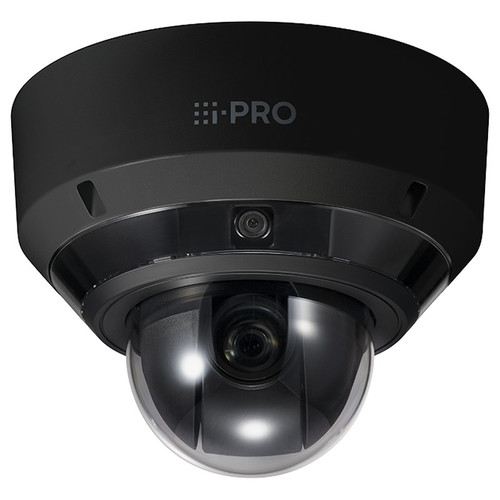
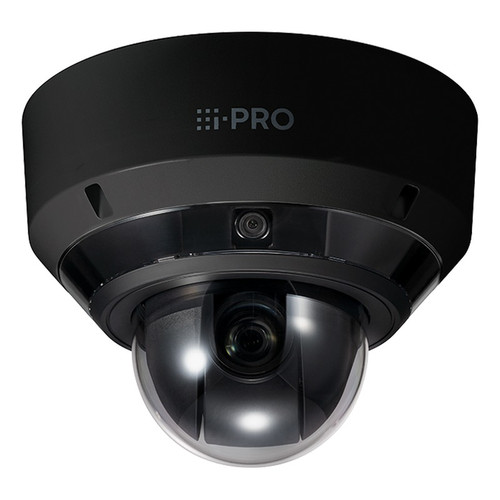
The sole installation-visible difference between the two models is housing finish: the Z2 is specified as 'Aluminum die cast, stainless steel, PC resin' with a white housing color, while the Z2-1 is specified as 'Aluminum die cast, Black; stainless steel screws'—also listed as white housing color in its spec fields, which is an internal inconsistency in the provided Z2-1 data (finish text states 'Black'; housing color field states 'White'). Mounting type for the Z2 is listed as 'W'; the Z2-1 spec does not list a mount type code. Both support 360° endless panning and –15° to +195° tilt, with manual speeds of 0.065°/s–150°/s and preset speeds up to 500°/s, and 256 preset positions.
Which fits your VMS and analytics better?
Both cameras carry ONVIF Profile G/M/S/T, support 24 simultaneous users, and use the same dual RJ45 10/100/1000 BASE-T network interface. Both support FIPS 140-2 Level 3 and IEEE 802.1X. The Z2-1 spec additionally lists 'Device Cert' under security; the Z2 spec does not mention this explicitly. Supported protocols are identical across both (IPv6, TCP/IP, UDP/IP, HTTP, HTTPS, SSL/TLS, SMTP, DNS, NTP, SNMPv1/v2/v3, DHCPv6, RTP, MLD, ICMP, ARP, 802.1X, DiffServ, LLDP, MQTT). Both support H.265/H.264 (CBR/VBR), MJPEG, Smart Coding (GOP control, Smart VIQS, P-picture control), and identical audio compression (G.726 ADPCM 32/16 kbps, G.711 64 kbps). Audio I/O is identical: 3.5mm stereo mini jack input (Z2-1 adds 2kΩ input impedance spec), 3.5mm monaural 600Ω output, with Off/Mic Input/Audio Output/Half-Duplex/Full-Duplex modes.
On AI analytics, the Z2 spec lists 'AI Motion/Face/Vehicle Detection' while the Z2-1 lists 'AI Video Motion Detection, Face/Vehicle Detection'—a minor labeling difference; both share identical AI sound classification (Gunshot, Yell, Vehicle horn, Glass break) and VMD (4 areas) / SCD (1 area). Both support up to 32 privacy zones and 8 VIQS zones. On-board storage is microSD/microSDHC/microSDXC up to 512GB on both (Z2 spec enumerates 64GB–512GB microSDXC, 4GB–32GB microSDHC, 2GB microSD). Alarm I/O is identical: 6 terminals (3 IN, 2 OUT, 1 AUX), with email/HTTP/TCP/SD card alarm actions. Both support identical browser clients (Edge, Firefox, Chrome) and mobile platforms (iOS 8.0+, Android).
Which should you choose: the X86530-Z2 or the X86530-Z2-1?
Our take: The WV-X86530-Z2 is the stronger documented choice when a verified minimum illumination figure is a procurement requirement, as its spec sheet explicitly states 0.006 lx (B/W, F1.6) while the Z2-1 spec provides no specific lux value. Beyond that single documented delta, the two cameras are functionally indistinguishable on every decision-relevant spec: identical sensor arrays, 21x motorized zoom, 144 dB dynamic range, PoE++ at 35.6W, IP67/IP66/NEMA 4X/IK10 ratings, –40 to +55°C operating range, 256 preset positions, dual RJ45, ONVIF G/M/S/T, and 512GB microSD storage. The Z2-1 spec adds a '30 fps' explicit frame rate call-out and 'Device Cert' to its security list; the Z2 spec does not. Housing finish text differs (Z2: white/PC resin; Z2-1 finish text: black aluminum—though the Z2-1 housing color field also reads white, an inconsistency in the provided data). Platform integrators with FIPS 140-2 or 802.1X mandates will find both equally capable.
Side-by-Side Comparison
Spec-for-spec, from manufacturer data.
| Specification | i-PRO X86530-Z2 | i-PRO X86530-Z2-1 |
|---|---|---|
| Resolution | 5MP (3072×2304 max) | 5MP (3072×2304 max) |
| Image Sensor | 3× 1/2.7" CMOS + 1× 1/2.8" CMOS | 3× 1/2.7" CMOS + 1× 1/2.8" CMOS |
| Optical Zoom / Focal Length | 21x motorized; 4.0–84.6 mm | 21x motorized; 4.0–84.6 mm |
| Min. Illumination | 0.006 lx (B/W, F1.6) | Not specified in provided data |
| Dynamic Range (WDR) | 144 dB (Super Dynamic, adjustable 0–31) | 144 dB (Super Dynamic, adjustable 0–31) |
| Max Frame Rate | Not explicitly stated (15fps mode referenced at max shutter) | 30 fps |
| Night Vision | IR (built-in per spec); IR range not specified | IR (built-in per spec); IR range not specified |
| Video Compression | H.265, H.264 (CBR/VBR), MJPEG | H.265, H.264 (CBR/VBR, Unicast, Multicast), MJPEG |
| IP / Ingress Rating | IP67 / IP66 (IEC 60529), NEMA 4X | IP67 / IP66 (IEC 60529), NEMA 4X |
| Impact Rating | IK10 (IEC 62262) | IK10 (IEC 62262) |
| Operating Temperature | –40 to +55°C (power-on: –20 to +55°C) | –40 to +55°C (power-on: –20 to +55°C) |
| Power Input / PoE Class | PoE++ IEEE 802.3bt, 35.6W / Class 5 | PoE++ IEEE 802.3bt, 35.6W / Class 5 |
| Edge Storage | microSD/microSDHC/microSDXC up to 512GB | microSD/microSDHC/microSDXC up to 512GB |
| Audio I/O | 3.5mm stereo mini jack in; 3.5mm mono 600Ω out | 3.5mm stereo mini jack in (2kΩ); 3.5mm mono 600Ω out |
| AI Analytics | AI Motion / Face / Vehicle Detection; AI Sound Classification | AI VMD / Face / Vehicle Detection; AI Sound Classification |
| Security Certifications | FIPS 140-2 Level 3, HTTPS, 802.1X | FIPS 140-2 Level 3, HTTPS, 802.1X, Device Cert |
| Housing Finish | Aluminum die cast, stainless steel, PC resin (White) | Aluminum die cast, Black; stainless steel screws (housing color field: White—inconsistency in provided data) |
| Dimensions / Weight | ø250 mm × 195 mm (H) / approx. 3.8 kg | ø250 mm × 195 mm (H) / approx. 3.8 kg |
| Warranty | 3-year | 3-year |
Frequently Asked Questions
Which should you choose: the X86530-Z2 or the X86530-Z2-1?
The WV-X86530-Z2 is the stronger documented choice when a verified minimum illumination figure is a procurement requirement, as its spec sheet explicitly states 0.006 lx (B/W, F1.6) while the Z2-1 spec provides no specific lux value. Beyond that single documented delta, the two cameras are functionally indistinguishable on every decision-relevant spec: identical sensor arrays, 21x motorized zoom, 144 dB dynamic range, PoE++ at 35.6W, IP67/IP66/NEMA 4X/IK10 ratings, –40 to +55°C operating range, 256 preset positions, dual RJ45, ONVIF G/M/S/T, and 512GB microSD storage. The Z2-1 spec adds a '30 fps' explicit frame rate call-out and 'Device Cert' to its security list; the Z2 spec does not. Housing finish text differs (Z2: white/PC resin; Z2-1 finish text: black aluminum—though the Z2-1 housing color field also reads white, an inconsistency in the provided data). Platform integrators with FIPS 140-2 or 802.1X mandates will find both equally capable.
Is the WV-X86530-Z2 or WV-X86530-Z2-1 better for low-light performance?
Based on the supplied specifications, the Z2 has a documented minimum illumination of 0.006 lx (B/W, F1.6). The Z2-1 spec does not provide a specific lux value—it lists only 'Image Sensor' under minimum illumination. If a verified low-light lux rating is required for a project submittal, the Z2 is the only model with that figure on record from the provided data.
Do the WV-X86530-Z2 and WV-X86530-Z2-1 have the same AI analytics capabilities?
Largely yes, with minor label differences. The Z2 lists 'AI Motion/Face/Vehicle Detection'; the Z2-1 lists 'AI Video Motion Detection, Face/Vehicle Detection.' Both share identical AI sound classification (Gunshot, Yell, Vehicle horn, Glass break), VMD with 4 areas, SCD with 1 area, and both carry ONVIF Profile G/M/S/T for VMS integration. Neither spec quantifies analytics accuracy or processing latency.
Are the WV-X86530-Z2 and WV-X86530-Z2-1 wired the same way and rated for the same outdoor environments?
Yes. Both require PoE++ (IEEE 802.3bt) at 35.6W (PoE Class 5) via dual RJ45 connectors. Both are rated IP67/IP66, NEMA 4X, IK10, and wind-resistant to 40 m/s. Operating temperature range is identical at –40 to +55°C, with an anti-condensation Temish element in each. No wireless connectivity is specified for either model.
Get a Second Opinion on Your Camera Choice
Share your site layout, coverage goals, and budget. Our team will validate the camera selection, flag anything we would change, and recommend products that match the use case.