
Geovision BX520-D01U vs Geovision BX5700F-8010: Specification Comparison
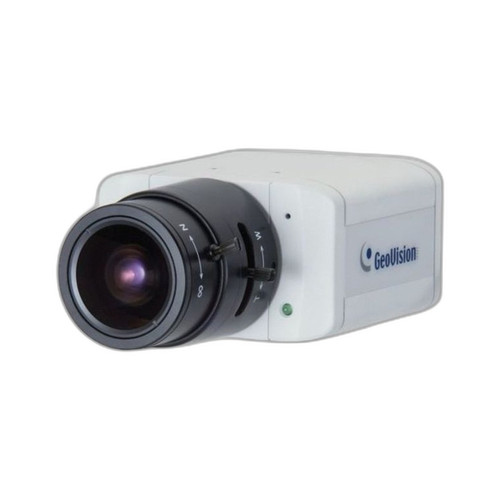
Both the Geovision BX520-D01U and the BX5700F-8010 are 5MP box-form-factor IP cameras aimed at installers who need a fixed, non-PTZ camera for professional or integrator deployments. The BX520-D01U is positioned as a varifocal, PoE-class box camera with stainless finish; the BX5700F-8010 is a fixed-lens, WDR-equipped day/night box camera with H.265 compression. This comparison examines imaging capability, installation characteristics, and integration fit so buyers can match the right unit to their project requirements.
In This Guide
How do the imaging specs compare?
Both cameras deliver 5MP resolution and offer day/night operation with IR low-light capability. The BX520-D01U uses a varifocal 4.5–10mm lens at F1.6–F4.5, giving installers on-site flexibility to adjust field of view without swapping optics — useful when camera placement must serve multiple framing scenarios. The BX5700F-8010 uses a fixed 2.95mm lens, which is a wide-angle perspective suited to covering broader areas at shorter distances, but offers no focal adjustment on-site.
The BX5700F-8010 explicitly lists WDR (wide dynamic range) as a feature, making it specced for high-contrast scenes such as backlit entryways or lobbies where simultaneous bright and dark zones must be resolved. The BX520-D01U does not list WDR in its provided specifications. The BX5700F-8010 also lists a minimum illumination of 'Low Lux,' while the BX520-D01U does not provide a lux figure in the supplied specs. Neither datasheet specifies IR range in the provided data.
What about installation and environment?
The BX520-D01U specifies a power draw of 13W and is described as 802.3af PoE compatible (under 13W), enabling single-cable installation over standard PoE switches. It lists wall and ceiling as supported mount types and carries a stainless color finish, suggesting suitability for environments where corrosion resistance or aesthetics matter. The BX5700F-8010 lists PoE as both its connectivity and power method but does not specify a wattage figure or PoE class in the provided specs.
The BX5700F-8010 is described as a modular box-mount form factor, which may offer flexibility in pairing with interchangeable housings or mounts in modular camera systems. Neither product lists an IP ingress-protection rating, IK impact rating, or operating temperature range in the specifications provided, so environmental hardening cannot be compared from the available data.
Which fits your VMS and analytics better?
The BX520-D01U explicitly lists ONVIF Profile S compliance, providing a defined interoperability standard for VMS integration across multi-vendor environments. The BX5700F-8010 references ONVIF compatibility in its card bullets but does not specify an ONVIF profile level in the structured specs provided. The BX520-D01U's cable category is listed as IPCAM; the BX5700F-8010's cable category is listed as IPPTZCam, which may reflect a catalog classification rather than PTZ capability, as the camera is described as a fixed box unit.
The BX5700F-8010 specifies H.265 video compression, which reduces bandwidth and storage requirements compared to H.264 — a meaningful advantage in bandwidth-constrained or multi-channel recording environments. The BX520-D01U does not list a compression codec in the provided specifications. Neither unit lists edge analytics, on-board storage, or audio I/O in the supplied data, so those capabilities cannot be compared.
Which should you choose: the BX520-D01U or the BX5700F-8010?
Our take: The BX520-D01U is the stronger choice when on-site lens adjustment and confirmed ONVIF Profile S compliance are the priority. Its varifocal 4.5–10mm, F1.6–F4.5 lens allows framing to be tuned without optic changes, and its 802.3af PoE draw of under 13W is explicitly spec-confirmed, simplifying switch selection. The BX5700F-8010 holds the advantage in high-contrast scene handling — it is the only unit with a documented WDR specification — and its H.265 compression delivers meaningful storage and bandwidth savings versus an unspecified codec on the BX520-D01U. The BX5700F-8010's fixed 2.95mm wide-angle lens suits wide-area coverage at short distances but cannot be adjusted post-installation. Choose the BX520-D01U for flexible framing in controlled-light environments on ONVIF-strict VMS platforms; choose the BX5700F-8010 for backlit or high-contrast scenes where WDR and H.265 efficiency matter more than lens flexibility.
Side-by-Side Comparison
Spec-for-spec, from manufacturer data.
| Specification | Geovision BX520-D01U | Geovision BX5700F-8010 |
|---|---|---|
| Resolution | 5 MP | 5 MP |
| Form Factor | Box | Box (modular) |
| Lens / Focal Length | Varifocal 4.5–10mm, F1.6–F4.5 | Fixed 2.95mm |
| Lens Type | Varifocal | Fixed |
| Day/Night | Day/Night (IR) | Day/Night (IR) |
| WDR | — | WDR |
| Min Illumination | — | Low Lux |
| IR Night Vision | Yes | Yes |
| Video Compression | — | H.265 |
| ONVIF | Profile S | Yes (profile not specified) |
| Power Input / PoE | 802.3af PoE, <13W | PoE (wattage not specified) |
| Mount Type | Wall; Ceiling | Box (modular) |
| Connectivity | Ethernet | PoE |
| Color / Finish | Stainless | — |
Frequently Asked Questions
Which should you choose: the BX520-D01U or the BX5700F-8010?
The BX520-D01U is the stronger choice when on-site lens adjustment and confirmed ONVIF Profile S compliance are the priority. Its varifocal 4.5–10mm, F1.6–F4.5 lens allows framing to be tuned without optic changes, and its 802.3af PoE draw of under 13W is explicitly spec-confirmed, simplifying switch selection. The BX5700F-8010 holds the advantage in high-contrast scene handling — it is the only unit with a documented WDR specification — and its H.265 compression delivers meaningful storage and bandwidth savings versus an unspecified codec on the BX520-D01U. The BX5700F-8010's fixed 2.95mm wide-angle lens suits wide-area coverage at short distances but cannot be adjusted post-installation. Choose the BX520-D01U for flexible framing in controlled-light environments on ONVIF-strict VMS platforms; choose the BX5700F-8010 for backlit or high-contrast scenes where WDR and H.265 efficiency matter more than lens flexibility.
Is the BX520-D01U or BX5700F-8010 better for low light?
Based on the provided specifications, the BX5700F-8010 explicitly lists 'Low Lux' minimum illumination and IR night vision. The BX520-D01U lists day/night operation and IR low-light capability but does not provide a lux figure. Neither unit specifies an IR range in the available data, so a definitive low-light ranking by lux number cannot be made from these specs alone; however, the BX5700F-8010's Low Lux rating is the only quantified low-light claim present.
Which camera works better for backlit entryways or lobby scenes?
The BX5700F-8010 is the spec-supported choice for high-contrast or backlit scenes: it explicitly lists WDR (wide dynamic range) in its specifications, which is designed to handle simultaneous bright and dark zones in the same frame. The BX520-D01U does not list WDR in the provided specifications, so its performance in backlit conditions cannot be confirmed from available data.
Can I use either camera with my existing ONVIF VMS?
The BX520-D01U is explicitly rated ONVIF Profile S, a defined compliance level that guarantees interoperability with Profile S-compatible VMS platforms. The BX5700F-8010 references ONVIF compatibility in its product bullets but does not specify a profile level in the structured specifications provided. If your VMS requires a specific ONVIF profile certification, the BX520-D01U's documented Profile S compliance offers a stronger integration guarantee based on the available data.
Get a Second Opinion on Your Camera Choice
Share your site layout, coverage goals, and budget. Our team will validate the camera selection, flag anything we would change, and recommend products that match the use case.