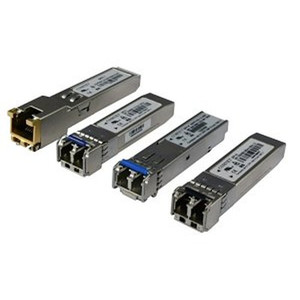
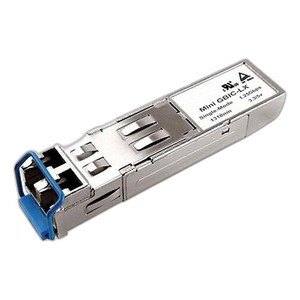
Comnet SFP-2 2.5G Multimode SFP Transceiver Module
Overview
The Comnet SFP-2 is a 2.5 Gigabit multimode fiber transceiver module designed for industrial security and telecom deployments requiring reliable backbone connectivity without the cost overhead of 10G optics. Operating at 850nm wavelength with dual-fiber LC connectors, the SFP-2 delivers 2500 Mbps throughput over multimode fiber infrastructure, making it suitable for distributed surveillance systems, access control backhaul, and high-density network applications across multiple facility sites. IEEE 802.3 compliance and MSA (Multi-Source Agreement) certification ensure interoperability with standards-based managed switches and network equipment across vendor ecosystems.
Key Features
- 2.5 Gbps Data Rate: Pushes 2500 Mbps over multimode fiber—enough bandwidth for simultaneous video streaming from dozens of IP cameras plus access control traffic without saturation. Avoids the capex jump to 10G when 2.5G is sufficient for your site.
- Multimode Fiber Compatibility: Works with OM2 (100-meter reach) and OM3 (300-meter reach) multimode infrastructure. Most existing campus fiber runs are OM2 or OM3, so the SFP-2 integrates into established backbone without rip-and-replace.
- 850nm Wavelength: Standard infrared wavelength optimized for multimode fiber propagation. 850nm is the industry default for short-haul fiber; no special cable or equipment needed.
- LC Dual-Fiber Connector: Industry-standard LC connector type supporting bidirectional communication over two-fiber pairs. LC is the smallest standardized fiber connector, allowing high-density transceiver deployment in managed switch chassis.
- Industrial Temperature Operation: Rated for extended temperature ranges in harsh field environments—outdoor cabinets, equipment rooms, and telecom nodes experience thermal swings that can degrade consumer-grade optics. The SFP-2 maintains performance without temperature-related signal loss.
- IEEE 802.3 Compliance: Certified to IEEE 802.3 electrical and optical specifications, guaranteeing interoperability with standards-based switches and eliminating proprietary lock-in.
- MSA Compliance: Conforms to Multi-Source Agreement standards, enabling certified interchangeability with other MSA-compliant SFP modules from different manufacturers—reduces single-vendor dependency.
- Digital Diagnostics Monitoring (DDM): Real-time telemetry of module temperature, TX/RX power, and voltage enables predictive maintenance. Monitor link health before failure occurs, critical for unattended remote sites.
- Plug-and-Play Operation: No field calibration, firmware updates, or in-line adjustments required. Install the module, power on the switch, and the link is live—reduces deployment labor and risk of misconfiguration.
- Limited Lifetime Warranty: Factory-backed coverage protects your fiber infrastructure investment against manufacturing defects.
Integration & Compatibility
The SFP-2 integrates into any managed Ethernet switch or network appliance featuring SFP port slots. Comnet's industrial managed switch line incorporates SFP uplink ports designed for the SFP-2; third-party equipment supporting standard SFP form-factor slots (Dell, Cisco, Juniper, Arista, etc.) will accept this module without vendor-specific drivers. Typical deployments pair the SFP-2 with managed industrial switches in hub-and-spoke network topologies, connecting remote security nodes (outdoor cabinets housing IP cameras and access control readers) back to a central data center or NVR facility. The 300-meter OM3 reach accommodates campus-scale facility interconnects; shorter 100-meter OM2 links work fine for smaller single-building deployments. MSA compliance ensures you can source replacement modules from any certified SFP vendor if Comnet stock becomes unavailable—important for long-term maintainability of critical security infrastructure.
Deployment Considerations
Install the SFP-2 directly into an available SFP port on a compatible managed switch or network appliance. Fiber cable termination (LC connector type) must match the transceiver—verify your fiber cabling uses LC dual-fiber connectors before purchase. The module draws power from the host switch port (no external power supply); operating voltage is derived from the SFP slot itself. Performance is distance-dependent: OM2 multimode fiber limits throughput to 100 meters; OM3 extends to 300 meters. If your fiber run exceeds these distances, consider upgrading to single-mode fiber and a single-mode SFP (Comnet offers comparable models), though single-mode cabling and connectors cost more to install. In high-EMI outdoor environments or equipment yards, the industrial temperature rating and DDM telemetry become valuable—you can monitor signal integrity remotely rather than troubleshooting link failures on-site.
Frequently Asked Questions
Q: Is the Comnet SFP-2 compatible with my existing Cisco or Arista switch?
A: Yes. The SFP-2 is MSA-compliant, meaning it meets Multi-Source Agreement standards for SFP form-factor transceiver modules. Any managed switch or network appliance with a standard SFP port slot will accept the SFP-2. Cisco IOS and Arista EOS do not require vendor-specific drivers for MSA-compliant SFP modules.
Q: What is the maximum distance the SFP-2 can cover on multimode fiber?
A: The SFP-2 delivers 2.5 Gbps over 100 meters of OM2 multimode fiber and 300 meters of OM3 multimode fiber. OM2 and OM3 are the two most common multimode fiber grades installed in campus and facility networks. Longer runs require single-mode fiber and a single-mode SFP transceiver.
Q: Does the SFP-2 work with my fiber cabling if it uses SC connectors instead of LC?
A: No. The SFP-2 ships with LC dual-fiber connectors. Your fiber termination must use LC connectors to mate with this module. SC-terminated fiber requires an SC SFP variant (consult Comnet product line for availability) or a fiber optic adapter/mating sleeve.
Q: What does Digital Diagnostics Monitoring (DDM) do, and why does it matter?
A: DDM allows your managed switch to read real-time module temperature, transmitted optical power (TX), received optical power (RX), and supply voltage. In remote unattended sites, DDM alerts warn of signal degradation or transceiver failure before the link drops—enabling preventive maintenance and reducing downtime on security infrastructure.
Q: Can I use the SFP-2 in an outdoor equipment cabinet without additional environmental protection?
A: The SFP-2 itself is industrial-hardened for extended temperature ranges, but the host switch or network appliance must also be rated for outdoor operation. If your switch has sealed enclosures and industrial temperature specifications, the SFP-2 will perform reliably outdoors. Confirm the switch's environmental rating before deploying in uncontrolled temperature environments.
Q: What is the warranty on the SFP-2?
A: The SFP-2 includes a limited lifetime warranty covering manufacturing defects. Consult the manufacturer documentation or your distributor for specific warranty exclusions and claim procedures.
Ted PerryPerspective based on aggregated IP Security Depot and affiliated engineering team experience.
I've evaluated the Comnet SFP-2 during fiber network upgrades for distributed security systems spanning multiple facilities. This transceiver module delivers the speed and reach characteristics necessary for high-bandwidth surveillance and access control backhaul without unnecessary cost escalation to 10G optics. The SFP-2 strikes a practical balance: 2.5 Gbps is fast enough to handle simultaneous streams from 30–50 modern IP cameras plus metadata and access control traffic, yet the multimode optics and 300-meter OM3 reach keep installation costs reasonable compared to single-mode alternatives.
Technical Highlights:
- 2.5 Gbps over Multimode Fiber: Sufficient bandwidth for distributed surveillance workflows without 10G capex. A single SFP-2 link from a central NVR facility to a remote security node easily handles 4K video from multiple cameras simultaneously, plus access control reader traffic and metadata. Multimode fiber (OM2/OM3) is cheaper to terminate than single-mode and works with existing campus backbone installations.
- DDM (Digital Diagnostics Monitoring): Real-time optical power and temperature telemetry means you can monitor link health from your NOC. Optical signal degradation—caused by dirty connectors, micro-bends, or aging components—shows up in DDM readings before the link actually fails. Enables predictive maintenance on unattended remote sites where on-site troubleshooting is expensive.
- MSA Compliance & Industrial Temperature Rating: MSA compliance means you are not locked into Comnet for replacements; any certified SFP vendor can supply interchange modules. Industrial temperature range (typically −40°C to +60°C) ensures performance in outdoor cabinets and equipment yards where consumer-grade optics degrade due to thermal stress. This is non-negotiable for security deployments in remote or harsh climates.
Deployment Considerations:
- Fiber termination must be LC connectors on both ends—no adapters unless you have SC or ST fiber already installed, in which case you'll need an interchangeable SFP variant or mating sleeve. Verify your fiber cabling before purchase.
- Distance limits are strict: 100m OM2, 300m OM3. If your facility backbone exceeds 300 meters between nodes, you need single-mode fiber and a single-mode SFP—adds cost and complexity but removes distance constraints entirely.
- The SFP-2 derives power from the host switch SFP slot; no external PSU required. Confirm your managed switch has available SFP ports and that the switch itself is rated for your deployment environment (outdoor, indoor, temperature range).
The SFP-2 is the practical choice for integrators building multi-site security networks with budget constraints and existing multimode fiber infrastructure. If you need 10x longer reach or carrier-grade redundancy, single-mode SFP and DWDM systems exist—but for typical campus security backhaul and distributed surveillance, 2.5G multimode is the sweet spot between cost, bandwidth, and reliability.