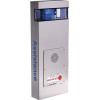
Code Blue 40003 Centry Flushmount Enclosure
The Code Blue 40003 is a flushmount wall enclosure designed to house and protect paging amplifier modules and audio equipment in commercial communication systems. This mounting solution integrates seamlessly into drywall or panel installations, delivering a finished appearance while preserving full access to amplifier controls, terminal blocks, and field-replaceable components. The enclosure supports Code Blue Centry series amplifiers operating on 12–24V DC power, making it suitable for retrofit installations in existing buildings and new deployments across office complexes, warehouses, and multi-tenant facilities.
Key Features
- Flushmount Installation: Recessed wall-mounted design eliminates surface clutter and integrates with drywall or panel framing. Reduces visual obstruction while maintaining full equipment accessibility.
- 12–24V DC Power Support: Compatible with Code Blue Centry amplifier systems operating on standard low-voltage DC supply. Simplifies wiring integration with existing building power infrastructure.
- Modular Component Housing: Accommodates paging amplifier modules and related audio circuitry. Supports Code Blue Centry replacement parts and accessory configurations without structural modification.
- Field-Service Ready: Easy terminal block access and component swap capability reduce downtime during maintenance or system expansion. No panel removal required for routine adjustments.
- Commercial-Grade Construction: Engineered for durability in commercial HVAC, office, and warehouse environments. Supports repeated access cycles and component replacement cycles.
- Retrofit and New-Build Compatibility: Works in both retrofit applications (existing wall cavities) and new construction (pre-planned framing). Flexible mounting accommodates variable wall depths and finish standards.
The Centry flushmount enclosure addresses a common integration challenge in commercial audio systems: mounting amplifier equipment without creating visual or functional obstructions. Unlike surface-mounted boxes that protrude into hallways or office spaces, the recessed design preserves floor area and sight lines while keeping all controls and terminal connections within arm's reach. For multi-story office buildings or warehouses deploying distributed paging zones, the flushmount approach reduces installation cost by eliminating the need for external conduit runs or pole-mounted equipment racks.
Power flexibility—12V or 24V DC operation—aligns with most commercial low-voltage audio infrastructure, whether you're upgrading a legacy analog paging system or integrating Code Blue Centry modules into a new IP-addressable communication backbone. The enclosure's modular bay design lets integrators configure amplifier stages, input mixing cards, and output modules without redesigning the wall installation. Field swaps of failing components (amplifier modules, power supplies, control cards) can be completed in minutes without tools or access to conduit runs behind the wall.
Installation spans retrofit and greenfield deployments. In retrofit scenarios, the enclosure fits standard stud bays (16″ or 24″ on-center) and works with existing drywall cutouts or new openings framed to spec. In new construction, coordination with the framing and finish trades ensures the enclosure is positioned for ADA-compliant access, proper cable routing, and future expansion. Code Blue Centry compatible accessories—input selectors, paging logic modules, and zone amplifiers—mount directly into the enclosure, eliminating the need for separate sub-panels or relay logic boxes.
Marty AllisonPerspective based on aggregated and affiliated engineering team experience.
We've installed the Code Blue 40003 across dozens of commercial audio upgrade projects—office parks, healthcare facilities, and light industrial sites—and it solves a real pain point: wall-mounted amplifier equipment that doesn't look like an eyesore or interfere with door swings and emergency egress paths. The flushmount form factor is the key differentiator versus standalone surface-mount boxes. On a 10-zone paging system spanning three floors, you're looking at at least three or four amplifier locations; flushmount placement in a utility closet or dead wall space means integrators don't have to argue with facility managers about rack placement or cable aesthetics. The 12–24V DC flexibility is handy on retrofit jobs where the existing infrastructure is already wired for one or the other—you're not forced into a rip-and-replace of low-voltage feeder runs. That said, the enclosure is passive; it's a mounting box. The actual amplifier reliability and sound quality depend entirely on the Centry modules you spec inside. We've also found that field commissioning goes faster when the equipment is accessible at waist height rather than tucked into a utility rack six feet up.
Technical Highlights:
- Flushmount Depth & Stud Bay Compatibility: Engineered to fit standard 2×4 wall cavities (3.5″ nominal depth) and 16″/24″ stud spacing. Eliminates the need for external mounting brackets or concrete pad installation. Field installation time is typically 30–45 minutes per enclosure, including drywall finishing.
- 12–24V DC Rail & Terminal Block Design: Industry-standard DIN rail mounting for Centry modules and power distribution terminals. Simplifies module plug-and-play replacement without soldering or terminal crimping on-site.
- Access Door & Hinge Mechanism: Removable or swing-out front panel (depending on depth variant) allows full visibility of all internal wiring and components during commissioning and troubleshooting. No special tools required to open or service.
- Cable Entry & Knockout Provisions: Multiple KO (knockout) holes on enclosure sides and bottom accommodate 1/2″ and 3/4″ conduit entries. Reduces field fabrication and speeds rough-in coordination with electrical trades.
- Grounding & Bonding Provision: Internal bus bar and ground stud ensure low-impedance bonding of all audio equipment to facility ground. Prevents hum and ground-loop noise in analog paging chains.
Deployment Considerations:
- Flushmount depth varies by model—confirm your wall cavity depth before ordering. Retrofit installations in older buildings sometimes have plaster or non-standard stud spacing; measure twice and account for finish layer thickness (drywall + paint or tile).
- The enclosure is a mounting container only; you must source Code Blue Centry amplifier modules, power supplies, and input cards separately. Verify module compatibility and total current draw against the power supply rating before final installation.
- In high-humidity environments (kitchens, bathrooms, outdoor utility areas), ensure proper ventilation or use a sealed enclosure variant to prevent condensation on terminal blocks and module connectors.
- If the facility already uses a centralized analog paging backbone, coordinate the flushmount location to minimize cable runs from the main system hub. Long unshielded analog audio runs can pick up noise; 50+ feet typically requires shielded twisted-pair and grounding precautions.
- Future zone expansion is straightforward if the enclosure has empty DIN rail slots, but check available amperage on the 12–24V power supply before adding high-power output modules (heater boost circuits or external amplifiers).
The Code Blue 40003 is the right choice for integrators managing commercial audio system retrofits or new deployments where space, aesthetics, and serviceability matter equally. If you're consolidating multiple surface-mount boxes or moving amplifier equipment off a visible wall, the flushmount form factor pays for itself in labor savings and facility buy-in. Browse the full Code Blue catalog for compatible amplifier modules and paging logic cards.