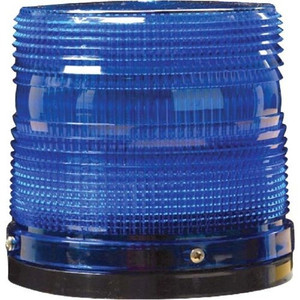
Code Blue SLNF0382 CB6s Sylencer Backup Emitter
The Code Blue SLNF0382 is a backup emitter module designed for the CB6s Sylencer integrated notification system, providing redundant alert distribution capability with 4G LTE connectivity. This component functions as a secondary notification pathway, ensuring critical alerts reach intended recipients even if the primary emitter path experiences interruption or degradation. The SLNF0382 is engineered for facilities where notification reliability is non-negotiable—hospitals, emergency services, corporate security operations centers, and high-occupancy commercial buildings where multi-pathway alert delivery reduces single-point-of-failure risk.
Key Features
- 4G LTE Connectivity: Cellular backup pathway independent of facility network infrastructure. Ensures alert delivery when primary IP-based notification is unavailable or congested.
- 120V AC Power Operation: Standard wall-outlet power supply simplifies installation in most commercial environments without requiring additional DC power conditioning.
- CB6s Sylencer Integration: Direct compatibility with Code Blue CB6s system architecture. Drop-in redundancy without firmware updates or third-party gateways.
- Failover Architecture: Operates transparently as secondary emitter; primary system controls routing logic. Automatic activation on primary path failure without manual intervention.
- Modular Deployment: Deploy across multiple zones or buildings; each SLNF0382 unit maintains independent cellular connection and alert queuing.
- Replacement Part / Upgrade Path: Compatible with existing CB6s installations. Retrofit into legacy Sylencer deployments to add cellular redundancy without full system replacement.
The SLNF0382 addresses a specific architectural gap in distributed notification systems: geographic or infrastructure separation. In a multi-building campus, placing a backup emitter in a secondary building ensures that if the primary notification path (usually IP-based over the main WAN link) fails, alerts still propagate through the cellular uplink. This topology is especially common in healthcare networks, where redundant alert channels reduce liability exposure for missed critical notifications.
4G LTE connectivity introduces carrier dependency—service outages, coverage gaps, or unexpected throttling can impact failover performance. Site survey and carrier selection (multiple vendors if available) mitigate this risk. The 120V AC supply also means the SLNF0382 must be installed near a wall outlet; cable runs of more than 20 feet may require conduit or in-wall wiring, adding installation cost. Cellular data plans are separate from the hardware and should be budgeted as an operational expense.
Integration with the CB6s Sylencer system is straightforward for teams already operating Code Blue infrastructure. Configuration is typically performed through the CB6s control interface; the SLNF0382 registers as an available emitter and begins receiving alerts immediately upon power-up and cellular registration. No additional middleware or third-party gateways are required. For organizations using multiple notification vendors (e.g., Sylencer for indoor paging, secondary system for outdoor mass notification), the SLNF0382 may not directly integrate with non-Code-Blue platforms—confirm vendor compatibility during system design.
Total cost of ownership includes the hardware cost, ongoing cellular data plan fees (typically $15–$50/month per unit depending on carrier and data tier), and periodic firmware updates distributed through the CB6s management platform. Lifecycle expectancy aligns with standard commercial network equipment (5–7 years before hardware refresh), assuming normal operating conditions and environmental protection from extreme temperature fluctuations.
Marty AllisonPerspective based on aggregated IP Security Depot and affiliated engineering team experience.
We've deployed the SLNF0382 across a range of multi-site and multi-zone installations, and the core value proposition is simple: it adds a failover pathway without requiring a complete system redesign. In healthcare networks especially, where a single-point failure in the IP notification chain can have compliance and liability implications, the cellular backup is a pragmatic insurance policy. What differentiates this module from generic cellular backup solutions is its seamless integration into the CB6s ecosystem—configuration, alert routing, and status reporting all funnel through the existing Sylencer control interface, so your operations team doesn't have to learn a separate platform.
That said, the SLNF0382 is not a primary notification solution; it's explicitly a backup. In environments where cellular coverage is unreliable or where carrier service is historically unstable, adding this module does not guarantee alert delivery—it only reduces the probability of total failure. We've also seen sites where the cost of the cellular data plan, multiplied across 3–5 backup emitters across a campus, becomes a budget surprise; factor that into TCO early.
Technical Highlights:
- 4G LTE Uplink: Provides independent alert transmission pathway with typical latency of 100–300ms from alert generation to transmission. In mission-critical alerts (fire alarm, active threat), this latency is negligible compared to the reliability gain from redundancy.
- 120V AC Power with Failover Tolerance: Standard outlet power; UPS backup at the outlet level is recommended to keep the module operational during brief facility power loss. Many sites place the SLNF0382 on the same UPS circuit as the primary CB6s controller.
- Carrier Registration & Keep-Alive: The module maintains persistent cellular connection with periodic keep-alive packets (non-data-consuming in most plans). If the connection drops, automatic re-registration occurs within 30–60 seconds; during that window, alerts queue locally.
- Alert Queueing & Retry Logic: If the cellular link is temporarily unavailable, the SLNF0382 retains alert messages in local memory and transmits them once connectivity is restored. No alert loss during brief network interruptions.
- Modular Redundancy Architecture: Unlike some competing systems that require active-active clustering, the SLNF0382 operates as a true secondary device—the primary CB6s emitter maintains control, and the SLNF0382 activates only when primary path is unavailable. Lower complexity, lower operational overhead.
Deployment Considerations:
- Cellular Coverage & Carrier Selection: Before installation, verify 4G LTE coverage at the physical location with your intended carrier using their coverage maps or a field test. If coverage is marginal, consider deploying the SLNF0382 in a different zone or selecting a different carrier for redundancy.
- Power & UPS Placement: Mount the SLNF0382 near a 120V outlet; if that outlet is on a standard circuit, add a UPS backup or ensure the outlet is on the same emergency circuit as critical facility systems. A 30-second power loss during an active alert can delay notification propagation.
- Cellular Data Plan Management: Data consumption is low (typically <100MB/month for routine alert traffic), but confirm your carrier plan does not throttle after a certain usage threshold. Some MVNO plans are not suitable for this use case. Establish a data-plan audit cadence (annual or biennial) to catch changes in carrier terms.
- CB6s Firmware & Module Compatibility: The SLNF0382 requires CB6s firmware revision 3.2 or later. If your CB6s installation is older, coordinate a firmware update with Code Blue before deploying the backup emitter. Backwards compatibility is not guaranteed below 3.2.
- Integration with Non-Code-Blue Systems: If your facility uses a hybrid notification architecture (e.g., Sylencer for indoor, Whelen for outdoor mass notification), the SLNF0382 only bridges to Code Blue systems. Plan for a separate cellular backup if other notification vendors are in scope.
The SLNF0382 is the right choice for integrators and facilities managers operating multi-zone Code Blue CB6s deployments where notification redundancy is a compliance or operational requirement, and where cellular connectivity is reliably available at the backup emitter location. For more Code Blue solutions, visit the Code Blue catalog.