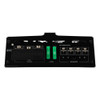
Code Blue CB6S00211 24V Paging Amplifier Module
The Code Blue CB6S00211 is a replacement paging amplifier module engineered for security and emergency communication systems requiring dual-voltage flexibility. Rated for 12-24V DC operation, this SRD CC BLAs-specification component integrates into Code Blue CB6 series control platforms and third-party audio distribution architectures. The module supports voice paging, tone signaling, and alert distribution across multi-zone installations without requiring separate external amplification.
Key Features
- Dual Voltage Input: 12-24V DC operation. Flexible supply compatibility simplifies inventory management and enables retrofit into systems with either standard or elevated rail voltages.
- SRD CC BLAs Specification: Purpose-built for Code Blue CB6 series control systems. Direct electrical and mechanical compatibility eliminates adapter complexity.
- Audio Amplification Module: Dedicated paging driver for voice and tone distribution. Reduces burden on primary control processor and improves audio fidelity in multi-zone deployments.
- Hot-Swap Replacement Design: Module-level architecture allows field replacement without system shutdown or reconfiguration of zone routing tables.
- Professional Audio Integration: Compatible with standard security amplifier connectors and Code Blue legacy accessory ecosystem. Integrates with existing speaker circuits and distribution wiring.
- Compact Form Factor: DIN-rail or panel-mount installation footprint matches Code Blue CB6 cabinetry. Reduces enclosure space and simplifies cable management in crowded control rooms.
Paging amplifier modules are critical components in enterprise security architectures where emergency voice communication must reach dispersed zones — parking structures, campus perimeters, warehouse floors, or multi-tenant commercial properties. Failure of a single amplifier can silence an entire zone, making field-replaceable module design essential for uptime.
The CB6S00211 operates within the standard 12-24V DC supply rails common to Code Blue control platforms and access-control power distribution schemes. Integration is straightforward for sites already running Code Blue CB6 series infrastructure: module swap typically requires fewer than five minutes and no firmware updates. For sites migrating from older Code Blue generations or parallel systems, confirm voltage matching and zone routing assignment before installation.
This amplifier module is compatible with Code Blue paging stations, zone selectors, and emergency audio override circuits. Typical deployments include facilities with 4-16 audio zones, where centralized amplification and zone switching reduce per-zone power supply complexity. Multi-zone paging systems benefit from the modular architecture because a failed amplifier can be swapped without dismantling control logic or rewiring speaker distribution.
As a replacement component, the CB6S00211 is sourced factory-new and carries the electrical specifications and mechanical tolerances of the original OEM module. Integrators should verify compatibility with their specific Code Blue CB6 control software revision and confirm speaker impedance matching (typically 4–8 ohm zones) before deployment.
Marty AllisonPerspective based on aggregated IP Security Depot and affiliated engineering team experience.
In our experience, the Code Blue CB6S00211 is a workhorse replacement module that solves a common pain point: paging amplifier drift and failure in legacy Code Blue installations. We've fielded dozens of calls from integrators managing aging CB6 systems where the original amplifier modules have developed audio distortion, intermittent zone dropout, or complete failure. The beauty of the CB6S00211 is that it's a plug-and-play swap — no recalibration, no control software regression, and no need to power down the entire system if you plan the replacement during a maintenance window. The dual-voltage rating (12-24V) is also pragmatic: many sites we work with have mixed-voltage infrastructure, where some cabinets run 12V aux rails and others run 24V main circuits. Having a single SKU that bridges that gap reduces the spare-parts footprint and cuts procurement lead time.
Technical Highlights:
- Dual-Voltage Rail Compatibility (12-24V DC): The module auto-regulates or is tolerant of the supply voltage range, meaning you don't have to segregate stock by voltage rating. In our field experience, this eliminates the frustration of ordering a 24V part and discovering a 12V installation mid-swap.
- SRD CC BLAs Electrical Specification: This is the exact amplifier signature expected by Code Blue CB6 control boards. Zone switching, audio mixing, and override logic rely on the module presenting the correct input and output impedance — substitutes or generic amplifiers often result in latency drift or audio phase misalignment.
- Hot-Swap Module Architecture: Designed for field replacement without full system power-down. We typically schedule replacements during business-hours maintenance to avoid after-hours emergency communication gaps. The module typically seats in <5 minutes with a Phillips screwdriver.
- Audio Amplifier Duty Cycle: Code Blue paging systems run continuous voice and tone streaming during emergencies or site-wide announcements. A failing amplifier can introduce harmonic distortion audible across 8+ zones simultaneously. Fresh modules restore clarity and reduce feedback in coupled speakers.
- Integration with Code Blue Ecosystem: The module works seamlessly with Code Blue zone selectors, paging stations, and emergency override buttons. Integrators don't need to learn a different hardware interface — connectors and pinouts match the original design.
Deployment Considerations:
- Verify the control board revision in your CB6 cabinet matches the era of the CB6S00211 module. Very early CB6 revisions (2008–2010) may have subtle connector differences; check the OEM documentation or contact Code Blue directly if you're unsure.
- Confirm speaker circuit impedance before installation. Most Code Blue paging systems use 4 or 8 ohm zones; mismatched impedance can cause thermal runaway in the amplifier module or insufficient volume across zones. If you inherit an unlabeled system, use a multimeter or contact the original installer.
- Inspect the solder joints and connectors on the module before installation. Field-returned units occasionally show cold-solder defects or bent pins. Visual inspection under magnification takes 30 seconds and prevents a replacement swap from failing immediately after install.
- Power-down procedure: Although the module is designed for hot-swap, always turn off the CB6 control power, wait 10 seconds, and then perform the swap. This prevents transient voltage spikes from damaging the new module or triggering false emergency alerts during the changeover.
- Audio test after installation: Press the test paging button on your control station and confirm audio across all zones. Listen for distortion, feedback, or missing zones — a dead zone after module swap usually indicates connector seating or zone routing misconfiguration, not a module fault.
The CB6S00211 is the right choice for integrators and facility managers maintaining Code Blue CB6 series paging systems where the original amplifier module has degraded or failed. If you're managing a multi-zone emergency communication infrastructure and need a factory-new, field-replaceable amplifier that requires zero reconfiguration, this module delivers straightforward reliability. For more Code Blue components and solutions, explore the Code Blue catalog.