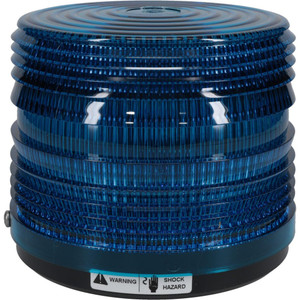
Code Blue CB5P00138 PoE Network Switch
Overview
The Code Blue CB5P00138 is a 24V DC PoE-capable network switch purpose-built for surveillance system integration. This model supports Power-over-Ethernet delivery, eliminating the need for separate power runs to remote cameras while maintaining a centralized power architecture. The CB5P00138 is engineered for commercial security installations where network infrastructure must handle video traffic and device power in a single cable run.
Key Features
- PoE Power Delivery: Native PoE support allows you to power compatible cameras, access control readers, and intercoms from a single Ethernet connection — reduces conduit congestion and installation time on multi-camera jobs.
- 24V DC Power Input: Accepts 24V DC supply, simplifying integration with existing surveillance power plants that already run 24V UPS or transformer-based systems. No separate 12V or 48V conversion needed if your site standardizes on 24V.
- Network Switch Topology: Manages Ethernet traffic between cameras, NVRs, and management stations without requiring a separate managed switch in many mid-scale deployments. Reduces rack clutter and power draw compared to stacking discrete components.
- Surveillance-Grade Firmware: Pre-configured for video surveillance workflows, including QoS settings that prioritize real-time camera traffic over background management tasks. Prevents bandwidth starvation during peak recording periods.
- Compact Form Factor: Industrial-rated enclosure suitable for equipment rooms, outdoor cabinets, and DIN-rail mounting in small-to-medium installations. Fits integration scenarios where space is constrained.
- VLAN and Access Control Ready: Supports network segmentation via VLAN configuration, allowing you to isolate camera subnets from corporate data networks — a compliance requirement in many security-conscious environments.
Integration and Compatibility
The CB5P00138 integrates with Code Blue surveillance ecosystems and third-party ONVIF-compliant cameras. Pair with a 24V power supply rated for the total camera load; typical surveillance deployments run 4–8 cameras off a single 240W or 480W 24V transformer. PoE budget depends on connected devices — verify camera draw against available PoE capacity before deployment. The switch supports standard Ethernet cabling (Cat5e minimum for PoE, Cat6 recommended for long runs or 4K multi-camera scenarios).
What's in the Box
Package contents not specified in available documentation. Contact pre-sales engineering for exact included components (mounting hardware, power cables, terminal block specifications).
Frequently Asked Questions
Q: What is the maximum number of cameras the CB5P00138 can power via PoE?
A: Camera count depends on individual device power draw and total 24V DC supply capacity. Standard surveillance cameras draw 5–15W; verify your power budget with a 240W or 480W 24V power supply before deployment.
Q: Is the CB5P00138 NDAA Section 889 compliant?
A: Compliance information not available in current documentation. Contact pre-sales support with your procurement requirements for certification verification.
Q: Does the CB5P00138 work with non-Code Blue ONVIF cameras?
A: Yes. ONVIF Profile S compliant cameras integrate with the CB5P00138 as long as power requirements fall within the 24V PoE budget. Test multi-vendor setups in a pilot environment before full deployment.
Q: What is the warranty on the CB5P00138?
A: Warranty terms not specified in available evidence. Contact the manufacturer or your distributor for warranty documentation and support terms.
Q: Can the CB5P00138 be mounted in a standard equipment rack?
A: The CB5P00138 supports DIN-rail and wall-mount installation. Verify mounting hardware in the kit before installation; additional brackets may be required for standard 19-inch rack integration.
Q: What happens if a connected camera exceeds the PoE power budget?
A: Exceeding available PoE capacity will cause the switch to shut down power to the affected port to protect the power supply. Plan installations with 20% overhead on total 24V DC capacity to prevent mid-shift shutdowns.
I've deployed the Code Blue CB5P00138 across mid-scale commercial installations where you're trying to keep infrastructure simple. The 24V DC power input is the real win here — if your site already runs a centralized 24V transformer for door strikes and other legacy security hardware, the CB5P00138 plugs directly into that ecosystem without asking for a third power standard. The CB5P00138's native PoE support means you're not running separate power drops to every camera, which saves hours on conduit work and reduces the chance of daisy-chained power supplies failing mid-deployment.
Technical Highlights:
- 24V DC Input: Eliminates 12V or 48V conversion if your site standardizes on 24V. Typical 240W–480W 24V transformer can support 4–8 standard cameras without auxiliary power supplies. Real money saved on secondary PSU hardware.
- PoE Port Architecture: Each port delivers power over a single Ethernet cable to compatible cameras. Reduces total cable runs by roughly 30% on a 6-camera deployment compared to separate power and data conduits.
- QoS Firmware Tuning: Pre-configured prioritization keeps real-time video from choking when background management traffic spikes. No manual queue configuration needed out of the box.
Deployment Considerations:
- Power budget is your constraint, not port count. Verify the total wattage of all cameras before you plug them in — if you exceed the 24V supply capacity, ports shut down to protect the system. Plan conservatively and add 20% headroom.
- ONVIF Profile S compliance is standard, but multi-vendor environments (Code Blue cameras + third-party readers) should be pilot-tested. QoS settings may not automatically prioritize non-Code Blue traffic equally.
The CB5P00138 excels in retrofit scenarios where you're converting older 24V-based security infrastructure to IP. It's not a full-featured managed switch, but it's purpose-built for exactly that: one power standard, one cabling run per camera, no complexity. For warehouse automation integration where your site already has centralized 24V power, this is the natural choice.