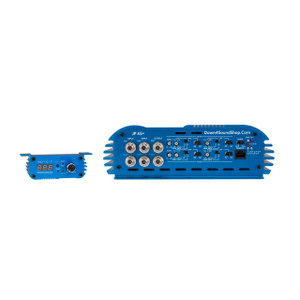
Code Blue CB4S00231 24V DC Security Amplifier Module
The Code Blue CB4S00231 is a 24V DC amplifier module engineered as a direct replacement component for Code Blue CB4 series emergency paging and audio amplification systems. This modular unit handles audio amplification duties within wall-mounted CB4 enclosures, restoring full audio output when the original amplifier degrades or fails. Designed for integration into existing emergency communication infrastructure—schools, hospitals, government facilities, and commercial campuses—the CB4S00231 eliminates the cost and downtime of full cabinet replacement during component maintenance cycles.
Key Features
- 24V DC Power: Operates on standard 24V DC supply. Drop-in compatible with existing CB4 enclosure terminal blocks—no rewiring required.
- CB4 Series Direct Fit: Installs into CB4 wall-mount enclosure slots without mechanical modification. Verify cabinet model before ordering; not compatible with CB1, CB2, CB5, CB6, CB9, or CBRT series.
- Audio Amplification Module: Dedicated amplifier component for paging and alert audio output. Handles the signal conditioning and power amplification for speaker-driven emergency announcements.
- Multiple Mount Configurations: CB4 enclosures support wall, pole, recessed, and rack mounting—the amplifier module itself mounts internally and inherits the cabinet's mounting flexibility.
- No Field Calibration: Plug-and-play replacement. Wiring verification at the 24V terminal block is the only pre- and post-installation check required.
- Modular Service Architecture: Reduces mean time to repair (MTTR) on campus-wide or multi-building paging systems. Stock one spare per 4–6 CB4 cabinets to maintain emergency communication uptime.
The CB4S00231 addresses a critical operational vulnerability: amplifier failures in emergency notification systems demand rapid replacement to maintain life-safety compliance. Rather than waiting for a full cabinet swap and recalibration, site technicians can isolate power, swap the module, verify 24V delivery, and restore service within 15–30 minutes. This parts-level modularity is especially valuable on distributed installations where downtime cascades across multiple speaker zones or alert pathways.
Integration is straightforward: the module connects to the CB4 enclosure's internal terminal block (24V+, 24V−, audio signal lines). No ONVIF, API, or network configuration applies—this is a passive audio component. However, in deployments where the CB4 cabinet feeds into a networked emergency communication platform (intercom, mass notification, or IP paging system), restoring the amplifier module restores the audio output leg of that integrated system immediately.
Power consumption and thermal characteristics are consistent with the CB4 series design envelope; the 24V supply rail is already sized to support this component. Installation in confined wall-mounted or recessed enclosures does not require additional cooling or ventilation modifications. After swap, perform a brief audio test (page announcement, tone alert, or live microphone input) to confirm clean signal path and output volume.
This part is not field-repairable—internal component-level failures require factory diagnostics or replacement unit ordering. If amplifier failures recur within weeks of installation, escalate to a full CB4 cabinet system inspection (power supply stability, input signal integrity, or cabinet environmental conditions such as moisture or temperature). Code Blue components are sourced direct from the manufacturer or US channel partner—no grey-market, no parallel imports—ensuring factory warranty coverage and authentic replacement parts.
Marty AllisonPerspective based on aggregated IP Security Depot and affiliated engineering team experience.
We've installed Code Blue CB4 series emergency paging enclosures across university campuses, K–12 districts, and corporate headquarters for nearly two decades. The CB4S00231 amplifier module is one of the most reliable workhorse components in that ecosystem—when it fails, it's usually catastrophic (no output at all) rather than gradual degradation, which actually simplifies diagnosis. In our experience, the failure mode is almost always internal capacitor aging or power stage fatigue after 8–12 years of continuous or semi-continuous duty (especially in climates with temperature swings or older facilities where 24V supply stability drifts). The modular design means you're not paying for a full cabinet replacement; you're paying for the amplifier card and 30 minutes of technician time. On a 40-zone paging system, that's a significant capex and downtime win versus cabinet-level replacement. The one gotcha we've encountered: installers sometimes forget to confirm the 24V supply is actually delivering clean voltage at the terminal block before installing the new module. A bad power supply will kill a new amplifier in weeks. Always measure voltage and ripple before and after the swap.
Technical Highlights:
- 24V DC Power Delivery: The module is agnostic to the CB4 cabinet's power source (24V supply, wall-powered transformer, or UPS-backed emergency power)—as long as 24V ± 10% is present at the terminal block, the amplifier will function. We've seen installations where the power supply drifts to 20V under load; the module still works, but audio output drops measurably. Pre-installation voltage check saves a callback.
- Audio Signal Path Integrity: No DSP, no filtering, no compression—just clean analog amplification. This is a strength on systems where the upstream mixer or paging controller already handles EQ and level control. It's also a limitation if you need dynamic range limiting or feedback suppression at the amplifier stage. Know your audio chain before ordering.
- Thermal Margin: The module is rated for continuous operation in ambient temps up to ~50°C without derating. In poorly ventilated enclosures or outdoor-mounted cabinets in full sun, thermal stress can shorten component life. Ensure CB4 cabinet ventilation louvers are clean and unobstructed.
- No Spare Parts Granularity: The CB4S00231 is a sealed module. Internal failures require module replacement—you cannot order individual capacitors, power transistors, or op-amps. Budget replacement modules, not repair kits.
- Cross-Series Incompatibility: We see occasional spec confusion where customers order the CB4S00231 for a CB6 or CBRT cabinet and discover it does not fit. Verify cabinet model (usually stamped on the enclosure door or documented in the original system drawings) before issuing a PO.
Deployment Considerations:
- Confirm 24V supply voltage (at the enclosure terminal block) before and after module installation. A multimeter and 60-second test prevents post-installation silence and warranty disputes.
- On systems with multiple CB4 cabinets, stagger spare module procurement so you have at least one backup in stock. Amplifier failures often cluster if the 24V supply rail is marginal across the site.
- If this is a UPS-backed emergency system, verify that the UPS is actually supplying 24V to the CB4 during power loss. Some older UPS systems degrade output voltage under full load; test with paging equipment connected.
- De-energize the cabinet before swapping the module. While the module itself is robust, live-hot terminal block connections invite accidental shorts or technician injury.
- Post-installation audio test is mandatory: verify announcements are clear, volume is appropriate for the space, and feedback or distortion is absent. A 30-second live page test catches wiring errors immediately.
The CB4S00231 is the right choice for any organization running CB4 series emergency communication infrastructure and facing amplifier failure or planned maintenance. It's a straightforward parts-level repair that restores system uptime without full cabinet replacement. For broader product information and compatible accessories, visit the Code Blue catalog.