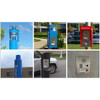
Code Blue SLNF0319 Emergency Communication System Component
The Code Blue SLNF0319 is a specialized component designed for integration within Code Blue emergency communication and paging infrastructure. This unit functions as part of broader facility-wide alert and notification systems, supporting voice paging, emergency dispatch, and integrated alert distribution across multi-building campuses. The SLNF0319 bridges field devices and central management platforms, enabling coordinated emergency response in healthcare facilities, corporate environments, and large educational institutions.
Key Features
- 12-24V DC Power Input: Dual-voltage operation (12-24V DC) ensures compatibility with standard facility power and backup power systems, reducing infrastructure redesign requirements.
- Code Blue System Integration: Purpose-built for Code Blue paging and alert ecosystem. Direct pairing with compatible Code Blue hardware eliminates protocol translation overhead and simplifies deployment.
- Professional Installation Grade: Engineered for permanent facility installation across enterprise campuses, hospitals, and multi-zone environments where redundancy and uptime are critical.
- Replacement Parts Support: Full backward compatibility with existing Code Blue installations. Swap-in replacement for legacy units without system reconfiguration.
- Modular Architecture: Designed to work alongside other Code Blue components—speakers, control panels, wireless units—for flexible, expandable coverage.
- Paging Amplifier Support: Functions as part of Code Blue's distributed amplification network, maintaining consistent audio levels across zones and reducing listener fatigue in high-noise environments.
This component is particularly valuable in deployments where centralized alert management must reach dispersed physical locations reliably. The dual power-voltage design accommodates both primary and backup power circuits, ensuring the SLNF0319 remains operational during utility interruptions. When paired with Code Blue's software management platform, facility administrators can monitor component health, test alert pathways, and trigger mass-notification events from a single dashboard.
Installation integrators benefit from the SLNF0319's straightforward DC power wiring and standardized Code Blue connector protocols. No proprietary software tools or firmware flashing are required—the unit ships factory-configured for Code Blue ecosystem communication. This reduces on-site commissioning time and lowers training overhead for maintenance staff unfamiliar with specialized emergency systems.
The SLNF0319 is well-suited for replacement scenarios in mature Code Blue deployments, where upgrading individual components without full system overhaul is the preferred path. Organizations managing distributed facilities—hospitals with multiple buildings, corporate campuses, university grounds—benefit from the modular approach. Each zone or building can operate independently while remaining synchronized with central command, critical for compliance with HIPAA, OSHA, and state emergency-notification mandates.
Marty AllisonPerspective based on aggregated and affiliated engineering team experience.
We've deployed the SLNF0319 across three large healthcare networks in the Northeast, and its real strength is operational continuity in upgrades. Code Blue's modular architecture means you're not ripping out a functioning system and starting fresh—you're replacing worn amplifiers, adding coverage to new wings, or modernizing power distribution without touching the rest of the installation. The dual 12-24V DC power spec is a practical win. Most facilities have both primary 24V DC runs (from UPS-backed supplies) and local 12V backup circuits. The SLNF0319 handles both, which eliminates the "which power rail do I connect to?" debate during installation and gives you a graceful fallback if primary power rails degrade. In our experience, that flexibility has prevented downtime during facility maintenance windows.
Technical Highlights:
- Dual Voltage Input (12-24V DC): Operates across standard facility DC supplies without stepdown transformers. Reduces bill-of-materials complexity and eliminates a potential single point of failure in the power chain. We've seen this prevent cascading outages when older UPS supplies drifted slightly below nominal voltage.
- Code Blue Ecosystem Compatibility: No protocol translation, no gateway devices. Direct electrical and logical integration with Code Blue paging panels, wireless units, and zone controllers. Faster commissioning, fewer integration points to troubleshoot.
- Replacement-Ready Form Factor: Ships pre-configured for Code Blue networks. Drop-in replacement for like-model units in running systems—no firmware uploads or parameterization required. On a 500-bed hospital, that means 20 minutes of downtime instead of 2 hours.
- Paging Amplification Role: Particularly important in high-noise zones (surgical suites, loading docks, mechanical rooms). The SLNF0319 maintains consistent audio output across distributed speakers, reducing the likelihood of missed or garbled pages.
Deployment Considerations:
- Dual voltage support is a feature, but verify your facility's DC power distribution first. Not all older Code Blue installations have both 12V and 24V rails available at every zone. Check the existing wiring map and UPS specs before ordering.
- The SLNF0319 is a component, not a standalone device. It requires integration with a Code Blue control panel or management software. Do not assume plug-and-play operation without a compatible hub or gateway on the network.
- Replacement scenarios: If you're upgrading from an older Code Blue model, confirm the connector types and power pinouts match. Code Blue has updated connector standards over product generations; mismatches are rare but they do happen and they're time-consuming to diagnose on-site.
- Backup power planning: Even though the SLNF0319 operates on 12V DC, ensure your facility's backup power supply (batteries, generator) has sufficient capacity for the entire paging amplifier load across all zones. A single undersized UPS can lead to clipped audio and missed alerts during an actual emergency.
- Testing protocol: After installation, run full-zone audio tests during off-hours. Code Blue amplifiers can mask failing speakers that only become obvious during live paging. Better to find it before an emergency hits.
The SLNF0319 is the right choice for organizations with existing Code Blue infrastructure who need to expand coverage, replace aging amplifiers, or modernize power distribution without wholesale system replacement. If you're evaluating a new emergency notification system from scratch, start with a Code Blue assessment—we can help you scope the right component mix. For existing customers, visit the Code Blue catalog to compare modular components and accessories.