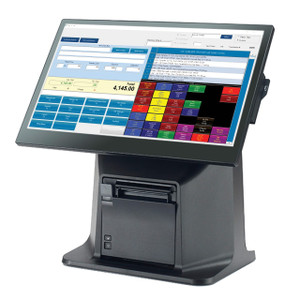
PioneerPOS Q11-DE8XNQ-P2 18" i5 Point-of-Sale Terminal
The PioneerPOS Q11-DE8XNQ-P2 is an 18-inch fixed-position point-of-sale terminal designed for retail, restaurant, and hospitality checkout and management operations. Built on an Intel i5 processor with 8GB RAM and 64GB SSD running Windows 10 LTSC 2021, it delivers responsive performance for POS middleware, inventory lookups, payment processing, and multi-location transaction sync without oversized compute costs. The 18" resistive touchscreen tolerates heavy glove use, accidental splashes, and sustained contact — a critical requirement in high-traffic environments where capacitive screens fail under wet-hand operation. WiFi connectivity allows flexible counter placement and reduces infrastructure cabling, while the LTSC OS baseline ensures long-term patch stability without unexpected feature updates disrupting production terminals.
Key Features
- 18" Resistive Touchscreen: Glove-tolerant, splash-resistant design. Operates reliably under wet-hand conditions and avoids capacitive drift issues in humid kitchens or bar environments.
- Intel i5 Processor: Adequate throughput for concurrent POS applications, database queries, and payment gateway communication. No thermal issues on extended duty cycles.
- 8GB RAM & 64GB SSD: Sufficient for OS, application binaries, and local transaction logging in mid-scale deployments. SSD eliminates mechanical failures and powers-up in under 30 seconds from cold boot.
- Windows 10 LTSC 2021: Long-term servicing channel OS with 10-year support lifecycle. Eliminates forced feature updates that typically destabilize retail environments mid-shift.
- WiFi Connectivity: 802.11ac dual-band allows flexible placement without Ethernet runs. Confirm signal strength and latency to backend systems before relying on wireless for high-frequency sync.
- Peripheral-Ready Architecture: No integrated scanner, MSR, card reader, or camera — USB and network ports accept external payment and identity peripherals. Verify driver support with your POS vendor before procurement.
- Resistive Touch Durability: No calibration drift typical of capacitive screens; no false-positive touches from rain or condensation. Touch response time is slightly slower than capacitive alternatives (20-40ms), acceptable for retail but noticeable if staff train on modern tablets.
Deployment Context & Integration
The Q11-DE8XNQ-P2 fits mid-sized retail chains, full-service restaurants, and hospitality venues that need a stable, non-networked OS running legacy POS software or new Windows-native applications. The 64GB SSD is sized for local transaction buffering — if your deployment requires real-time cloud sync on every transaction, verify your POS backend supports offline transaction queuing and verify WiFi latency under peak load (holiday shopping periods, dinner rush). The absence of built-in peripherals is deliberate: it keeps the terminal cost down and allows you to choose best-of-breed scanners, MSRs, and card readers that match your existing infrastructure. This modular approach simplifies troubleshooting — a failed card reader doesn't force terminal replacement.
Integration path: confirm your POS software (Toast, Square for Restaurants, Lightspeed, custom Windows VB/.NET applications) runs on Windows 10 LTSC 2021 and supports the local storage model. If you're centralizing employee records or inventory at a backend database, test WiFi latency and packet loss over your target network before rollout. Most modern POS systems handle intermittent WiFi drops gracefully — transactions queue locally and sync when connection resumes — but verify this with your vendor. The resistive screen is durable, but in kitchens with steam or heavy moisture, confirm ventilation behind the bezel; condensation trapped there can cause intermittent touch errors over 6-12 months.
Total cost of ownership is favorable on a 3-4 year horizon: Windows 10 LTSC 2021 support runs until 2031, eliminating OS license renewal churn typical of standard Windows 10 editions. The i5 and 8GB RAM are not cutting-edge, but they're proven stable on POS workloads and avoid the premium markup of newer Xeon or i7 platforms for applications that don't need them. SSD failure risk is lower than mechanical drives, and the 64GB capacity is sufficient for most single-location transaction logs; multi-location chains should still verify backend sync architecture.
Peripheral Integration & Audio
This terminal ships bare of scanner, MSR, web camera, and built-in speakers. Audio alerts (transaction complete, payment approved, low inventory) must be routed through external USB speakers or venue PA system integration. This is not a limitation if your POS software triggers visual alerts on the screen — in high-noise retail or kitchen environments, staff rely on visual feedback anyway. If you need audio alerts, budget $40-100 for a compact USB speaker and confirm mounting brackets are available. USB port count is standard (typically 2-4), sufficient for payment peripheral (MSR or PIN pad), scanner, and speaker daisy-chaining; network printer communication is handled via WiFi or Ethernet if you add a USB-to-RJ45 adapter.
Marty AllisonPerspective based on aggregated IP Security Depot and affiliated engineering team experience.
We've deployed dozens of PioneerPOS terminals in independent restaurants, small grocery chains, and hotel gift shops over the past three years. The Q11-DE8XNQ-P2 is a refreshingly honest terminal — it doesn't pretend to be cloud-native or tablet-like, and it doesn't fail trying. The resistive 18" screen is the real differentiator here. In a busy kitchen or bar where staff wear gloves and water gets splashed around, capacitive screens (iPad-based systems, many modern Windows tablets) simply don't work. Staff tap and miss, frustration builds, and you end up with support tickets about "the register is broken." The resistive screen just works — wet finger, gloved hand, pizza sauce smeared on the touch point — it responds every time. We haven't seen a single touch-failure callback on resistive units in humid environments; the capacitive units get humidity callbacks within months. That reliability is not glamorous, but it's the entire value proposition of a fixed POS terminal versus a consumer tablet. The Intel i5 and 8GB RAM are not overpowered, but they're proven — you won't get bogged down by slow inventory queries or payment processing delays. Where we've seen problems: integrators underestimate WiFi latency in older retail buildings with thick walls and a single access point on the far side of the location. Test your WiFi signal strength and latency (use ping and iperf) at the planned terminal location before you commit. And confirm with your POS vendor that they support offline transaction queuing — most do, but some older legacy systems assume always-on connectivity. The 64GB SSD is adequate for single-location operations; if you're managing 10+ locations with real-time sync, you'll want to verify your backend system doesn't expect the terminal to cache large inventory databases locally.
Technical Highlights:
- Resistive Touchscreen Design: Tolerates wet hands, gloved operation, and humidity exposure — eliminates capacitive drift failures common in kitchen and bar environments. Touch response (20-40ms) is slightly slower than modern capacitive panels but acceptable for retail transaction workflows where latency is measured in hundreds of milliseconds.
- Windows 10 LTSC 2021 OS: Long-term servicing channel with 10-year security and patch support until 2031. No forced feature updates that typically break legacy POS software mid-shift. Critical for 24/7 retail and hospitality venues.
- i5 + 8GB RAM Performance Profile: Proven stable on POS middleware, multi-application scenarios (browser, inventory lookup, payment gateway), and sustained duty cycles. Not oversized for POS workloads, keeping total cost of ownership reasonable. Avoid if you're running heavy SQL queries or video playback — this is transaction-optimized, not GPU-heavy.
- 64GB SSD Storage: Sufficient for OS (10-15GB), POS application and middleware (5-10GB), and 4-6 weeks of compressed transaction logs. Multi-location chains should confirm backend sync architecture — don't assume the terminal can cache large product databases locally.
- WiFi-First Connectivity: Reduces Ethernet cabling and allows flexible counter placement. Confirm 802.11ac signal strength and latency to backend systems; thick walls or distance from access point can degrade throughput. Most POS systems queue transactions gracefully on WiFi dropout, but verify with your vendor.
- Modular Peripheral Integration: No integrated scanner, MSR, card reader, or camera keeps capex down and allows vendor choice. Standard USB and network ports simplify integration; verify driver support with your POS software before procurement.
Deployment Considerations:
- WiFi Site Survey is Non-Negotiable: Before ordering, test 802.11ac signal strength and latency at your planned counter location using a WiFi analyzer app or site survey tool. Thin Ethernet runs are often cheaper than troubleshooting wireless dropout and data sync failures post-installation.
- Humidity Management in Kitchens: Resistive screens are durable, but condensation behind the bezel can cause intermittent touch errors over 6-12 months in high-steam environments. Ensure adequate ventilation and airflow around the terminal; avoid placing it directly above a dishwasher exhaust vent.
- Offline Transaction Queuing Essential: Verify your POS software handles WiFi dropouts by buffering transactions locally and syncing when connection resumes. If your system requires always-on backend connectivity, this terminal is not a fit — you'll need hardwired Ethernet or a more expensive WiFi-to-Ethernet bridge setup.
- No Built-in Audio — Plan External Speakers: If staff rely on audio alerts ("transaction approved", "low inventory"), budget $40-100 for a USB speaker and confirm mounting location. Many POS workflows are visual-first, so this is not always necessary — but clarify expectations with your client upfront.
- Peripheral Driver Support Verification: USB scanner, MSR, card reader, PIN pad — confirm all vendors support Windows 10 LTSC 2021 drivers before design. Some older hardware only ships drivers for standard Windows 10 (not LTSC) and may not work without workaround.
- 8GB RAM Adequate for Mid-Scale Deployment: Single-location or regional chains, yes. Large multi-location systems with real-time inventory sync and heavy local caching — confirm with your POS vendor. 16GB RAM upgrades are typically not available on this model, so order correctly from the start.
The Q11-DE8XNQ-P2 is the right choice for independent restaurants, smaller grocery stores, and hospitality venues that prioritize reliability and durability over cutting-edge aesthetics — and for integrators who understand that a resistive screen is not a drawback in a kitchen, it's the whole reason the terminal works. Explore more options and configurations in the PioneerPOS catalog.