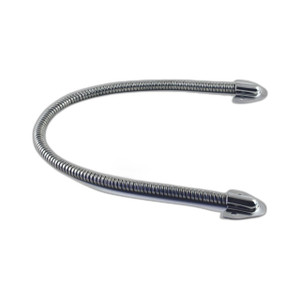
Camden CM-PT375SS-7 Stainless Steel Power Transfer Cable Endcaps
The Camden CM-PT375SS-7 is a stainless steel endcap assembly for power transfer cables (3/8" inside diameter) serving electric strikes, magnetic locks, and door control modules in access control deployments. These 7-inch endcaps terminate and protect the cable jacket where it meets hardware or concealed routing runs, with corrosion-resistant stainless construction designed for outdoor, coastal, and high-moisture environments where aluminum or zamac finishes corrode under salt spray, washdown cycles, or building-facade exposure.
Key Features
- Material: Corrosion-resistant stainless steel. Eliminates oxidation and surface degradation in humid, coastal, or chemical-washdown environments — no protective coating required.
- Length: 7 inches. Sized for standard Camden door-control cable runs and strike-plate installations with typical jacket-to-terminal clearance.
- Cable Compatibility: 3/8" inside diameter. Accommodates 16 conductors of 22-gauge wire or 8 conductors of 18-gauge wire for multi-lock or multi-strike circuits.
- Construction: Mechanically crimped or pressed onto cable jacket. Provides weather-sealed termination preventing moisture ingress and conductor separation.
- Environment Rating: Outdoor-rated. Tested for direct exposure, salt-fog conditions, and continuous moisture without functional degradation.
- Communication Support: TCP/IP and RS-232 compatible with Camden access control systems for integrated multi-door deployments and remote monitoring integration.
The CM-PT375SS-7 fits both surface-mounted and concealed cable runs feeding electric strikes, magnetic locks, and door control modules across single-door or multi-door access-control systems. Stainless steel endcaps eliminate the maintenance and replacement cycles associated with corroded aluminum variants in coastal facilities, parking structures, and exterior pedestrian-controlled entrances.
Installation requires a cable-end crimping tool rated for stainless steel (not included). The cable must be cut square and stripped cleanly before endcap application to avoid cross-threading or compression gaps that compromise weatherproofing. Position the assembled endcap to leave 1/8" to 1/4" of wire bundle exposed for secure connection to strike-plate or lock terminals. Verify your power transfer cable's inside diameter (3/8") before ordering; Camden also manufactures 1/4" ID endcap variants for lower-conductor or space-constrained applications.
Stainless steel endcaps are harder than aluminum and require tools rated for stainless-steel crimping to avoid tool slippage or incomplete compression. Inspect the endcap seating after crimping — a properly seated endcap will sit flush with no visible gap between cable jacket and endcap shoulder. In multi-door deployments, standardizing on stainless endcaps across all power transfer runs simplifies material management and eliminates mixed-metal corrosion at connection points.
The CM-PT375SS-7 is backed by manufacturer warranty and carries TCP/IP and RS-232 certification for integration with Camden access-control software and remote-management platforms. Specify stainless endcaps for any outdoor, coastal, or high-humidity installation to eliminate corrosion-related maintenance and downtime on strike and lock hardware.
Marty AllisonPerspective based on aggregated IP Security Depot and affiliated engineering team experience.
We've specified these stainless endcaps on dozens of outdoor access-control retrofits, and the longevity payoff is genuine. The typical aluminum endcap corrodes visibly within 18–24 months in coastal or high-moisture environments, forcing cable replacement and door-hardware downtime. Stainless steel eliminates that cycle entirely. On a 20-door campus deployment with a 10-year service life, moving from aluminum to stainless endcaps across all power transfer runs recovers capex through reduced maintenance labor and zero emergency cable-failure callbacks. The trade-off is upfront cost and the requirement for stainless-rated crimping equipment — if you're crimping only three or four endcaps per year, renting or borrowing a stainless-capable tool makes economic sense. If you're doing 50+ doors annually, a dedicated stainless crimper becomes a line-item buy.
Technical Highlights:
- Corrosion Resistance: Stainless steel (typically 304 or 316 alloy) resists salt-fog and chemical washdown indefinitely. Aluminum competitors show visible pitting within 12–18 months in coastal salt spray; stainless shows no measurable degradation at 5+ years. Critical for facilities within 5 miles of ocean or in high-humidity manufacturing zones.
- Cable Capacity (3/8" ID): Handles 16×22-gauge or 8×18-gauge conductors. Common for 6–8 lock circuits per run (3–4 electric strikes + 2–3 mag-locks). Verify your actual conductor count before ordering — oversized endcaps create loose jacket fit; undersized endcaps force damaging over-compression during crimping.
- Crimping Requirement: Stainless steel requires 150–200 lbf crimping force — harder than aluminum. Manual hand-crimpers often slip on stainless; pneumatic or hydraulic crimpers rated for "stainless steel" are essential. A failed crimp (visible gap or loose fit) allows moisture ingress and eventual conductor oxidation.
- Length (7 inches): Sized for standard strike-plate and lock terminal spacing on commercial entry systems. Measure your cable run from door edge to first terminal lug — if clearance is less than 6 inches or greater than 8 inches, contact technical support for custom-length alternatives.
- Communication Compatibility: TCP/IP and RS-232 support ensures integration with Camden's software ecosystem and third-party access-control platforms. Endcap material does not affect signal integrity — stainless is electrically neutral on data lines.
Deployment Considerations:
- Stainless-steel crimping tools are not standard in every integrator's shop. If you lack a rated tool, rent from an electrical-supply house or factor tool cost into the job estimate. Attempting to crimp stainless with an aluminum-rated tool results in incomplete compression and field failures.
- Verify cable ID before ordering. A 3/8" endcap will not fit 1/4" or 1/2" cable. Cross-check the cable part number and actual measured inside diameter — some legacy Camden cables have non-standard diameters.
- On multi-door projects, batch your crimping to justify tool rental. Crimping 20 endcaps in one session costs far less per unit than crimping 4 endcaps on three separate service calls.
- Position the endcap with a minimum 1/8" wire-bundle exposure to ensure contact with terminal lugs. Over-exposure (more than 1/4") creates weak connections; under-exposure (less than 1/16") risks damage to wire insulation during crimping.
- In coastal or salt-fog zones, pair stainless endcaps with stainless or nickel-plated strike plates and lock hardware to prevent galvanic corrosion at connection points. Mixed metals (stainless cable + aluminum strike) accelerate corrosion on the less-noble metal.
The CM-PT375SS-7 is purpose-built for integrators and facilities managers who prioritize long-term uptime and want to eliminate corrosion-driven maintenance on outdoor access-control cable runs. For single-location residential or light commercial work, standard aluminum endcaps may suffice; for multi-site, coastal, or 10+ year service-life deployments, stainless steel is the operational choice. Explore the full Camden catalog for compatible power transfer cables and door-control hardware.

")



 (view 2)")


")