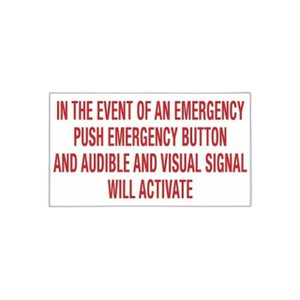
Camden CM-SE21F Electromagnetic Lock Strike Sign
The Camden CM-SE21F is a 12.5" × 8.5" solid white electromagnetic lock strike designed for networked access control deployments managing up to 50 doors. Operating at 12VDC with TCP/IP integration, it provides fail-secure electromechanical locking suitable for standard door frame mounting across multi-tenant, multi-floor, or distributed facility installations. The visible sign form factor clearly identifies strike-controlled access points to facility staff and integrators during maintenance and troubleshooting.
Key Features
- Electromagnetic Strike, 12VDC: Low-voltage electromechanical actuation compatible with standard access control relay circuits and distributed 12VDC power supplies. Reduces wiring complexity in multi-door deployments.
- 50-Door Capacity: Single control module manages up to 50 networked door strikes, lowering per-door infrastructure and control overhead on mid-scale installations.
- TCP/IP Networked Control: Centralized access policy enforcement via TCP/IP-based access control platform; real-time audit logging and remote monitoring across all doors from a single management console.
- HID Credential Support: Works with HID credential ecosystems (card, fob, mobile); unified credential provisioning across all 50 doors simplifies HR and facilities workflows.
- 12.5" × 8.5" Sign Format: Visible white signage mounted at standard door frame height; improves facility orientation and reduces confusion in complex building layouts.
- Wall Mount, Standard Frame Holes: Direct mounting to existing door frame specifications; no custom fabrication required. White powder-coat finish resists fingerprints and scuff marks in high-traffic corridors.
- Fail-Secure Design: Remains locked on power loss, protecting secured spaces during electrical outages or control system faults.
- Manufacturer Warranty: Factory-backed reliability on electromechanical components and circuit board assembly.
The CM-SE21F bridges the gap between visible access-point identification and networked strike control. Unlike discrete or hidden strikes, the sign format communicates to building occupants exactly which doors are electronically controlled—reducing accidental attempts to force locked doors and lowering security staff inquiries. In multi-tenant office buildings, medical facilities, and educational campuses, this transparency reduces operational friction without compromising access security.
TCP/IP integration allows the CM-SE21F to fit seamlessly into centralized access control systems (Genetec, Lenel, Salto, or proprietary platforms supporting HID credentials and relay-triggered strikes). Real-time event logging tracks unlock events, forced-entry attempts, and power anomalies, feeding directly into security dashboards and audit reports. Multi-door management scales from 2 to 50 doors per control module, reducing the number of independent relay boxes and power supplies required.
12VDC operation matches the power budget of distributed access control architectures; a single 12VDC power supply with appropriate load rating (typically 2–5A per strike, confirmed during design) can service multiple CM-SE21F units on the same circuit loop. Wiring to conventional access control relay outputs is straightforward: positive and negative leads to the strike solenoid, no special line-voltage conversion needed. Standard door frame mounting hardware is included; verify striker plate alignment and frame thickness (typically 1.25" to 2.5" steel or aluminum) before installation to avoid binding or misalignment.
White powder-coat finish is standard across the CM-SE21F line; metallic or custom colors may require special order. In environments subject to frequent cleaning (hospitals, food-service facilities), the smooth finish tolerates damp-cloth wipe-down without finish degradation. The visible sign design does not obscure the actual strike plate or locking mechanism—all moving parts remain accessible for maintenance and striker adjustment.
Marty AllisonPerspective based on aggregated IP Security Depot and affiliated engineering team experience.
We've deployed the Camden CM-SE21F across office parks, healthcare facilities, and multi-building campuses where networked access control needs clear visual strike identification at the door level. The 12.5" × 8.5" white sign is refreshingly honest design—rather than hiding access infrastructure, it communicates to occupants and staff exactly where electronic strikes live. That transparency eliminates a surprising amount of operational noise: fewer lost-key escalations, fewer attempts to shoulder-charge electronically controlled doors, and faster facility staff troubleshooting on power failures or credential resets. The TCP/IP backbone and HID credential support mean you're not building a siloed access island; it plugs into your existing badge ecosystem and central monitoring console. We've seen integrators spec the CM-SE21F into 40–50 door deployments where it genuinely reduces total cost of ownership versus individual relay-controlled strikes scattered across multiple cabinet locations.
Technical Highlights:
- 12VDC Electromagnetic Strike with TCP/IP Network Interface: Low-voltage design eliminates line-voltage handling and reduces electrical compliance overhead. TCP/IP backbone allows real-time access policy updates and event logging without polling individual relay modules. In facilities with dynamic credential revocation (departing contractor, access-time windows), central policy push beats individual door rewiring every time.
- 50-Door Capacity per Control Module: Single networked controller manages 50 strikes; typical multi-floor office deployments consolidate to 1–2 modules total, reducing cabinet clutter and PSU redundancy footprint. Scaling from 10 to 50 doors requires no hardware redesign—just credential provisioning.
- HID Credential Unification: All 50 doors recognize the same badge/fob ecosystem; facilities with mixed strike vendors often struggle with credential reconciliation. The CM-SE21F enforces one credential type across the entire deployment, simplifying HR termination procedures and reducing replay-attack surface.
- Fail-Secure Electromechanical Locking: Power loss or control system crash leaves the door locked—appropriate for high-security spaces, pharmaceutical cold storage, or server rooms. Verify exit-code compliance in your jurisdiction (life-safety code may mandate fail-safe on egress doors; plan accordingly).
- Visible Sign Form Factor: 12.5" × 8.5" white panel at standard door height improves wayfinding and reduces confusion in complex buildings. Occupants see 'electronically controlled' before attempting to force the door; security ops see 'this is a networked strike' during routine inspection.
Deployment Considerations:
- 12VDC power budget: Verify your PSU and control module relay outputs are rated for simultaneous strike actuation current (typically 1–2A per strike). If you're stacking all 50 doors on one power rail, you risk voltage sag and delayed solenoid actuation. Size your supply at 1.5× peak simultaneous demand or use distributed 12VDC supplies on separate circuits.
- Door frame alignment: Strike mounting requires solid frame contact. Hollow metal frames over 2.5" thick or composite frames may not provide adequate mounting surface. Test-fit striker plate alignment on a sample door before mass deployment; misaligned strikes bind and cause user frustration (people jamming shoulders into doors that won't unlock).
- Exit-code compliance: Fail-secure strikes require panic-bar or release mechanism on egress doors in most jurisdictions. The CM-SE21F itself is the lock; pair it with compliant push bars or request integrator review of local life-safety code before final installation schedule.
- TCP/IP network dependency: Access control hinges on network connectivity. Confirm your access control platform has local backup relay logic for network outages (most modern systems do, but verify). A crashed controller with no local failover leaves all 50 doors permanently locked.
- Credential provisioning workflow: HID credential lifecycle (onboarding, revocation, time-windowed access) is now centralized. If your facilities team is used to managing individual doors, budget training time for centralized policy management via the access control console.
The CM-SE21F is the right choice for mid-scale, networked access control environments where credential unification and centralized policy management justify a modest upfront infrastructure investment. If you're managing 10–50 doors across one or more buildings and you want to simplify credential provisioning and event auditing, the CM-SE21F eliminates single-door relay chaos. Explore the Camden catalog for additional strike types and controller options.

")



")