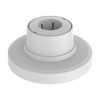
Axis 5507-361 T94B02D Pendant Kit, White
The Axis 5507-361 is a purpose-built pendant mounting solution for small-form-factor Axis dome cameras in indoor surveillance deployments. Where wall brackets or standard ceiling mounts create visual clutter or rigid sightlines, a pendant approach lets you hang the camera from overhead infrastructure—drywall anchors, grid suspension systems, or existing conduit—while maintaining a minimal footprint. The white finish integrates into modern ceiling systems without standing out.
Key Features
- 1.5" NPS thread interface: Connects to standard threaded pipe fittings and suspension hardware. This commonality means you can source mounting components from industrial suppliers or integrate with existing infrastructure—no proprietary adapters required.
- 3/4" threaded pipe compatibility with nut: If you're working with smaller-diameter ceiling infrastructure or prefer a tighter mechanical fit, the 5507-361 accommodates 3/4" NPT pipes with included or field-supplied nuts. This flexibility avoids costly conduit modifications on retrofit jobs.
- Compact form factor: Engineered specifically for M20, M31-LV/-LVE, M30-V/-WV, and Companion series cameras. Oversized brackets waste ceiling space and obstruct sightlines; this pendant keeps the footprint small enough to blend into retail, office, and hospitality environments.
- White finish: Reduces contrast against drop ceilings, acoustic tile, and drywall. In facilities where every visible element is scrutinized by design or compliance teams, neutral aesthetics avoid retrofit friction.
- Pendant design (versus flush-mount or dome): Hanging the camera from above eliminates corner-mounting dead zones. Particularly useful in narrow corridors, stockrooms, or open plans where corner placement isn't practical.
- Discrete installation: No wall penetrations, no bracket projections. The 5507-361 supports the camera body directly from ceiling infrastructure, minimizing visual impact compared to surface-mounted or turret alternatives.
Integration & Compatibility
This mount is designed for Axis dome cameras in the M-series lineup. Confirm your specific camera model supports pendant mounting before ordering; check the camera's technical documentation or consult the network video recorder setup guide if you're planning a multi-camera system and need mounting consistency across deployment locations.
The threaded interface is passive—no power, no intelligence. Cable management depends on your ceiling infrastructure; route network and power leads through conduit or cable trays as your facility standards require. For PoE-powered cameras, ensure your PoE switch is positioned to accommodate run lengths from the mount point to your rack.
When to Choose a Different Mount
If you need wall-mount simplicity or your camera must sit flush against a surface, consider the standard dome or corner-mount bracket for the M-series. If the pendant depth exceeds your ceiling void depth, switch to a wall-bracket configuration. For outdoor or high-vibration environments, Axis offers IP66-rated mounts designed for those conditions; the 5507-361 is indoor-only.
Frequently Asked Questions
Q: Is the 5507-361 suitable for outdoor installations?
A: No. This is an indoor-rated pendant kit. For outdoor dome cameras, use a weatherproof mount rated IP66 or higher.
Q: Will the 5507-361 work with other brands' dome cameras?
A: The threaded interface is compatible with any dome camera that accepts standard 1.5" NPS threads. However, Axis engineered this mount specifically for their M20, M31-LV/-LVE, M30-V/-WV, and Companion series. Test fit and weight-load verification are recommended before deploying on non-Axis cameras.
Q: What is the maximum camera weight the pendant can support?
A: Consult the datasheet for rated load capacity. Ensure your ceiling infrastructure (anchors, conduit, or suspension hardware) is rated for the combined mass of the mount and camera.
Q: Can I adjust the pendant length or angle?
A: The 5507-361 is a fixed-length pendant. If you require adjustable positioning, consider a gooseneck mount or articulating bracket in the Axis accessory line.
Q: Does the kit include all hardware needed for installation?
A: The kit includes the pendant body and threaded interface. You'll need to source ceiling anchors, suspension hardware, or conduit suitable for your specific ceiling type—this varies widely by facility. Coordinate with your facilities team before ordering.
Q: Is there a finish other than white?
A: The 5507-361 is white only. For other finishes, consult the broader Axis mount catalog or consider a standard bracket.
Ted PerryPerspective based on aggregated IP Security Depot and affiliated engineering team experience.
The Axis 5507-361 solves a specific problem: how to mount a small dome camera from a ceiling without wall penetrations or visible brackets. In retail and hospitality settings where aesthetics matter as much as coverage, a pendant approach keeps the camera body centered and hidden—especially valuable in aisles, corridors, or open areas where corner mounting isn't practical.
Deployment Considerations:
- Ceiling infrastructure is critical: The pendant hangs from whatever you anchor it to. Ensure your drywall anchors, conduit clips, or suspension points are rated for the combined weight of the 5507-361 and your camera (typically 2–4 lbs). A weak anchor is a liability.
- Thread compatibility requires verification: The 1.5" NPS interface is standard, but confirm your threaded fittings or pipe match that spec. Mixing NPT with NPS threads creates loose, unsafe connections—test the fit before final installation.
- Cable routing demands planning: Pendant mounts hang cables down. Route them through conduit, cable trays, or tie them cleanly to avoid trip hazards or snagging. This isn't hidden like a wall-mount installation.
- Limited adjustability: The 5507-361 is fixed-length. If you need to fine-tune camera angle or height after rough-in, you'll need a different mount or field-fabricated extensions.
Best fit: retail stockrooms, office hallways, hospitality corridors, or educational facilities where discrete ceiling mounting outweighs the need for simple field adjustment. Avoid this mount if your facility lacks adequate ceiling void depth or if ceiling infrastructure is weak.