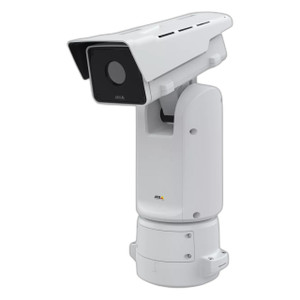
Axis Q2112-E 640x480 Thermal Network Camera
The Axis Q2112-E (model 02604-001) is a fixed-lens thermal imaging camera engineered for perimeter surveillance, critical infrastructure protection, and remote facility monitoring where visible light is absent or unreliable. Operating on the ARTPEC-8 platform, it detects human and vehicle heat signatures across extended distances in complete darkness, fog, rain, and low-visibility conditions—scenarios where conventional RGB or IR illuminated cameras fail. The 640×480 VGA thermal sensor with optimized NETD (noise equivalent temperature difference) delivers actionable heat-signature detail for integrators protecting airports, utilities, ports, border zones, and high-value outdoor assets where thermal performance justifies the capex and bandwidth overhead.
Key Features
- VGA Thermal Resolution (640×480): Thermal imaging at 0 lux with fixed long-range lens options (non-user-changeable). Sufficient for human detection at 100+ meters and vehicle detection at 300+ meters depending on lens selection and environmental contrast.
- IP66/IP67 Sealed Housing: Full dust and water ingress protection. Withstands sustained rain, hose-down cleaning, and temporary submersion—no corrosion risk on coastal or wet industrial sites.
- IK10 Impact Rating: Resists direct strikes and environmental abuse on exposed perimeter mounts. Critical for vandal-prone or high-wind environments where conventional housings fail.
- PoE Power (12–16W): Single Ethernet cable delivers power and carries audio/video streams. Eliminates auxiliary power runs on distributed perimeter installations, reducing installation labor and splice points.
- PT-Mount Compatible: Pairs with Axis pan-tilt heads (sold separately) for automated guard-tour operations. Thermal payloads on PT platforms enable systematic perimeter scanning without manual camera repositioning.
- ONVIF Profile Compliance: Native integration with Axis Camera Station, Genetec, Milestone, Avigilon, and third-party VMS platforms supporting thermal stream ingestion. Multi-vendor interop simplifies mixed-camera deployments.
- ARTPEC-8 Native Security Hardening: Axis proprietary CPU with encrypted credential storage, signed firmware, and CVE patch velocity. Reduces exposure on air-gapped or low-maintenance remote sites.
- Integrated Audio Capability: Dual-channel support for two-way communication or site audio alerting when wired to external speakers. Operational redundancy on sites without discrete intercom infrastructure.
Thermal Imaging & Environmental Performance
The Q2112-E operates across −40°C to 60°C (−40°F to 140°F) without performance degradation—a critical spec for cold-climate perimeter sites and enclosure-mounted deployments. Thermal sensors are agnostic to mounting orientation (wall, ceiling, pendant), allowing flexible installation on existing structural mounts. Unlike visible-light cameras that require external IR lighting or suffer in fog and rain, thermal imaging penetrates atmospheric obscuration, making the Q2112-E the only practical solution for continuous 24/7 perimeter coverage in adverse weather or extreme low-light conditions. Integrators should budget roughly 4–8 Mbps per stream depending on frame rate (typically 25–30fps) and H.264/H.265 codec selection; on multi-camera perimeter deployments, thermal bitrate compounds, necessitating gigabit backhaul or dedicated thermal recording paths.
Deployment & Integration Strategy
The fixed, non-user-changeable lens design requires specification of the correct long-range focal length at purchase—no field swaps or adjustments post-installation. Confirm the required detection distance (human at 100m vs. vehicle at 300m) and site-specific atmospheric conditions (coastal haze, industrial particulate, vegetation obstruction) with the integrator before SKU selection. For automated perimeter tours, pair the thermal camera with an Axis pan-tilt head; tour waypoints and dwell times are configured in Camera Station or the native VMS, reducing manual operator overhead on large perimeters. Audio integration requires external speaker hardware and amplifier; the camera itself does not drive speakers directly. ONVIF Profile compliance ensures bitstream compatibility with any VMS, but thermal metadata (target classification, heat-signature tracking) may require Axis-native tooling for advanced analytics.
Total Cost of Ownership
Thermal cameras command a 3–8x capex premium versus conventional visible-light options, justified only on sites where total darkness, fog, or vandal-proof coverage is non-negotiable. The PoE power model eliminates auxiliary power infrastructure, offsetting some installation cost. Long-term operational gains stem from unattended 24/7 perimeter scanning (guard tours on PT heads), zero external lighting maintenance, and dramatic false-positive reduction compared to motion-triggered visible cameras in adverse weather. Bandwidth overhead and thermal-native VMS licensing may increase OpEx; confirm your NVR or cloud platform's thermal ingest and long-term storage policies before committing.
Marty AllisonPerspective based on aggregated IP Security Depot and affiliated engineering team experience.
We've deployed the Axis Q2112-E on critical infrastructure, port perimeters, and remote utility sites where thermal is the only viable 24/7 surveillance method. The camera does what it advertises—detects human heat signatures at range in complete darkness and fog—but it is not a cost-conscious alternative to visible-light plus external IR. The engineering decision to lock the lens (non-user-changeable) is deliberate: it forces specification discipline upfront and reduces field troubleshooting. We've seen integrators stumble by specifying the wrong focal length (e.g., 25° lens for a 500-meter detection requirement); once installed, you cannot swap it. The ARTPEC-8 platform and ONVIF compliance make it straightforward to integrate into mixed-vendor deployments, and the PoE power model eliminates auxiliary runs that plague traditional thermal systems. Compared to the nearest alternative (Flir A70 or Boson module integrations), the Axis Q2112-E is more plug-and-play and carrier-grade—at the cost of less flexibility on optics. For sites where the detection distance and lens requirement are known with certainty, this is a solid choice.
Technical Highlights:
- VGA (640×480) Thermal Sensor with Optimized NETD: NETD-optimized imaging means finer temperature discrimination at range, reducing false positives from reflective surfaces and thermal noise. On unattended perimeters, this translates to lower alert fatigue and fewer wasted guard dispatches.
- Fixed Long-Range Lens (Non-Changeable): Eliminates field variability and post-install refocusing. Every camera performs identically; no risk of lens miscalibration. Trade-off is that you must select the correct focal length before shipment.
- PoE + Audio on Single Cable: Reduces installation points-of-failure and eliminates separate power conduit runs. On a 20-camera perimeter, this savings compounds in labor and cabling cost.
- IP66/IP67 + IK10: Thermal sensors on exposed pole mounts are subject to weather and vandalism. This rating combo is uncommon in thermal; most alternatives require heater housings or heavy protective cages that add cost and complexity.
- ARTPEC-8 Security Hardening: Axis proprietary silicon with encrypted storage and firmware signing. Critical for remote, unattended sites where firmware patching cadence is slow and CVE exposure is high.
- PT-Mount Compatibility: Enables automated guard-tour operation without additional compute or mechanical relay hardware. On a 500-meter perimeter, systematically panning and dwell-scanning is operationally cleaner than fixed cameras.
Deployment Considerations:
- Lens selection is permanent. Before placing an order, validate the detection distance (human vs. vehicle) and atmospheric obstruction (coastal haze, industrial dust, vegetation). Spec the wrong lens and you have a $3k+ paperweight.
- Thermal bitrate scales with frame rate and temperature-gradient complexity. A 640×480 @ 30fps thermal stream can consume 6–8 Mbps; on multi-camera perimeters, ensure your backhaul switch has gigabit uplink capacity or create a dedicated thermal recording path in your NVR.
- PT heads are sold separately and add significant capex. Budget for the head, controller, and integration labor. Verify your VMS supports Axis PT tour playback; some third-party platforms require manual PTZ control.
- Thermal metadata (target tracking, size estimation) may require Axis Camera Station or ARTPEC-8 edge analytics licensing. If you're running Milestone or Genetec, confirm their thermal stream handling before committing to this platform.
- Audio is integrated but does not drive speakers directly. Plan for external amplifier and speaker hardware if two-way communication is required. Audio-over-thermal is useful for site alerts but not for active communication with ground personnel without additional infrastructure.
- Operating temperature range (−40°C to 60°C) is wide, but thermal sensor drift increases in extreme cold. On arctic perimeter sites, budget for occasional recalibration or thermal drift compensation in your VMS.
This camera is the right spec for integrators protecting critical infrastructure, utilities, and remote facilities where 24/7 unattended thermal surveillance is non-negotiable and budget allows for a thermal-class system. It is overkill for conventional commercial properties and underperforms when paired with visible-light workflows. If your site requires thermal, the Axis Q2112-E is a mature, carrier-grade platform that simplifies integration. Explore the full Axis catalog for complementary thermal and visible-light options.