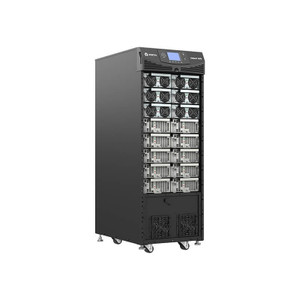
Vertiv AS6C0NCWGNNXLKB 15KVA Lithium-Ion UPS Scalable to 20KVA N+1
Overview
The Vertiv AS6C0NCWGNNXLKB is a 15KVA three-phase UPS with N+1 scalability to 20KVA, built around LiFePO₄ lithium-ion battery chemistry — the architecture of choice when you need a decade of reliable runtime from a power protection system that won't demand constant battery replacements. Designed for data centers, server rooms, and critical infrastructure environments where lead-acid batteries create recurring maintenance windows and weight constraints, this unit shifts the total cost of ownership equation significantly over its rated service life. If you're evaluating Vertiv power protection systems for a new deployment or a lead-acid replacement project, the AS6C0NCWGNNXLKB warrants a close look at the lifecycle math.
Key Features
- LiFePO₄ Chemistry for Thermal Safety: Unlike conventional lithium cobalt oxide cells, lithium iron phosphate chemistry is inherently more thermally stable — it resists runaway under overcharge or physical damage conditions. For deployments in equipment rooms without dedicated fire suppression rated for lithium batteries, this distinction matters at the facilities approval stage.
- Up to 10-Year Service Life: Lead-acid strings typically need replacement every 3–5 years; this unit's rated service life extends to 10 years. On a 10-year cost model, eliminating one or two full battery replacement cycles offsets a meaningful portion of the initial premium. Factor in labor, disposal, and downtime when running the comparison.
- Under 4.5-Hour Recharge Time: After a full discharge event, the system returns to protected status in under 4.5 hours. In environments where grid instability causes repeated discharge cycles — coastal facilities during hurricane season, for example — faster recharge directly reduces your exposure window between events.
- ~46 lbs per Battery String: At roughly 46 pounds per battery string, this UPS is substantially lighter than comparable lead-acid configurations, which routinely exceed 150–200 lbs for equivalent capacity. That weight reduction opens up above-floor installation options, simplifies raised-floor load calculations, and reduces two-person lift requirements during installation.
- Advanced BMS with Cell-Level Monitoring: The integrated battery management system monitors at the individual cell level, not just the string. This granularity catches degradation early — before a weak cell pulls down the entire string's capacity — which is what makes the 10-year service life claim achievable in practice rather than just on paper.
- Better Performance at Higher Temperatures: Lead-acid batteries derate significantly above 77°F (25°C) and age faster in warm rooms. This unit's lithium-ion chemistry maintains capacity at elevated temperatures, which is relevant for telecom edge deployments, manufacturing floor UPS installations, or any space where cooling is sized for equipment, not battery longevity.
- N+1 Scalability to 20KVA: The 15KVA base configuration supports expansion to 20KVA with N+1 redundancy, allowing the UPS architecture to grow alongside your load without a forklift upgrade. This makes it practical to deploy now at current load and commission additional capacity as the environment scales — a meaningful operational advantage for phased buildouts.
- Minimal Maintenance Profile: Lithium-ion cells don't require periodic equalization charges, electrolyte checks, or the environmental controls that lead-acid strings demand. Reduced maintenance burden translates directly to lower facilities staff hours and fewer scheduled maintenance windows for the power infrastructure.
- 5-Year Warranty Covering UPS and Batteries: The manufacturer's 5-year warranty covers both the UPS unit and the battery system — an important distinction, since many UPS warranties exclude batteries or cover them for a shorter term. Confirm warranty registration requirements at commissioning.
Integration and Compatibility
The AS6C0NCWGNNXLKB is designed to integrate into existing commercial UPS and power protection infrastructure alongside standard three-phase distribution and bypass switching equipment. The N+1 architecture supports modular expansion, and the advanced BMS provides data outputs compatible with typical DCIM and building management systems for runtime monitoring and predictive maintenance workflows. For deployments pairing this UPS with high-density compute or network switching infrastructure, verify that your PDU and transfer switch ratings are sized to the 20KVA upper boundary to avoid a secondary equipment upgrade at expansion time. Consult your facilities team on UPS selection and sizing guidance to confirm the load profile before commissioning.
Frequently Asked Questions
Q: What is the warranty on the Vertiv AS6C0NCWGNNXLKB?
A: The AS6C0NCWGNNXLKB carries a 5-year manufacturer warranty that covers both the UPS unit and the battery system. Confirm warranty registration requirements at the time of commissioning.
Q: How long does it take to recharge the AS6C0NCWGNNXLKB after a full discharge?
A: Recharge time is under 4.5 hours from a full discharge back to protected status. This is significantly faster than most lead-acid alternatives, which is important in environments that experience repeated discharge events.
Q: What is the expected battery service life of the AS6C0NCWGNNXLKB?
A: The battery service life is rated up to 10 years. Lead-acid UPS batteries typically require replacement every 3–5 years, so this lithium-ion system can eliminate one or two full battery replacement cycles over its lifetime.
Q: Why does the AS6C0NCWGNNXLKB use LiFePO₄ chemistry instead of standard lithium-ion?
A: LiFePO₄ (lithium iron phosphate) is a specific lithium-ion chemistry chosen for its thermal stability. It is significantly more resistant to thermal runaway under overcharge or physical stress conditions compared to lithium cobalt oxide cells, which is an important consideration for facilities approvals and insurance requirements in enclosed equipment rooms.
Q: Can the AS6C0NCWGNNXLKB handle higher ambient temperatures than lead-acid UPS systems?
A: Yes. The lithium-ion chemistry in this unit performs better at elevated temperatures compared to lead-acid batteries, which derate capacity and age faster above 77°F (25°C). This makes the AS6C0NCWGNNXLKB better suited for installations in warm equipment rooms or environments where cooling is not optimized for battery longevity.
Q: How heavy is each battery string in the AS6C0NCWGNNXLKB?
A: Each battery string weighs approximately 46 lbs — substantially lighter than equivalent lead-acid configurations, which simplifies installation, reduces raised-floor load concerns, and may eliminate two-person lift requirements depending on the installation configuration.
The spec I keep coming back to on the AS6C0NCWGNNXLKB is the ~46 lb per battery string weight — when you're planning a raised-floor installation in a space that wasn't originally designed for high-density power, that number changes the conversation with your structural engineer entirely. Lead-acid equivalents at this capacity class can push 150–200 lbs per string, and the floor loading math gets painful fast.
Technical Highlights:
- LiFePO₄ Thermal Stability: The iron phosphate chemistry resists thermal runaway under overcharge and physical stress — relevant when your AHJ or insurer asks what lithium chemistry is in the cabinet before signing off on the installation.
- Sub-4.5-Hour Recharge: After a full discharge, the system is back to protected status in under 4.5 hours. For facilities in storm-prone regions running multiple discharge cycles per year, that turnaround cuts your unprotected window significantly compared to lead-acid systems that can take 8–12 hours.
- Cell-Level BMS Monitoring: The advanced BMS tracks individual cells, not just aggregate string voltage. That granularity is what makes a 10-year service life realistic — you catch degrading cells before they pull down string capacity, rather than discovering the problem during an actual outage.
Deployment Considerations:
- The N+1 scalability path to 20KVA means your transfer switch and PDU ratings need to be sized to the upper boundary at initial deployment — don't spec them to the 15KVA base load or you'll be back at the equipment rack when you expand.
- The 5-year warranty covers both the UPS and batteries, but confirm registration requirements at commissioning — some Vertiv warranty programs require online registration within a specific window post-installation to activate full coverage.
This unit is the right fit for phased data center buildouts and edge deployments where lead-acid battery replacement cycles create recurring downtime risk and the ambient temperature profile runs warm — specifically manufacturing environments, telecom edge sites, and server rooms that share cooling with occupied office space.