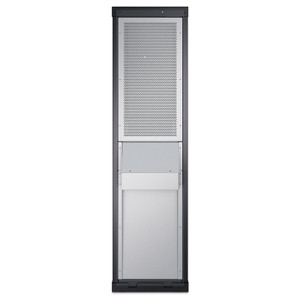
Product images are provided for reference and may not represent the exact model, configuration, or included components.

Overview

SKU: SUVTR30KG5B5S
Condition: New
Write a Review 34% OFF

APC Smart-ups VT ISX 30KVA 480V in 208V OUT W/5 Batt Mod. W/pdu & Startup 5X8 - SUVTR30KG5B5S

APC by Schneider Electric SUVTR30KG5B5S Smart-UPS VT 30KVA 3-Phase UPS with PDU and StartupOverviewThe APC by Schneider Electric SUVTR30KG5B5S is a 30…

$37,270.00 $24,657.99 SAVE $12612
Ships same business day
In stock

Quantity:

Adding to cart… The item has been added
Compatibility guidance available for your deployment
Senior specialists for pre and post-sales support
Authorized sourcing and documentation support
Shipping and lead-time confirmation before install

Laura Bennett, IPSD Senior Specialist

Talk to Laura

200+ hrs training • U.S - based

Senior Specialist • 877-277-7147

APC Smart-ups VT ISX 30KVA 480V in 208V OUT W/5 Batt Mod. W/pdu & Startup 5X8 - SUVTR30KG5B5S

$37,270.00
$24,657.99

Overview

SKU: SUVTR30KG5B5S
Condition: New

No Bots, Just Experts

Questions about this product? Free pre-sales support from a senior specialist — product questions, compatibility checks, BOM quotes, price confirmation — typically answered within one business day. Need camera placement or system design work? Engineering time is $175 per hour (qty 1 = 1 hour). Hardware buyers get up to one hour ($175) credited back on their order.

Description

APC by Schneider Electric SUVTR30KG5B5S Smart-UPS VT 30KVA 3-Phase UPS with PDU and Startup

Overview

The APC by Schneider Electric SUVTR30KG5B5S is a 30 kVA / 24 kW three-phase online double-conversion UPS designed for data centers, network equipment rooms, and critical infrastructure where a momentary power interruption is not acceptable. With 480V input and 208V output, this unit bridges high-voltage utility feeds to standard North American three-phase loads — eliminating the need for a separate step-down transformer in many rack environments. The package includes five battery modules, an integrated PDU, and factory startup service, making it a ready-to-commission solution rather than a collection of components you have to spec and source separately.

Browse the full APC by Schneider Electric power protection lineup for complementary products across the portfolio.

Key Features

  • 30 kVA / 24,000 W Output Capacity: Enough headroom to carry a densely loaded server cabinet or a mixed rack environment with compute, storage, and networking. The gap between kVA and kW (0.8 power factor) is intentional — real-world IT loads are rarely unity PF, so sizing at 30 kVA gives you 24 kW of actual work without pushing the unit to its thermal limit.
  • 480V Input / 208V Output: Accepts the high-voltage three-phase feed common in larger facilities and data halls, then presents clean 208V three-phase output to downstream PDUs and rack equipment. This input-to-output transformation means you can deploy deeper in a building without voltage-drop penalties on long cable runs from the utility panel.
  • 13.7-Minute Full-Load Runtime / 36.5-Minute Half-Load Runtime: Five included VRLA battery modules provide meaningful bridge time — enough at full load to execute an orderly shutdown or wait out a generator transfer, and enough at half load to ride through extended utility interruptions in sites with slow-start backup generation. If your generator transfer takes 30–45 seconds, this runtime is well above the margin you need.
  • Emergency Power Off (EPO): Hard-wired EPO input allows building management, fire suppression systems, or operations teams to de-energize the UPS output instantly from a remote panel — a code requirement in many data center and industrial environments. Confirm your facility's EPO wiring standard before commissioning.
  • VRLA Battery Chemistry: Valve-regulated lead-acid batteries are sealed, maintenance-free, and do not require a dedicated battery room with ventilation for hydrogen gas at normal float conditions. This matters in mixed-use spaces — server rooms that are not purpose-built battery vaults.
  • 58 dB Noise Level: Comparable to a normal conversation at close range. Relevant if this UPS lives in an open office-adjacent IDF closet or a smaller comms room. Not whisper-quiet, but not the kind of acoustic signature that will drive complaints.
  • Operating Temperature Range 0–40°C: Standard data center ambient range. The 40°C upper limit means cooling redundancy matters — if your room temp spikes during an AC failure, the UPS will tolerate it, but battery life degrades meaningfully above 25°C, so this is not a substitute for adequate room cooling.
  • Audible Alarms: On-board audible alerting for fault conditions — useful as a first-notice mechanism in unmanned equipment rooms, though you should still integrate the UPS into your SNMP or BMS monitoring stack for remote visibility.
  • cUL / UL 1778 / ISO 9001 / ISO 14001 Certifications: UL 1778 is the specific UL standard for uninterruptible power supplies — relevant for facilities where the Authority Having Jurisdiction (AHJ) requires listed equipment. ISO 9001 and 14001 speak to manufacturing process quality and environmental management, which matter in procurement programs that require supplier certifications.
  • Integrated PDU and Factory Startup Included: The bundled PDU eliminates a separate procurement step and ensures the distribution hardware is matched to the UPS output. Factory startup means a trained technician performs initial commissioning — reducing the risk of wiring errors on a system where a mistake can take down every load downstream simultaneously.

Integration and Compatibility

This three-phase UPS is sized and configured for data center rows, telecom switching rooms, industrial control panels, and mid-tier colocation deployments where 208V three-phase distribution is standard. The 480V input aligns with North American commercial electrical infrastructure — coordinate with your electrician on the input breaker sizing before installation. The EPO port enables integration with facility management systems and fire suppression panels; consult local codes for EPO wiring requirements specific to your jurisdiction.

For rack-level power distribution downstream of this unit, review rack PDU options to complete your power distribution architecture. If you are also specifying network infrastructure for the same equipment room, managed network switches with SNMP capabilities can be monitored through the same BMS stack you use for the UPS.

Operating altitude is rated to 999 meters — installations above that threshold will require derating. Storage conditions extend to -50°C, which supports pre-deployment warehousing in cold climates without battery damage concerns.

Frequently Asked Questions

Q: What is the input voltage and frequency requirement for the SUVTR30KG5B5S?

A: The SUVTR30KG5B5S accepts 480V three-phase input at 40–70 Hz, accommodating the variable-frequency conditions sometimes seen on generator power as well as standard 60 Hz utility feeds.

Q: How long will the SUVTR30KG5B5S run at full load?

A: With the five included battery modules, typical runtime is 13.7 minutes at full load (30 kVA / 24 kW) and 36.5 minutes at half load. Actual runtime varies with battery age, temperature, and load power factor.

Q: Does the SUVTR30KG5B5S include an Emergency Power Off (EPO) connection?

A: Yes. The unit includes an EPO input for remote de-energization, which is required by code in many data center and industrial installations for integration with fire suppression and building management systems.

Q: What certifications does the SUVTR30KG5B5S carry?

A: The SUVTR30KG5B5S is listed to cUL and UL 1778 (the UL standard specific to uninterruptible power supplies), and the manufacturing process carries ISO 9001 and ISO 14001 certifications.

Q: What battery type is used, and is it maintenance-free?

A: The unit uses VRLA (valve-regulated lead-acid) batteries. VRLA chemistry is sealed and maintenance-free under normal float conditions — no electrolyte checks or watering required, and no dedicated battery room ventilation is mandated at standard float voltages.

Q: Can this UPS be installed above 1,000 meters elevation?

A: The operating altitude rating is 0–999 meters. Installations above this threshold will require derating of the output capacity — consult APC by Schneider Electric's altitude derating tables for your specific elevation before commissioning.

Ted Perry
Ted Perry

The SUVTR30KG5B5S sits in the sweet spot for mid-tier data center rows and critical equipment rooms: 30 kVA at 0.8 PF gives you 24 kW of real output, which is enough to carry a fully populated high-density rack or a mixed-load row without pushing the unit into thermal stress territory. The 480V-in / 208V-out configuration is the spec I look at first — it tells you this unit is designed to live at the end of a high-voltage branch circuit, not hanging off a 208V panel that's already loaded with other equipment.

Technical Highlights:

  • Runtime at Half Load (36.5 min): If your site runs at 40–50% utilization — common in right-sized deployments — you have over half an hour of battery time. That's long enough to span a generator transfer with margin, or to execute a graceful VM migration and shutdown sequence without racing the clock.
  • Input Frequency 40–70 Hz: The wide frequency window matters when you're on generator power. Most standby generators don't hold exactly 60 Hz under load transients, and a UPS with a narrow acceptance band will transfer to battery unnecessarily. The 40–70 Hz window keeps you on utility pass-through during normal generator operation.
  • UL 1778 Listing: This is not a generic UL mark — UL 1778 is the specific UPS product safety standard. When your AHJ or insurance carrier asks for listed equipment, this is the cert that answers the question directly. ISO 9001/14001 are manufacturing-process credentials, useful in enterprise procurement programs with supplier qualification requirements.

Deployment Considerations:

  • The 0–999 meter altitude ceiling is a real constraint in high-elevation facilities — Denver-area data centers and mountain-region telco huts will need to apply APC's derating tables before committing to 30 kVA output at elevation.
  • Battery life degrades above 25°C ambient even though the operating spec allows 40°C. If your cooling system is undersized or has single points of failure, plan your battery replacement interval around worst-case room temperature, not the 25°C baseline spec — you will replace batteries earlier than the datasheet suggests.

This unit makes the most sense in a purpose-built equipment room with 480V three-phase utility feed, an active cooling system, and a generator with automatic transfer. The included PDU and startup service make it a reasonable single-PO solution for a new data hall buildout where minimizing vendor coordination is worth the bundle premium.

Specifications
Output power capacity: 30 kVA
Output power: 24000 W
Input frequency: 40/70 Hz
Emergency Power Off (EPO: Yes
Noise level: 58 dB
Audible alarm(s: Yes
Typical backup time at full load: 13.7 min
Typical backup time at half load: 36.5 min
Product colour: Black
Operating temperature (T-T: 0 - 40 °C
Storage temperature (T-T: -50 - 40 °C
Operating relative humidity (H-H: 0 - 95%
Storage relative humidity (H-H: 0 - 95%
Operating altitude: 0 - 999 m
Non-operating altitude: 0 - 15000 m
Certification: cUL,ISO 14001,ISO 9001,UL 1778
Weight: 1040.9 kg
Battery type: VRLA
Q&A
Reviews
Have Questions?

RELATED PRODUCTS

System Design, Deployment & Technical Support

Support services and planning resources for commercial surveillance, access control, and infrastructure deployments.

Fixed scope • Fixed price

System Design Assistance

  • Get help validating product compatibility
  • Coverage requirements
  • Storage planning and deployment architecture before you buy.
Request Design Help

Deployment & Configuration Support

  • Access fixed-scope support for rollout planning
  • User setup guidance
  • Migration and system standardization across single-site or multi-site deployments
View Support Services

Guides, Tools & Calculators

  • PoE requirements
  • Storage retention
  • Camera selection and deployment methodology
Open Technical Resources