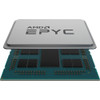
HPE P53705-B21 AMD EPYC 9634 84-Core SP5 Server Processor
Overview
The HPE P53705-B21 is an HPE-validated AMD EPYC 9634 processor designed for HPE ProLiant Gen11 and Synergy SP5-socket servers. At 84 cores running a 2.25GHz base clock with boost headroom up to 3.75GHz, this processor fits demanding workloads — high-density virtualization, large-scale containerized environments, and AI inference stacks — where per-socket core count and memory bandwidth are the governing constraints. If you're building or expanding an SP5 platform and need a proven high-core-count option, the P53705-B21 (often searched as P53705 B21) is a practical candidate to evaluate against your workload profile.
This unit is available as a refurbished component backed by a 90-day warranty, which places it squarely in the budget-conscious refresh or lab-expansion category rather than new production deployments where full OEM coverage matters. That's a genuine tradeoff to weigh — covered in more detail below.
Key Features
- 84 Cores per Socket: Eighty-four physical cores per socket means significantly more concurrent threads for virtualization hosts running dense VM-per-host ratios or Kubernetes node pools. Compared to lower-tier EPYC 9004 SKUs in the 16–32 core range, the 9634 lets you consolidate more workloads onto fewer physical nodes — reducing licensing overhead for per-socket-licensed software like VMware vSphere.
- 2.25GHz Base / 3.75GHz Boost: The 2.25GHz base is conservatively rated to keep all 84 cores within thermal budget under sustained load. The 3.75GHz boost is available for lightly-threaded or bursty workloads where individual core speed matters — useful if the server handles mixed-use (both transactional and batch) without running all cores hot simultaneously.
- 384MB L3 Cache: The 384MB L3 cache is one of the largest available in the EPYC 9004 family. Large L3 reduces main-memory round-trips for workloads with hot working sets — database query caches, in-memory analytics, and AI inference where model weights partially fit on-die. Fewer DRAM accesses translates directly to lower latency under load.
- 12-Channel DDR5 Memory Architecture: Twelve memory channels per socket at DDR5-4800 delivers a theoretical 460.8 GB/s of per-socket memory bandwidth. For bandwidth-bound workloads — streaming analytics, high-resolution video transcoding pipelines, or large matrix operations — this bandwidth ceiling determines throughput more than raw clock speed. Twelve channels also means more physical DIMM slots available for capacity scaling.
- DDR5-4800 Support: DDR5-4800 is the fastest mainstream DDR5 speed tier, roughly doubling the bandwidth-per-channel over DDR4-3200. When paired with appropriate HPE SmartMemory DIMMs, this matters most in scenarios where data movement is the bottleneck — not compute cycles.
- SP5 Socket Compatibility: The SP5 socket is AMD's current-generation server socket for the EPYC 9004 series. Confirm your specific HPE server model supports SP5 and is on HPE's compatibility matrix for the 9634 before ordering — SP5 is NOT backward-compatible with SP3 (EPYC 7003/7002-series) or earlier platforms.
Integration & Compatibility
The P53705-B21 is an HPE-factory-configured option for HPE ProLiant and Synergy platforms using the SP5 socket. HPE processor option kits include the heatsink and documentation required for HPE server installation — verify the specific kit contents against your platform's service guide before ordering, particularly for high-density blade vs. rack configurations where heatsink profiles differ.
As a refurbished unit, the P53705-B21 will perform identically to a new unit at the silicon level — EPYC 9634 silicon doesn't degrade in the way that, say, batteries or mechanical components do. The practical risk is provenance and warranty: refurbished server processors should be sourced from suppliers who can demonstrate clean decommissioning chain-of-custody. The 90-day warranty on this unit is a meaningful limitation versus a standard new-unit coverage period; budget accordingly for spares or extended coverage if deploying in a production environment where unplanned downtime has hard costs.
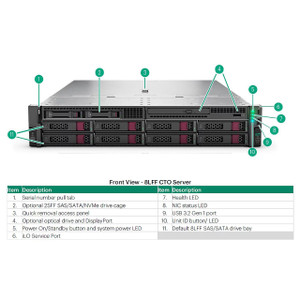
For environments running HPE's Gen11 portfolio — including ProLiant DL385 Gen11 — pairing this CPU with HPE-validated DDR5 SmartMemory is strongly recommended. Third-party DIMMs may work but can trigger memory speed downgrades or iLO alerts depending on firmware version.
Frequently Asked Questions
Q: What socket type does the HPE P53705-B21 use?
A: The P53705-B21 uses the AMD SP5 socket, which is the current-generation socket for EPYC 9004-series processors. It is not compatible with SP3 or earlier AMD server sockets.
Q: What is the warranty on the P53705-B21?
A: This unit is sold as refurbished with a 90-day warranty. This is significantly shorter than a new HPE processor option kit, which should be factored into any production deployment planning.
Q: How many cores and what clock speeds does the EPYC 9634 provide?
A: The EPYC 9634 provides 84 cores per socket with a 2.25GHz base clock and boost up to 3.75GHz depending on thermal and power headroom.
Q: What memory speed and bandwidth does the P53705-B21 support?
A: The processor supports DDR5 at up to 4800MHz across 12 memory channels, delivering up to 460.8 GB/s of per-socket memory bandwidth.
Q: Is this processor compatible with HPE ProLiant Gen10 servers?
A: No. The SP5 socket is specific to HPE Gen11 and compatible Synergy platforms. Gen10 servers use SP3 (EPYC 7002/7003-series) and are not socket-compatible with the EPYC 9634.
Q: What is the L3 cache size on the EPYC 9634?
A: The EPYC 9634 includes 384MB of L3 cache, one of the largest L3 cache configurations in the EPYC 9004 family, which benefits latency-sensitive workloads with large active data sets.
The P53705-B21 is a high-density compute option for HPE SP5 platforms, and the spec that stands out most to me is the 460.8 GB/s per-socket memory bandwidth — that's not a rounding exercise, it directly determines how fast data moves between the EPYC 9634's 84 cores and DRAM under sustained parallel workloads. If your bottleneck is memory throughput rather than raw clock speed, this is the number that matters.
Technical Highlights:
- 84-Core Density: Running 84 cores at 2.25GHz base allows high-VM-density hosts — in a properly sized HPE Gen11 chassis this translates to significantly more VMs per rack unit than lower-tier EPYC 9004 SKUs, reducing infrastructure footprint.
- 384MB L3 Cache: This cache size reduces DRAM pressure for workloads with working sets that partially fit on-die — AI inference, in-memory databases, and large-frame video analytics all benefit from fewer cache misses at scale.
- 3.75GHz Boost: The 1.5GHz gap between base and boost means the processor can handle latency-sensitive single-threaded tasks (management plane operations, lightweight API calls) without the entire socket being thermally constrained by sustained all-core load.
Deployment Considerations:
- Verify SP5 socket compatibility against HPE's QuickSpecs for your specific ProLiant or Synergy model before ordering — not every SP5-capable chassis supports the 9634 at launch firmware levels; an iLO/BIOS update may be required.
- The 90-day warranty on this refurbished unit is the hard constraint for production use — plan for a cold spare or extended service contract if this processor is going into a system where unplanned downtime carries real cost.
This processor makes the most sense in a high-density virtualization or AI inference node refresh where the existing chassis is already SP5-capable, budget is constrained, and the reduced warranty risk is acceptable given a controlled lab or secondary-tier environment rather than a mission-critical primary production host.