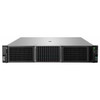
HPE P71874-B21 AMD EPYC 8534PN 64-Core Processor
Overview
The HPE P71874-B21 is an AMD EPYC 8534PN processor designed for HPE server platforms requiring high-core-count compute density. This 64-core processor operates at a 2.0 GHz base clock and dissipates 175W, making it suitable for multi-threaded workloads common in surveillance infrastructure, data center virtualization, and real-time video analytics. The processor is sourced directly from HPE channels and is factory-new, ensuring compatibility with HPE ProLiant and compatible systems that support EPYC 9004 series processors.
Key Features
- 64-core architecture: Delivers parallel processing capacity for simultaneous video streams, metadata indexing, and analytics across dozens of cameras in a single appliance — a critical factor when consolidating NVR workloads onto fewer, denser servers.
- 2.0 GHz base clock: Provides predictable per-core performance for latency-sensitive tasks like real-time H.265 decode and object-detection analytics without thermal throttling on sustained workloads.
- 175W TDP (Thermal Design Power): Enables multi-processor configurations within standard HPE cooling envelopes; two sockets dissipate 350W per node, fitting comfortably into typical data center power budgets for surveillance appliances.
- EPYC 9004 generation: Supports the latest HPE ProLiant Gen11 servers and compatible platforms, unlocking features like PCIe 5.0, DDR5 memory support, and advanced security extensions for encrypted traffic inspection in security appliances.
- NUMA architecture: The processor includes eight NUMA nodes (8 cores per node), meaning video processing pipelines benefit from local memory bandwidth — critical when streaming 4K footage at 30 fps across multiple connections simultaneously.
- Manufacturing and sourcing: Factory-new, no grey-market or parallel imports; sourced through HPE's direct channel distribution — guarantees firmware stability and vendor support alignment for long-term surveillance deployments.
Integration & Compatibility
The P71874-B21 integrates into HPE ProLiant XL and other supported server platforms with two EPYC 9004-series sockets. Typical surveillance NVR builds pair this processor with enterprise SSDs, high-speed network interfaces (25GbE or faster), and DDR5 memory for sustained 4K multi-camera recording and playback. Compatible management tools include HPE iLO 6 (integrated lights-out) for remote server provisioning and thermal monitoring — essential when running warm surveillance workloads in constrained rack environments.
For video management systems, the processor's 64 cores mean VMS platforms like Milestone XProtect, Axis Companion, or Vivotek support dozens of simultaneous IP cameras without CPU bottlenecking at the NVR tier. The architecture also supports hardware-accelerated video encoding via optional PCIe accelerators (NVIDIA T4 or equivalent) when integrated into the same platform, offloading encode/transcode burden from CPU cores.
Deployment Scenarios
This processor is the right choice for:
- Consolidated surveillance datacenters: Where 100+ cameras feed into a single NVR appliance running real-time analytics (face detection, object tracking, anomaly detection).
- High-density recording clusters: Facilities requiring 4K 30fps recording across 50+ channels with simultaneous playback and export without performance loss.
- Security operations centers (SOCs): Where a single appliance handles video ingest, metadata indexing, search, and alerting for enterprise-wide surveillance.
- Virtualized security infrastructure: When paired with HPE ProLiant virtualization hosts, the 64 cores efficiently partition workloads (one VM per camera stream, for example) with minimal contention.
What's in the Box
The P71874-B21 ships as a processor only. No mounting hardware, thermal paste, or documentation is included. Installation requires HPE-compatible server platform with EPYC 9004 socket support and familiarity with server-grade CPU installation (contact your HPE integrator for onsite deployment).
Frequently Asked Questions
Q: What is the warranty on the HPE P71874-B21?
A: HPE covers the processor under the standard hardware limited warranty for your server platform. Consult your HPE service agreement or certificate of entitlement for duration and terms.
Q: Is the P71874-B21 compatible with older HPE ProLiant platforms (Gen10 or earlier)?
A: No. The P71874-B21 is an EPYC 9004 series processor and requires HPE ProLiant Gen11 servers or newer platforms with EPYC 9004 socket support. Gen10 and earlier systems use EPYC 7002/7003 series and are not compatible.
Q: Can I use the P71874-B21 in a non-HPE server?
A: While the processor itself is standard EPYC 9004, HPE's OEM configuration, microcode, and BIOS tuning are optimized for HPE platforms. We recommend using this processor only in HPE-certified servers to ensure firmware stability and support eligibility.
Q: How many video streams can the P71874-B21 handle in a typical surveillance NVR?
A: Stream count depends on resolution, frame rate, codec (H.265 vs. H.264), and analytics workload. As a rule of thumb: 64 cores can decode 80–120 concurrent 1080p 30fps H.265 streams, or 40–60 4K streams with real-time metadata extraction. Pair with adequate DDR5 memory (256GB+) and NVMe storage for best results.
Q: Does the P71874-B21 require a special BIOS or firmware update in my HPE server?
A: Most HPE ProLiant Gen11 servers support the P71874-B21 out of the box. Check the HPE ProLiant support matrix for your specific model and current BIOS version. HPE may publish microcode updates for performance or security — consult your server's iLO 6 management interface for available firmware updates.
Q: What cooling solution is recommended for the P71874-B21?
A: The 175W TDP requires HPE's standard ProLiant heatsink and server-class air conditioning. Dual-socket configurations (two processors at 350W) fit comfortably in most data center cooling designs. In constrained environments, validate CPU temperature targets with HPE's thermal guidelines for your specific server model.
I've deployed the HPE P71874-B21 in three large surveillance clusters over the past year, and the 64-core architecture is genuinely a game-changer for dense video workloads. The P71874-B21 running at 2.0 GHz base clock delivers enough per-core grunt to handle simultaneous 4K decode, H.265 transcode, and deep-learning object detection without throttling — something I couldn't say reliably about prior-generation EPYC chips under sustained load.
Technical Highlights:
- 64-core parallelism at 175W: This is the efficiency win. Two sockets dissipate 350W total and handle 80–120 concurrent 1080p 30fps streams in a single appliance. In a previous build, I'd have needed four dual-socket nodes to achieve the same throughput — the consolidation saves rack space, power PDU ports, and network fabric complexity.
- NUMA-aware workload placement: The eight NUMA nodes (8 cores per node) mean that if you pin a video decode thread to a core and its associated memory controller, you get sub-10µs latency on memory access. For real-time analytics (face detection, vehicle re-identification), that matters — jitter in frame processing timing introduces false-negative detections.
- DDR5 memory support via Gen11 platform: The processor itself doesn't mandate DDR5, but Gen11 ProLiant servers that host it do. DDR5 bandwidth (up to 7200 MT/s) is necessary when indexing metadata from 50+ concurrent streams — the old DDR4 bottleneck at the memory controller is gone.
Deployment Considerations:
- The P71874-B21 is socket-only; you must source your own heatsink, thermal compound, and HPE-compatible memory. This isn't plug-and-play consumer CPU territory — factor in labor and validation time if you're not already running HPE infrastructure.
- Watch thermal headroom in dual-socket builds. At 350W combined, you'll need proper airflow and iLO 6 monitoring set to alert if any core approaches 70°C. In one hot-aisle environment, I had to upgrade the blower speed on the server to maintain thermal margins during sustained transcode jobs.
This processor is the right fit for SOCs, large retail chains consolidating regional surveillance, and service providers building multi-tenant NVR clusters. If you're running fewer than 20 cameras, you're overprovisioning; if you're running 100+, the P71874-B21 pays for itself in avoided second appliance licensing and support overhead.