AMD 100-300000008H Instinct MI210 GPU Accelerator
Overview
The AMD 100-300000008H Instinct MI210 is a dual-GPU accelerator module built on 5nm FinFET technology, designed for high-throughput AI inference, video analytics, and compute-intensive surveillance workloads. Configured as a universal baseboard (UBB) module, this unit pairs two full-featured GPUs on a single card, delivering 42 PFLOPs (peak FP8 with sparsity) per GPU — meaningful capacity when you're running real-time video stream processing, object detection, or metadata extraction across dozens of camera feeds simultaneously. Each GPU draws up to 1000W, so power budgeting is non-negotiable, but the density and memory bandwidth justify the engineering effort for large-scale deployments.
Key Features
- 2.048 TB HBM3E Memory per GPU: Eliminates frequent model reloading and context switching during inference — critical when running multiple concurrent video streams or large language model–based analytics on edge NVRs. Compare this to traditional GPUs with 8–24 GB: you can keep multiple inference models resident in VRAM simultaneously, cutting latency and improving throughput.
- 6 TB/s Memory Bandwidth per GPU: Sustains high-resolution multi-stream inference without memory stalls. For H.265 or H.264 video decode (which the GPU pipeline supports via hardware engines) followed by neural network inference, this bandwidth ensures the compute units stay fed. Bottleneck moves away from memory and lands squarely on model complexity — which is exactly where you want it.
- 9,728 Matrix Cores and 155,648 Stream Processors: Massive parallelism for both AI tensor operations and traditional compute. The matrix cores accelerate mixed-precision operations (INT8, FP8, FP16, BFLOAT16) — the bread-and-butter formats for trained object-detection and classification models. Stream processors handle the surrounding logic, branching, and memory orchestration. Together, they sustain 20.9–42 PFLOPs depending on sparsity and precision, enough to run inference on multiple 224×224 or 1024×1024 video frames per second at sub-100ms latency.
- Full-Chip ECC and Page Retirement: In 24/7 surveillance deployments, bit errors accumulate. ECC memory (every cache line protected) catches single-bit and multi-bit errors before they corrupt analytics results. Page retirement removes degraded memory blocks without requiring a full reboot — uptime matters when your deployment spans weeks without downtime.
- SR-IOV Virtualization (up to 64 partitions): Slice each GPU into 64 independent virtual functions, each with its own memory, registers, and scheduling domain. Allows multi-tenant inference: different VMS instances, different ML model inference pipelines, or different customer video streams sharing the same physical GPU without interference. Useful in managed service or cloud-adjacent surveillance architectures.
- 8× PCIe Gen 5 x16 Links (128 GB/s aggregate per GPU): Connects to host infrastructure with 16 GB/s per link, enough to stream uncompressed 4K video feeds into the GPU for on-the-fly inference, or to write high-fidelity metadata and cropped frames back to NVR storage. 128 GB/s per GPU means you don't bottleneck on host-to-device bandwidth even with 8–10 concurrent high-bitrate streams.
- 7× Infinity Fabric Links (128 GB/s each, 896 GB/s ring aggregate): GPU-to-GPU interconnect on the same OAM (Open Accelerator Module) allows load-balanced inference across both GPUs without host CPU coordination. If you're running large batch inference or dual-model inference (detection + classification in series), peer-to-peer transfers happen at memory-bandwidth speeds, not PCIe speeds.
Integration and Compatibility
The MI210 integrates into EPYC-based server platforms via standard PCIe x16 slots (Gen 5 recommended; Gen 4 works with reduced bandwidth). Firmware supports IOMMU and SR-IOV, so hypervisors (Proxmox, KVM, Xen) and container runtimes (Docker, Kubernetes) can partition and isolate workloads. Video codec support (H.265, H.264, MJPEG decode) is hardware-accelerated, meaning the GPU can ingest compressed camera streams directly and feed raw frames to inference pipelines without CPU overhead. For VMS platforms (Milestone, Axis Camera Station, generic ONVIF-based systems), the GPU sits as a secondary compute device — your NVR software submits video frames via ROCm or HIP APIs, receives bounding boxes and event metadata, and logs the results. No changes to existing VMS workflows required, but you do need a custom analytics bridge to glue your chosen ML framework (PyTorch, TensorFlow) to your video capture pipeline.
What's in the Box
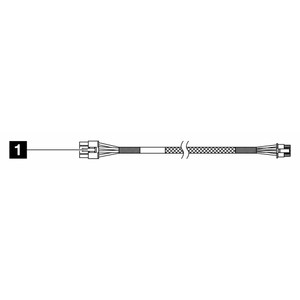
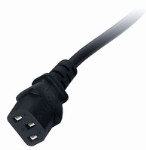
The 100-300000008H ships as a bare GPU module (UBB form factor). No passive heatsinks, no mounting brackets, no cables included — you are responsible for procuring a compatible OAM carrier board, airflow management (either active liquid cooling or aggressive forced-air with the MI210 heatsink sold separately), and power delivery (dual 8-pin PCIe auxiliary connectors or modular PSU connectors, depending on carrier). This is not a consumer add-on card; treat it as a compute appliance requiring dedicated rack engineering.
Frequently Asked Questions
Q: Can I use the 100-300000008H with a standard consumer motherboard?
A: No. The MI210 requires an EPYC server platform or other enterprise/HPC motherboard with PCIe Gen 4 or Gen 5 slots and proper power delivery infrastructure. Consumer AM4 or X670 boards lack the cooling, power budgeting, and firmware support for 1000W dual-GPU modules.
Q: What's the power draw, and what PSU do I need?
A: Each GPU pulls up to 1000W, so 2000W maximum for the dual-GPU module alone. A typical EPYC 7004-series server plus MI210 will demand a 4000–6000W PSU depending on CPU SKU and other accelerators. Budget accordingly before installing.
Q: Does the MI210 decode video in hardware?
A: Yes. The GPU includes dedicated H.264, H.265, and MJPEG decode engines. You can feed compressed camera streams directly to the GPU; it decompresses and outputs raw frames to the inference pipeline. This offloads CPU decode and saves significant host compute cycles.
Q: How much memory do the 2.048 TB HBM3E pools provide per model?
A: The full 2.048 TB is shared between all running inference processes on a single GPU. A typical YOLOv8 model (100–200 MB), a face-recognition model (50–500 MB), and metadata buffers might consume 1 GB total — leaving terabytes for frame buffers, temporary tensors, and model optimization caches. Unless you're running 100+ simultaneous AI models, memory is not the constraint.
Q: What's the difference between the MI210 and MI250X?
A: The MI250X (100-300000006H) is newer, with higher clocks and improved matrix-core density. If you need maximum FP8 throughput and can accept higher cost, MI250X is the upgrade path. The MI210 remains the cost-efficiency sweet spot for video analytics workloads where you don't max out the compute every frame.
Q: Is the 100-300000008H NDAA-compliant?
A: No explicit NDAA certification exists for this SKU in publicly available documentation. If your deployment requires NDAA Section 889 compliance, confirm with AMD directly before purchase.
The AMD 100-300000008H Instinct MI210 is a compute elephant — not a general-purpose solution, but a laser-focused accelerator for environments where raw inference throughput and memory capacity are the primary constraints. If you're building a regional surveillance hub that processes 50+ simultaneous camera streams with object detection, face recognition, or gait analysis, the 2.048 TB HBM3E memory and 42 PFLOPs peak compute per GPU justify the engineering and power burden.
Technical Highlights:
- Memory Bandwidth (6 TB/s per GPU): Eliminates the traditional bottleneck in multi-model inference — you can run detection, classification, and embedding extraction back-to-back without waiting for tensors to shuffle through PCIe or main memory. Real-world benefit: sub-100ms end-to-end latency for complex inference chains at 30 fps per stream.
- HBM3E Capacity (2.048 TB per GPU): Keeps large models (ResNet-152, Vision Transformers, multi-language embeddings) permanently resident in GPU memory. No model swapping, no recompilation overhead between frames. For deployments running 3–5 different analytics models concurrently, this is a game-changer.
- SR-IOV (up to 64 partitions): Allows multi-tenant isolation at the hardware level. Each VMS instance or customer gets a dedicated slice of GPU memory and compute, with no risk of one overload crashing another. Hypervisor-level scheduling ensures fairness.
Deployment Considerations:
- Power is non-negotiable: 2000W dual-GPU draw means your rack PDU, cooling, and PSU must be oversized for the MI210 alone. A single 3000W PSU will not cut it if you have any other equipment on the same circuit.
- OAM carrier board sourcing: AMD ships the bare GPU module; you must procure a compatible OAM carrier (typically from server vendors like Supermicro or Inspur). Carrier selection directly impacts cooling strategy — passive heatsink vs. active liquid-cooled options. Plan this step before ordering the GPU.
Best-fit deployment: regional or enterprise NVR hub processing 50–100 camera streams simultaneously, with multi-model inference (detection + classification + face-ID + gait), real-time alerting, and metadata storage. The MI210's memory and bandwidth shine when inference complexity is high and frame throughput is sustained. Avoid this module for small 4–8 camera deployments or inference pipelines that run sporadically — cost-per-inference becomes prohibitive.