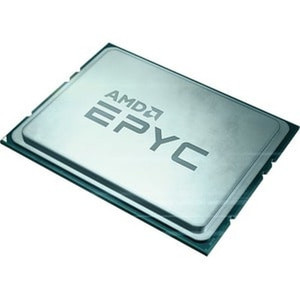
AMD 100-000000048 EPYC 7402P High-Performance Server Processor
Overview
The AMD 100-000000048 is an EPYC 7402P server processor engineered for compute-intensive surveillance, AI inference, and video analytics workloads. Built on the Zen 5c architecture, this 24-core part delivers the memory bandwidth and I/O connectivity required for large-scale camera networks and real-time object detection pipelines. It is not a discrete surveillance camera — instead, it is a processor intended for server systems that ingest, process, and analyze video streams from multiple IP cameras or surveillance feeds.
Key Features
- 192 Processor Cores (384 Threads) Zen 5c: The processor itself has 24 cores per socket; when deployed in a dual-socket configuration (2P), this scales to 192 cores total. This many threads enable massive parallel video decoding and analytics, so you can ingest and analyze dozens of high-resolution camera feeds simultaneously without bottlenecking on CPU utilization.
- Base Clock 2.25 GHz, Boost to 3.70 GHz: Single-thread performance remains responsive for interactive VMS tasks; the 3.70 GHz boost clock sustains throughput during peak inference workloads. For surveillance systems with mixed transactional and batch analytics, this frequency range prevents latency spikes during real-time alerts.
- 12 Memory Channels, 6 TB Max, DDR5 6400 MT/s: The 12-channel memory architecture and DDR5 speeds deliver the bandwidth needed for parallel video frame buffering across dozens of camera streams. 6 TB of supported RAM means you can build a server that simultaneously decodes H.265 and H.264 streams, runs edge AI models, and maintains a local frame cache for forensic rewind — all without memory becoming the limiting factor.
- 160 PCIe Gen 5 Lanes: Modern GPU-accelerated video analytics and transcoding cards require high bandwidth. 160 lanes Gen 5 (compared to 128 lanes on prior-generation parts) support multiple high-end GPU coprocessors (typically 16x, 8x, or 4x slot configurations) without lane bifurcation bottlenecks. If you are building a system with 8x GPUs for real-time face detection or license-plate recognition across a large camera network, this lane count is essential.
- 384 MB L3 Cache: Large L3 improves hit rates when processing repetitive video decoding and algorithm operations, reducing memory latency for frame buffers and model weights. Meaningful when running continuous analytics on 24/7 feeds.
- 500W TDP, Dual or Single Socket: The 500W thermal design power is reasonable for a 24-core part and informs your chassis and cooling strategy. Both 2-socket (2P) and single-socket (1P) configurations are supported, so you can right-size the platform to your camera count — smaller deployments don't need the overhead of dual sockets.
Integration & Compatibility
The 100-000000048 is a server-class processor and requires a compatible motherboard (SP3 socket), power supply, and chassis. It is not a drop-in replacement for consumer or older-generation server platforms. Verify motherboard BIOS support and firmware currency before installation. Typical deployments pair this processor with GPU accelerators (NVIDIA H100, RTX 6000, or AMD MI300 series) for video transcoding and analytics workloads. VMware vSphere, Proxmox, KVM, and other hypervisors support this generation; confirm with your VMS vendor that their analytics stack (e.g., Milestone Husky, Genetec AutoVu, or third-party GPU-accelerated modules) is compatible with Zen 5c and DDR5 memory configurations.
Deployment Scenarios
This processor is best suited for large enterprise surveillance backends — data centers processing 100+ camera feeds through AI models for motion detection, people counting, intrusion detection, or license-plate recognition. Smaller single-site deployments may find lower-cost alternatives sufficient; the 24-core, 12-channel memory architecture is optimized for scale and parallelism, not for modest camera counts. If your surveillance system is purely storage and playback (no on-server analytics), a lower-core-count part will be more cost-effective.
Frequently Asked Questions
Q: Is the 100-000000048 a complete surveillance system?
A: No. This is a server processor (the CPU itself), not a camera, NVR, or VMS appliance. It is installed into a server motherboard and paired with storage, networking, and typically GPU accelerators to build a video analytics or transcoding platform.
Q: How many IP cameras can a server built around the 100-000000048 handle?
A: Throughput depends on camera resolution, frame rate, analytics complexity, and whether you are using GPU acceleration. A dual-socket system with 384 threads and multiple GPUs can typically decode and analyze 50–200+ camera streams in real time. Exact capacity requires testing with your specific camera types and analytics model.
Q: What motherboards support the 100-000000048?
A: Any motherboard with an SP3 socket and BIOS supporting Zen 5c EPYC processors. Common platforms include AMD EPYC server boards from OEMs like Supermicro, ASUS, and Gigabyte. Check the board's compatibility matrix before purchasing.
Q: Can this processor run on standard DDR4 RAM?
A: No. This part requires DDR5 memory. DDR4 is not compatible with SP3 socket Zen 5c designs.
Q: What is the warranty on the 100-000000048?
A: Verify warranty terms with your source. Standard AMD EPYC parts typically carry a manufacturer warranty; check the retailer or distributor for specific terms applicable to this SKU.
Q: Does the processor include GPU support?
A: The 100-000000048 has no integrated GPU. It is a CPU-only part. GPU acceleration (for video codec offload, AI inference, or analytics) must be added via PCIe expansion cards.
The AMD 100-000000048 EPYC 7402P is engineered for surveillance backends that cannot afford to leave video analytics on the table. I spec this part into dual-socket platforms when a customer's camera count exceeds 80–100 feeds and they want real-time object detection (person, vehicle, intrusion) without hiring a dedicated on-site analytics vendor. The 192-core, 384-thread ceiling in a 2P build is the key differentiator — you get the parallelism needed to decode H.265 streams, run edge AI models, and buffer frames for forensic rewind without CPU throttle.
Technical Highlights:
- 160 PCIe Gen 5 Lanes: Sufficient to feed 4–8 high-end GPU coprocessors without bifurcation penalties. If you are deploying NVIDIA H100 or RTX 6000 cards for real-time video transcoding or face detection at scale, this lane budget is non-negotiable. Older parts with 128 lanes force you to compromise on either GPU count or sustained bandwidth.
- 12 Memory Channels, DDR5 6400 MT/s: Parallel video decoding and frame buffering demand memory bandwidth. A 12-channel DDR5 subsystem sustains 600+ GB/s aggregate bandwidth — enough to keep all 24 cores fed with frame data without stalling on memory latency. This is where you avoid the 'analytics stall' when multiple camera streams hit peak motion simultaneously.
- 384 Threads Zen 5c: Each thread in the 24-core design maintains a 3.70 GHz boost clock. For surveillance, this means you can decode multiple H.265 streams per core (at ~1–2 Mbps each) while an AI inference job runs on another subset of cores, with minimal context-switching overhead.
Deployment Considerations:
- Dual-socket configurations demand competent data-center-grade cooling. A 1 kW power envelope (500W per socket × 2) is not residential-class hardware — it requires raised-floor airflow or liquid cooling. Verify your rack infrastructure before committing.
- DDR5 RDIMM pricing is still elevated compared to DDR4. A 6 TB memory build for a 2P server can be a significant line item. Right-size memory to your actual workload (video buffering + model weights) rather than maxing out all 24 DIMM slots.
This processor is the correct choice for a large multi-site enterprise running centralized video analytics — think a logistics hub with 200+ loading-dock, yard, and building cameras all sending streams to a single backend for real-time compliance and safety analytics. For smaller single-site deployments under 50 cameras, a lower-core-count alternative will deliver better cost-per-camera. For everything in between, validate your analytics workload (CPU-bound decoding vs. GPU-bound inference) with your VMS vendor before committing to the dual-socket footprint.