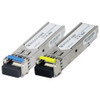
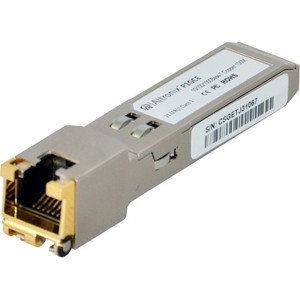
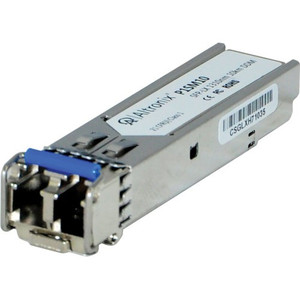
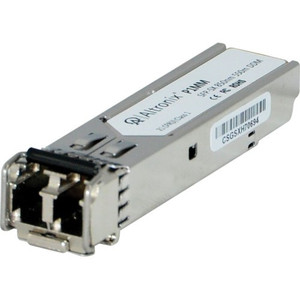
Altronix P1AB2K Single-Mode SFP Transceiver 550m
The Altronix P1AB2K is a bidirectional SFP (Small Form-Factor Pluggable) module purpose-built for extended-range fiber optic backbone connectivity in security infrastructure. This single-mode transceiver spans up to 550 meters, making it the correct choice when you need to aggregate camera feeds or Ethernet traffic across a large campus, industrial park, or multi-building facility without additional repeaters or signal conditioning.
Key Features
- Bidirectional SFP transceiver design: Sends and receives on the same fiber strand via wavelength division multiplexing—reduces fiber runs by half compared to unidirectional modules, lowering trenching and conduit costs on greenfield builds or retrofits.
- 550-meter maximum transmission distance: Covers most campus-scale and large warehouse perimeters without intermediate conversion or active repeaters. Exceeds typical multi-mode limits (usually 200–300m) and eliminates the need for additional fiber switches at distribution points.
- Single-mode fiber support: Single-mode fiber has lower attenuation per kilometer than multi-mode, so the P1AB2K maintains clean, reliable signal over those 550 meters. Essential when you're linking distant buildings or running fiber along a warehouse exterior wall.
- Small Form-Factor Pluggable (SFP) housing: Slips into any standard SFP slot on compatible network switches or media converters—no chassis replacement needed. Supports hot-swappable installation, so you can swap modules during operation without powering down the switch or losing traffic.
- Multi-mode fiber compatibility: Although rated for single-mode, the P1AB2K works with multi-mode fiber as well, giving you flexibility in topology. If you inherit an older multi-mode backbone, this module bridges the transition without forcing a complete fiber migration.
- Lifetime Limited Warranty: Altronix backs the unit indefinitely against defects in materials and workmanship—typical for passive optical components, but worth confirming with your distributor on coverage scope (e.g., labor, shipping).
Integration and Deployment Context
The P1AB2K serves as a media converter in a fiber backbone network. You install it in an SFP slot on a network switch, media converter, or fiber distribution frame to transition between fiber and copper (Ethernet) runs. Common scenarios include:
- Linking an NVR or central video management system (VMS) in the main security operations center to a remote recording appliance or edge aggregator 500+ meters away.
- Connecting a campus perimeter switch to a distant building camera cluster without intermediate active equipment.
- Replacing a failed bidirectional module in an existing fiber backbone without swapping the entire switch—critical for minimizing downtime in 24/7 surveillance environments.
Verify that your target switch or media converter has available SFP slots and supports the P1AB2K's transceiver specifications before ordering. Consult the switch manufacturer's compatibility matrix or contact pre-sales engineering if you're unsure.
When to Choose a Different Model
If your deployment requires distances under 300 meters and you want to minimize module cost, a multi-mode SFP transceiver will be cheaper and adequate. If you need distances beyond 550 meters (e.g., 1–2 km), investigate long-reach single-mode or CWDM modules in the Altronix power infrastructure line, which offer 2–10 km+ range at higher cost. If your switch lacks SFP slots, you'll need a standalone media converter chassis to house the P1AB2K.
Frequently Asked Questions
Q: Does the P1AB2K work with any fiber type?
A: The P1AB2K is optimized for single-mode fiber and achieves its 550-meter range over single-mode. It also supports multi-mode fiber, but effective distance will be shorter (typically 200–300m) due to higher modal dispersion in multi-mode cable.
Q: Can I use the P1AB2K to extend a camera signal 550 meters without intermediate equipment?
A: No. The P1AB2K is a fiber transceiver module—it converts electrical (Ethernet) to optical and back, but you still need a fiber optic backbone between two switches or media converters. Install one P1AB2K at each end of the fiber run. Both endpoints must have SFP-compatible equipment.
Q: Is the P1AB2K hot-swappable?
A: Yes. You can insert or remove the module while the switch is powered and online. However, traffic on that port will drop during the swap. In production surveillance systems, plan for brief disruption or perform swaps during maintenance windows.
Q: What fiber connector type does the P1AB2K use?
A: The datasheet should specify SC, LC, or ST connectors. Verify your fiber cable termination matches the transceiver connector type before ordering. Mismatched connectors require additional adapters.
Q: Does the P1AB2K need power?
A: No. SFP transceivers are passive optical modules; they receive power from the host switch's SFP slot. No external power supply required.
Q: Is the P1AB2K suitable for outdoor fiber runs exposed to temperature extremes?
A: The module itself is typically rated for indoor enclosure operating temperatures. If the fiber cable runs outdoors, use armored or outdoor-rated fiber cable and install the transceiver in a climate-controlled enclosure (switch or fiber distribution frame). Consult the full datasheet for precise operating temperature limits.
Ted PerryPerspective based on aggregated IP Security Depot and affiliated engineering team experience.
I've spec'd the Altronix P1AB2K on several large-scale surveillance backbone projects, and the 550-meter single-mode range is legitimately useful when you're dealing with campuses where IP cameras or encoders are spread across multiple buildings. The real win is the bidirectional design—you're running one fiber pair instead of two, which cuts your conduit and splicing labor.
Technical Highlights:
- 550-meter span on single-mode fiber: This distance covers most campus deployments without repeaters. Single-mode fiber has roughly one-third the attenuation per kilometer compared to multi-mode, so your signal stays clean over long runs—critical if you need to avoid intermediate active equipment or minimize equipment in the field.
- Bidirectional transceiver architecture: Uses wavelength division multiplexing (WDM) to send and receive on a single fiber. In practice, this halves your fiber plant labor—no second fiber strand to terminate and test, and lower risk of cross-talk or polarity errors common with unidirectional pairs.
- Hot-swappable SFP form factor: Slips into standard SFP slots on any compatible switch. This means you can replace a failed transceiver without powering down the entire switch. In a 24/7 surveillance system, that's the difference between a 5-minute swap and a 30-minute outage.
Deployment Considerations:
- Both ends need SFP slots: You'll install one P1AB2K at each end of your fiber run. If your switch or media converter lacks SFP slots, you need a separate fiber distribution frame or media converter chassis—add cost and rack space.
- Fiber type matters: Single-mode and multi-mode transceivers are not interchangeable. Verify your fiber plant is single-mode before ordering, or confirm that multi-mode mode operation is acceptable (expect ~300m range instead of 550m). Mixing fiber types without proper testing can produce intermittent link errors that are hell to debug at 2 AM.
- Connector compatibility check: The P1AB2K uses a specific fiber connector (SC, LC, or ST—check the datasheet). Mismatched connectors require adapters or re-termination. Always confirm your existing cable terminations before purchase.
Deploy the P1AB2K when you're extending your video backbone across a multi-building site and you want to minimize active equipment footprint in the field. It's not a glamorous component, but it's exactly what you reach for when a single fiber run needs to stretch 500+ meters without repeaters.